TL;DR
Start with a well-fitted helmet, front and rear lights, a sturdy lock, and basic flat-tire tools. Add bags, fenders, comfort upgrades, or family gear to match your routine, and check your bike’s specifications before buying anything that connects to its electrical system, affects handling, or carries weight.
An e-bike can turn a rainy grocery run into an easy ride, but the wrong bag can sway against your wheel, and a mismatched charger can damage expensive equipment. The useful accessories are the ones that solve a real problem on your route.

Get bike and ride gear delivered free with Prime
- Fast, free delivery on millions of items
- Prime Video, Amazon Music and more included
- Member-only deals all year
This guide helps you choose electric bike accessories for commuting, errands, touring, and family rides. You’ll see what to buy first, how to check fit and load limits, and which upgrades can wait until you know what your riding days actually demand.
Think of your kit like a good rain jacket: it should suit the weather you face, fit properly, and work when you need it. The key aspects and facts for a smart purchase are simple: safety, compatibility, weight, and how often you’ll use it.
Start with a properly fitted helmet, front and rear lights, a secure lock, and tools for common flat repairs.
Lock the frame to a fixed object; use a tracker or alarm only as another layer of security.
Count rider, cargo, and accessories against the e-bike’s total permitted load, not just the rack rating.
Use only a manufacturer-approved charger for your exact battery system, and confirm electronic accessory compatibility.
Check bike and accessory limits before fitting a child seat, trailer, or other passenger equipment.
Buy these four accessories before your first long ride
Electric bike accessories should first help you stay visible, protect your bike, and get home after a minor problem. Start with a certified, properly fitted helmet, front and rear lights, a sturdy lock, and a small repair kit. Those four cover common needs before you spend on convenience upgrades.
Fit matters more than appearance. Your helmet should sit level and snug, with the straps forming a secure V below each ear. A rider leaving work at dusk may feel perfectly visible under streetlights, while a driver approaching through drizzle sees only a dark jacket and a thin silhouette. Use lights even when you can see the road clearly, and check local rules for your bike’s class.
A U-lock or strong chain should pass through the frame and, when possible, a wheel, then secure to a fixed object. A cable can help secure a second wheel, but it shouldn’t be your only defense. For flats, pack tire levers, a patch kit or compatible spare tube, a pump, and a multitool; a puncture beside a quiet road is much less stressful when you can inflate the tire again.
Buy in this order:
- Choose a helmet suited to your bike and local rules.
- Add front and rear lights and reflective details.
- Buy a lock that suits where you park.
- Pack repair tools matched to your tires and bike.
These basics are practical, but they don’t replace regular maintenance. If a breakdown involves brakes or electrical systems, call a certified e-bike mechanic.
Popular right now

Philips 2200 Series Fully Automatic Espresso Machine with Classic Milk Frother, Ceramic Grinder, and AquaClean Filter

De'Longhi Rivelia Automatic Espresso Machine with Milk Frother

Philips 3300 Series Fully Automatic Espresso Machine with LatteGo
As an affiliate, we earn on qualifying purchases.
Choose a lock and lights for the places you actually ride
The best lock and lighting setup depends on where you leave your bike and when you ride. A short daylight trip to a shop may call for a compact lock and visible daytime lights; an overnight city parking spot often calls for a stronger primary lock, a second lock, and a place where people can see the bike.
A lock works best when it connects your frame to something immovable. For example, loop a U-lock around the frame and a fixed rack, then use a separate cable or chain for a removable wheel. An alarm or tracker may help you locate a stolen bike, but it can’t physically stop someone from lifting it away. Keep the bike’s serial number and a recent photo somewhere safe so you can report it promptly.
Choose lights with secure mounts that won’t loosen over bumpy roads. Charge them before a long ride and make sure bags or a child seat don’t block the rear light. Reflective clothing and wheel or frame reflectors add visibility from different angles, like bright stitching catching a passing headlight.
Choices depend on your route, parking time, local law, and bike class. A higher-powered speed-pedelec may have different helmet and lighting requirements than an ordinary pedal-assist bike. Check the rules where you ride, and check for open recalls through NHTSA if your bike or accessory is covered by its recall system.
A tracker can help you find a bike; a physical lock helps keep it where you parked it.
Carry groceries without making your e-bike wobble
A rack, pannier, basket, or trailer makes errands easier when it fits your bike and keeps weight secure. Before you buy, check the rack’s rating, the bike’s permitted total load, and the mounting points on your frame. Your total load includes rider, cargo, and accessories, so a rack that can carry 25 kilograms doesn’t automatically mean your bike can carry that much extra.
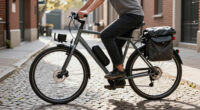
Imagine bringing home a heavy bag of oranges in a handlebar basket. The weight sits high and far forward, making slow turns feel twitchy. A pair of low-mounted panniers can balance the load more naturally, while a rear rack suits a backpack or a box of groceries. Keep items from swinging into the wheel, and tighten straps before every ride.
Fenders and waterproof panniers earn their keep on wet commutes. A fender blocks the gritty stripe of road spray that otherwise runs up your back, while a roll-top bag keeps a laptop dry through a brief shower. If you use a trailer, check its compatibility and connection instructions; a trailer changes the way you brake and turn.
Essential accessory categories for carrying gear include racks, bags, baskets, and trailers, but the right combination depends on your routes. A commuter carrying a laptop may value a weatherproof pannier, while a weekend rider may prefer a removable trunk bag. Load the bike evenly and stay within the limits for both frame and rack.
Make daily rides more comfortable in small, useful steps
Comfort upgrades work best when they solve a specific ache, reach problem, or weather nuisance. A saddle that fits your body, grips that support your hands, and handlebars adjusted for a natural posture can make a 20-minute commute feel easier. Extra padding alone doesn’t guarantee comfort; a wide saddle can rub if its shape doesn’t match your position.
If your fingers go numb on a ride to the train station, try changing your grip position and check the handlebar reach before ordering new parts. Ergonomic grips may spread pressure across your palm, while a saddle adjustment could stop you sliding forward. Make one change at a time and take a short test ride on a familiar route so you can tell what helped.
For a rider caught in an afternoon shower, fenders, rainwear, shoe covers, and waterproof storage solve different parts of the problem. Fenders keep road spray off your clothes; shoe covers help keep socks dry; a waterproof bag protects a change of shirt. They work like layers in a warm coat: each addresses a different gap.
Suspension components can smooth rough surfaces, but they add cost and may need adjustment or service. Check that any replacement part suits your bike and intended use. A comfortable setup is personal, and if pain persists, ask a qualified bike fitter or mechanic to inspect your position and components.
Avoid charger and phone-mount mistakes that can cost you
Use only a charger approved for your exact e-bike battery system, with the correct voltage and connector. Chargers that look alike can still differ electrically, and a mismatch can damage the battery or create a safety hazard. Follow the bike maker’s instructions for charging, temperature, and storage rather than guessing from a plug that seems to fit.
A spare charger can be handy for travel, but confirm its compatibility with the manufacturer before packing it. For example, a touring rider staying overnight may want a charger at the destination; carrying a random universal charger isn’t a safe shortcut. Don’t modify wiring or add an unapproved electrical accessory to make a setup work.
A phone mount can keep navigation visible, but it must not cover controls or distract you into handling the phone while moving. Strong vibration can affect some phone cameras, so a vibration-damping mount may help where available. Set your route before you start, then pull over somewhere safe to change it.
Electrical, braking, and steering components deserve care because a bad fit can affect more than convenience. If an accessory needs wiring changes, affects braking, or leaves you unsure about compatibility, take the bike to a certified mechanic. That’s especially important for high-voltage e-bike systems and safety-critical brake work.
Match child seats and passenger gear to your specific bike
A child seat or trailer is safe to use only when the bike and accessory makers approve that combination and you follow their installation and load limits. Don’t assume any rear rack can carry a child seat just because the seat clamps onto it. Check the bike’s permitted load, the rack or frame compatibility, and local rules before you buy.
For example, a parent might strap a small backpack to a rear rack and add a child seat, only to discover the combined load exceeds the bike’s limit. Count the rider, child, seat, bags, and other accessories together. Secure loose straps, keep little feet clear of wheels and spokes, and follow the seat or trailer maker’s instructions for harnesses and inspection.
Take a short test ride in a quiet area before heading into traffic. A passenger changes how the bike accelerates, brakes, and balances, much like a full shopping load changes a turn. Give yourself more stopping distance and check that lights remain visible behind the seat or trailer.
For family rides, helmets and visibility still matter, and the appropriate helmet depends on the bike class and local law. When a mount, rack, brake, or frame limit is unclear, ask the manufacturer or a certified mechanic. Careful compatibility checks help you choose gear that suits your family’s trips, whether you’re carrying children or hauling a week’s groceries.
Frequently Asked Questions
What accessories should I buy first for an e-bike?
Begin with a properly fitted helmet, front and rear lights, a suitable lock, and a basic repair kit. Add a rack or panniers if you carry things often; a commuter with a laptop will likely appreciate weatherproof storage.
Can I use any charger with my e-bike?
No. Use a charger approved for your exact battery system, with the correct voltage and connector. Ask the bike maker or an authorized dealer if you’re unsure about a spare charger.
What is the best way to secure an e-bike?
Use a sturdy U-lock or chain through the frame and, when possible, a wheel, secured to an immovable object. In a higher-risk area, add another lock or a tracker and choose a visible place to park.
Can I install a child seat or trailer on any e-bike?
No. Check compatibility and load limits for the bike, seat or trailer, and rack if the setup uses one. Count the rider, passenger, cargo, and accessories together, and follow the makers’ installation instructions and local rules.
Which accessories help most with commuting?
Lights, a lock, fenders, and a rack or panniers cover common commuting needs. If you ride in rain, waterproof storage and rainwear keep work clothes and electronics drier; the right setup depends on your route and what you carry.
Conclusion
Choose accessories around the rides you take most: visibility and a lock for daily stops, stable bags for errands, and weather protection for year-round commuting. Before buying, check fit, compatibility, local rules, and the full load your bike can carry.
Start with the basics, then add one useful upgrade at a time. Your best kit is the one that gets you home safely, with your groceries dry and your ride still feeling like yours.