TL;DR

Get bike and ride gear delivered free with Prime
- Fast, free delivery on millions of items
- Prime Video, Amazon Music and more included
- Member-only deals all year
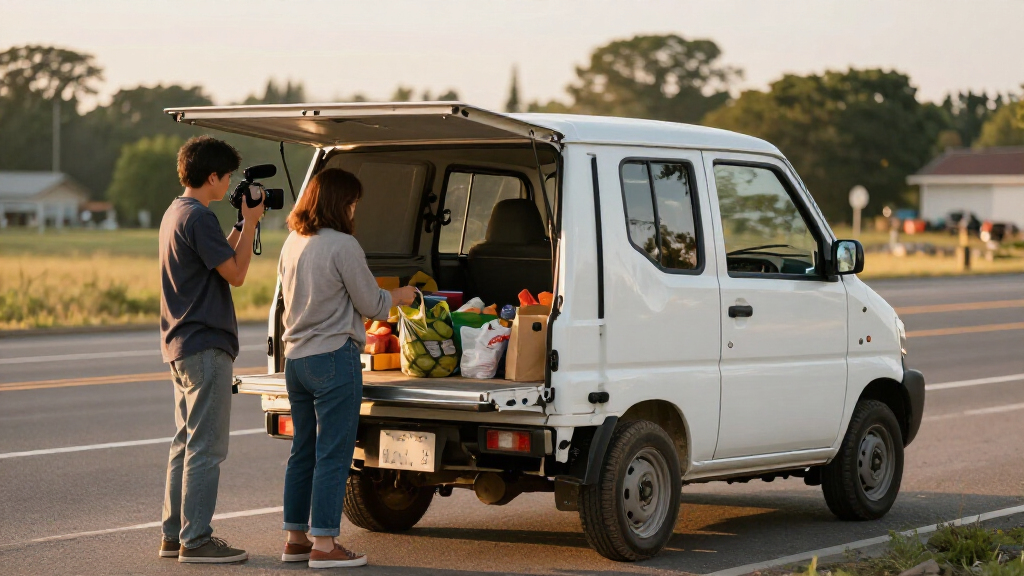
NHK World sent a correspondent to Pennsylvania to interview American kei truck owners and a dealer about why the small Japanese imports appeal to them. The report cites an estimate of 30,000 kei trucks imported into the United States over five years, while registration rules still differ by state.
NHK World, Japan’s public broadcaster, has published a report from Pennsylvania featuring Americans who own, sell and advocate for kei trucks—small Japanese vehicles whose use on public roads remains subject to differing state rules. The report offers a snapshot of growing U.S. interest in the imports and the practical and legal questions facing buyers.
The correspondent visited Lancaster Mini Truck, a Pennsylvania dealership that sells cab-forward kei trucks and other compact imports. Owner Jake Simpson told the program that he bought his first mini truck five years earlier and was frequently approached by people asking about it. He said that attention helped persuade him to turn his interest into a business.
Simpson said he now imports about 15 to 20 trucks a month. He described the vehicles as practical, citing available four-wheel drive, fuel economy of around 40 miles per gallon and sale prices of roughly $6,000 to $8,000. Those figures and assessments are attributed to Simpson in the report, rather than presented as specifications that apply to every kei truck.
The report also spoke with Joey Iorio, co-founder of Empire State Kei Advocates, who is campaigning for New York to allow kei vehicles to be registered for public-road use. The Drive’s account of the NHK report says an estimated 30,000 kei trucks were imported into the United States over the preceding five years; the estimate is attributed to the report, and the source does not provide a detailed methodology.
State Rules Shape Kei Truck Use
The report connects interest in kei trucks to both their perceived utility and the limits on where owners can drive them. A vehicle may meet federal import age requirements but still face state-level registration restrictions, leaving buyers’ ability to use it on public roads dependent on where they live. That distinction matters to prospective owners weighing a purchase, not just to collectors.
Advocacy efforts described in the report show how state policy can change. The Drive says Texas legalized kei cars last year following lobbying by enthusiasts. The Pennsylvania interviews do not establish a nationwide shift, but they illustrate why owners and advocates are seeking changes state by state.
As an affiliate, we earn on qualifying purchases.
Import Age and State Registration
Under the federal rule described in The Drive’s report, vehicles not originally certified for the U.S. market can generally be imported once they are at least 25 years old. That import rule does not guarantee that a vehicle can be registered for ordinary road use in every state. The article identifies New York as a state that does not allow kei cars and trucks to be registered for public-road use.
Kei vehicles are built to Japan’s limits on size, engine displacement and power, which helps explain their compact design. Simpson’s comparison of a kei truck’s bed with that of a late-model Ram 3500 was presented in the report to illustrate how he sees the smaller truck’s cargo area as useful. It is a comparison made at the dealership, not a general finding about all truck models or hauling needs.
““I got my first mini truck five years ago.””
— Jake Simpson, owner of Lancaster Mini Truck, quoted in the NHK World report
As an affiliate, we earn on qualifying purchases.
Road Access Still Varies by State
The report does not provide a complete, current state-by-state list of registration rules, nor does it establish whether New York lawmakers will change the rules or when any decision might occur. Buyers should check the requirements in their state before purchasing; federal eligibility to import an older vehicle does not settle whether it can be registered locally.
The cited figure of 30,000 imports over five years is an estimate, and the source does not explain how it was calculated. The report also does not show that every truck has the fuel economy or equipment Simpson cited, or that all models are suitable for the same work.
As an affiliate, we earn on qualifying purchases.
Advocates Continue State Campaigns
Iorio’s campaign, as described in the report, centers on persuading New York lawmakers to permit registration. The account does not identify a scheduled vote, bill or other specific legislative milestone. In states where rules remain restrictive, owners’ access will depend on any future policy changes and how state agencies apply their requirements.
For people considering an import, the immediate next step is to verify local registration and road-use rules before buying. The NHK report documents current enthusiasm and advocacy, but it does not announce a new law or a change to federal import rules.
Japanese mini truck registration kit
As an affiliate, we earn on qualifying purchases.
As an affiliate, we earn on qualifying purchases.
Key Questions
What did NHK World report?
NHK World sent a correspondent to Pennsylvania to interview kei truck fans and visit Lancaster Mini Truck. The report covered why some Americans buy the vehicles and efforts to change restrictions on their road use.
How many kei trucks have been imported to the United States?
The report cited an estimate of 30,000 over five years. The source does not provide a methodology or a more precise breakdown, so the figure should be treated as an attributed estimate.
Can an imported kei truck be driven on public roads everywhere in the U.S.?
No. The federal age-based import rule does not itself guarantee road registration. The Drive’s account says some states restrict registration, and rules vary by state.
What prices and fuel economy did the dealer cite?
Jake Simpson said he sells trucks for roughly $6,000 to $8,000 and cited fuel economy of around 40 miles per gallon. Those are his reported figures, not guarantees for every vehicle.
What is the New York advocacy effort seeking?
Empire State Kei Advocates, co-founded by Joey Iorio, is lobbying for changes that would allow kei vehicles to be registered for public-road use in New York. The report does not give a date for a legislative decision.
Source: rss
Fall Picks
fall essentials
As an affiliate, we earn on qualifying purchases.