
TL;DR

Get bike and ride gear delivered free with Prime
- Fast, free delivery on millions of items
- Prime Video, Amazon Music and more included
- Member-only deals all year
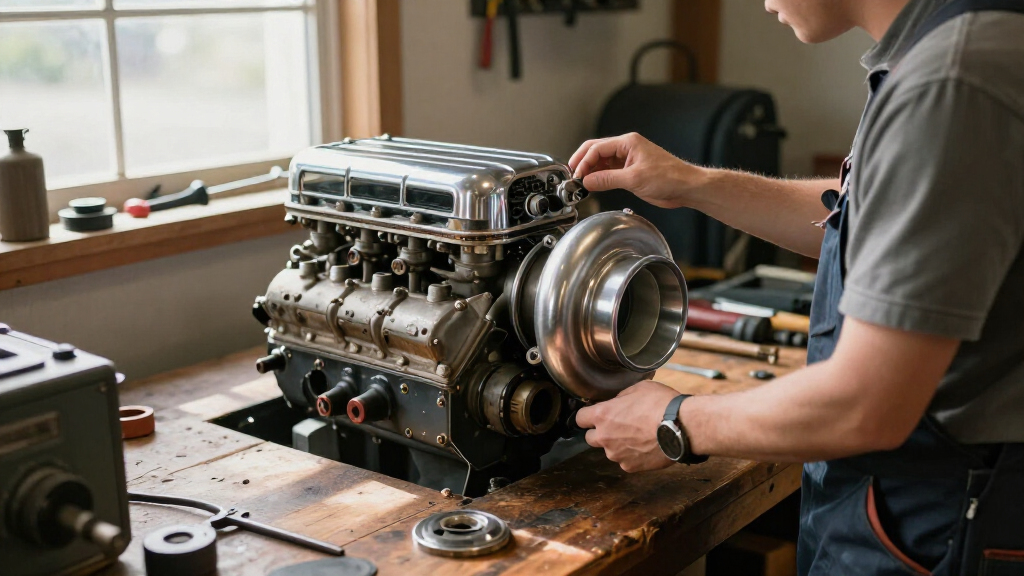
A car enthusiast has installed a turbocharger on a 100-year-old Ford Model T engine. While the modification is unproven, it has sparked widespread curiosity about its viability and implications for vintage cars.
A vintage car enthusiast has installed a turbocharger on a Ford Model T engine from around 1923, a modification that has attracted significant online interest. The key question now is whether this setup can actually run and what impact it might have on the engine’s performance and longevity.
The modification involves attaching a modern turbocharger to a restored Ford Model T engine—a design that dates back nearly a century. The project was shared on social media, sparking widespread discussion among vintage car fans and automotive engineers. Experts note that, technically, the engine’s basic design is simple, but its components and materials are vastly different from modern engines. The main challenge lies in whether the engine’s original parts can withstand the increased pressure and temperature from forced induction. There are no confirmed reports yet of the engine successfully running with the turbo installed, and it remains unclear whether the modification has been tested under real driving conditions or is purely experimental.Potential Impact on Vintage Car Customization
This development matters because it challenges traditional views on preserving vintage vehicles in their original form. If successful, it could open new avenues for modifying classic cars for higher performance, but it also raises questions about engine durability, safety, and historical preservation. The experiment could influence how enthusiasts approach restoration and customization, blending vintage aesthetics with modern technology. However, experts warn that such modifications might risk damaging irreplaceable parts or creating unsafe driving conditions, especially if not properly engineered.As an affiliate, we earn on qualifying purchases.
Historical and Technical Context of the Model T Engine
The Ford Model T, produced from 1908 to 1927, is renowned for its simple, durable design that revolutionized auto manufacturing. Its engine, a 2.9-liter inline-four, was designed for reliability and ease of repair, not high performance. Over the decades, enthusiasts have restored and preserved these vehicles primarily for historical and collectible value. The idea of adding a turbocharger—a device that forces more air into an engine to boost power—represents a significant departure from traditional restoration practices. While some modern engine swaps are common, applying forced induction to a 100-year-old engine is unprecedented and largely experimental. The trend appears to be driven by curiosity about the engine’s limits and the novelty of blending vintage design with modern technology.As an affiliate, we earn on qualifying purchases.
Unconfirmed Outcomes and Technical Challenges
It is not yet confirmed whether the turbocharged Model T engine has successfully run or achieved meaningful performance improvements. Details of the testing process, engine modifications, and safety assessments remain unclear. Experts emphasize that, given the age and design of the engine, there is a high degree of uncertainty about its durability under forced induction. The long-term effects and potential risks are still unknown, and no official testing results have been publicly released.car turbocharger for classic engines
As an affiliate, we earn on qualifying purchases.
As an affiliate, we earn on qualifying purchases.
Next Steps in Testing and Evaluation
The next phase involves testing the turbocharged engine under controlled conditions to assess performance, safety, and durability. Enthusiasts and engineers will likely monitor parameters such as temperature, pressure, and engine response. If initial tests are promising, further modifications and real-world driving trials may follow. The outcome of these experiments could influence future vintage car projects, either encouraging innovative modifications or reinforcing traditional preservation methods.auto performance upgrade for vintage cars
As an affiliate, we earn on qualifying purchases.
As an affiliate, we earn on qualifying purchases.
Key Questions
Can a 100-year-old engine handle a turbocharger?
It is currently unconfirmed whether the engine can handle forced induction without damage. Experts express concern about material stress and engine integrity.
Has the turbocharged Model T engine been tested in real driving conditions?
No, there are no publicly available reports of real-world testing or performance results at this time.
Why are enthusiasts attempting this modification?
The trend reflects curiosity about pushing vintage engines beyond their original design limits and exploring innovative ways to enhance performance.
Could this modification damage the historic engine?
Yes, there is a significant risk of damage due to increased stress, especially if the engine components are not reinforced or properly modified for forced induction.
What does this mean for vintage car restoration?
This experiment could influence future approaches—either encouraging creative modifications or reinforcing traditional preservation practices—depending on the outcomes.
Source: rss
Evergreen bestsellers Picks
bestsellers
As an affiliate, we earn on qualifying purchases.