
Corrosion on your battery connectors might seem small, but it can cause huge problems. It creates a barrier that interferes with electrical flow, leading to weak starts or even complete failure. That buildup, usually green, white, or bluish, forms from a chemical reaction with battery acid, especially in humid or salty environments. Regular cleaning, using protective coatings, and tight connections help prevent this. Keep an eye on your connectors—you’ll discover simple tricks that could save you from unexpected breakdowns.

Get bike and ride gear delivered free — and shop member deals
- Fast, free delivery on millions of items
- Access to Prime Big Deal Days deals on October 6–7
- Prime Video, Amazon Music and more included
Key Takeaways
- Corrosion on battery connectors creates electrical resistance, leading to weak or failed engine starts.
- White, bluish, or greenish powder indicates corrosion, often caused by battery acid reacting with metal.
- Regular inspection and cleaning prevent buildup, maintaining proper electrical contact and vehicle reliability.
- Applying protective coatings like petroleum jelly helps inhibit corrosion formation over time.
- Neglecting corrosion control can cause severe electrical issues and reduce the lifespan of connectors and the battery.
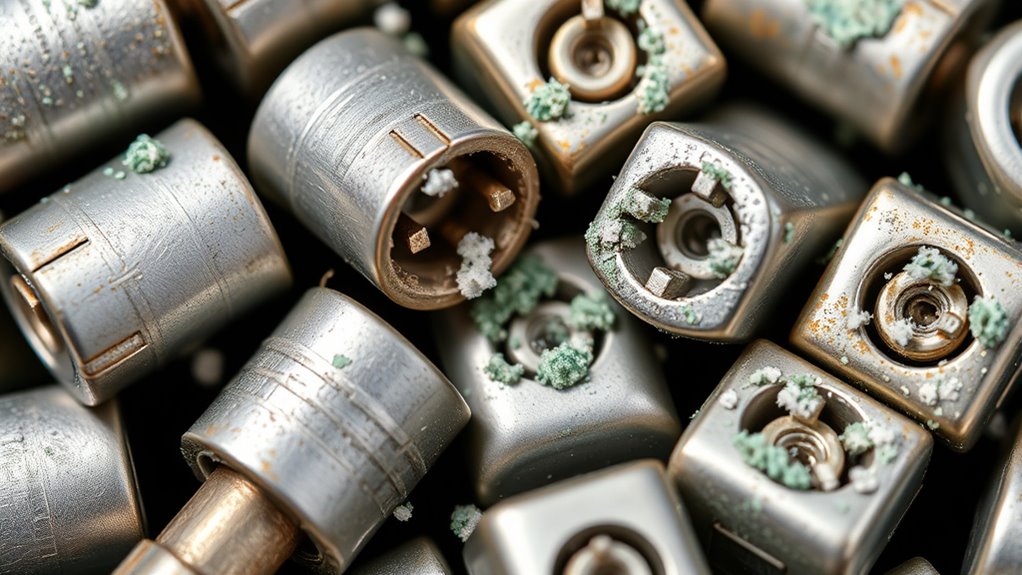
Have you ever wondered why your car’s battery sometimes fails to start unexpectedly? One common culprit is corrosion on the battery connectors. It may seem like a minor issue, but corrosion can considerably hinder the flow of electricity from your battery to your vehicle’s electrical system. When corrosion builds up on the terminals, it creates a barrier that prevents proper connection, leading to weak or intermittent starts. That’s why understanding corrosion prevention and practicing connector maintenance are vital to keep your vehicle running smoothly.
Corrosion typically appears as a white, bluish, or greenish powder around the battery terminals. It results from a chemical reaction between the battery acid and the metal connectors, especially in humid or salty environments. Over time, this buildup not only hampers electrical conductivity but can also cause the connectors to deteriorate. If you neglect it, you might find yourself stranded with a dead battery or experiencing poor electrical performance, like dim headlights or sluggish engine response. Regularly inspecting your battery terminals for signs of corrosion is a simple step that can save you time and money.
To prevent corrosion, you should incorporate corrosion prevention strategies into your routine connector maintenance. Applying a protective coating, such as a terminal protector spray or a layer of petroleum jelly, can create a barrier against moisture and chemical buildup. These products help keep corrosive elements at bay, extending the life of your connectors. Additionally, keeping the battery area clean and dry is vital. When you notice any corrosion starting to form, use a mixture of baking soda and water to neutralize the acids and scrub away the buildup with a wire brush or an old toothbrush. Always disconnect the battery cables before cleaning to avoid electrical shocks, and ensure you reconnect them tightly afterward.
Maintaining your connectors isn’t just about cleaning; it’s about making a habit of checking them regularly. Tighten any loose connections, as loose terminals can lead to increased resistance and heat buildup, which accelerates corrosion. Also, avoid over-tightening, as that can damage the connectors or the battery posts. If you notice persistent corrosion despite cleaning and preventive measures, consider replacing the connectors or the battery terminals altogether. This proactive approach can prevent more severe issues down the line, such as complete electrical failure or damage to your vehicle’s electronic components.
In short, taking the time for connector maintenance and corrosion prevention is a small investment that pays off by ensuring your vehicle starts reliably and runs efficiently. Don’t ignore those tiny signs of corrosion—they’re often the first warning that your battery connection needs attention. Staying vigilant and proactive can help you avoid unexpected breakdowns and keep your car dependable for the long haul. Recognizing the importance of electrical conductivity and proper maintenance can make all the difference in vehicle performance.
battery terminal corrosion cleaner
As an affiliate, we earn on qualifying purchases.
As an affiliate, we earn on qualifying purchases.
Frequently Asked Questions
How Often Should I Check My Battery Connectors for Corrosion?
You should check your battery connectors for corrosion at least every three to six months as part of preventative maintenance. Regular inspections help prevent corrosion buildup, which can cause poor connections and potential failure. During these checks, clean any corrosion you find and apply corrosion prevention products. Staying proactive guarantees your battery stays in good condition, avoiding unexpected issues and extending its lifespan.
Can Corrosion Be Reversed Without Replacing Connectors?
Ever wondered if you can reverse corrosion without replacing connectors? Yes, you can often clean it off with a mixture of baking soda and water, then scrub gently with a wire brush. Doing this regularly helps with corrosion prevention and extends connector longevity. Just guarantee you dry everything thoroughly afterward. Keep up with routine checks, and you’ll prevent minor corrosion from causing major issues down the line.
What Are the Best Cleaning Methods for Corroded Connectors?
You should start by disconnecting the connectors, then use a mixture of baking soda and water to neutralize corrosion. Apply this solution with a toothbrush, scrubbing gently to remove buildup. Rinse with clean water and dry thoroughly. Regular connector maintenance and corrosion prevention, like applying dielectric grease, can help prevent future issues. These cleaning methods are effective and simple, restoring functionality without replacement when corrosion isn’t severe.
Are Certain Battery Types More Prone to Connector Corrosion?
Certain battery types are more prone to connector corrosion due to their battery material and connector design. For example, lead-acid batteries often have metal connectors that corrode faster if exposed to moisture or acid leaks, while lithium-ion batteries tend to resist corrosion better thanks to their sealed design. You should regularly inspect your battery’s connector design and be aware of the battery material to prevent corrosion and maintain peak performance.
How Does Temperature Affect Battery Connector Corrosion?
Temperature plays a significant role in battery connector corrosion by accelerating chemical reactions, which can lead to rust and deterioration. When temperatures fluctuate, thermal expansion causes the metal parts to contract and expand, creating tiny cracks that allow moisture and contaminants to enter. These conditions promote corrosion, especially in humid environments. To prevent this, keep your battery in a stable, cool place and regularly check for signs of corrosion.
battery terminal protector spray
As an affiliate, we earn on qualifying purchases.
As an affiliate, we earn on qualifying purchases.
Conclusion
Keep an eye on your battery connectors—small signs of corrosion might seem minor, but they can lead to big failures. A tiny buildup can cause connection issues, leaving you stranded when you least expect it. Ignoring these small problems risks costly repairs and inconvenience. So, stay vigilant, clean those connectors regularly, and prevent corrosion from sneaking in. Because in the world of batteries, small issues today can turn into major failures tomorrow.
As an affiliate, we earn on qualifying purchases.
car battery corrosion prevention kit
As an affiliate, we earn on qualifying purchases.
As an affiliate, we earn on qualifying purchases.
Fall Picks
fall essentials
As an affiliate, we earn on qualifying purchases.