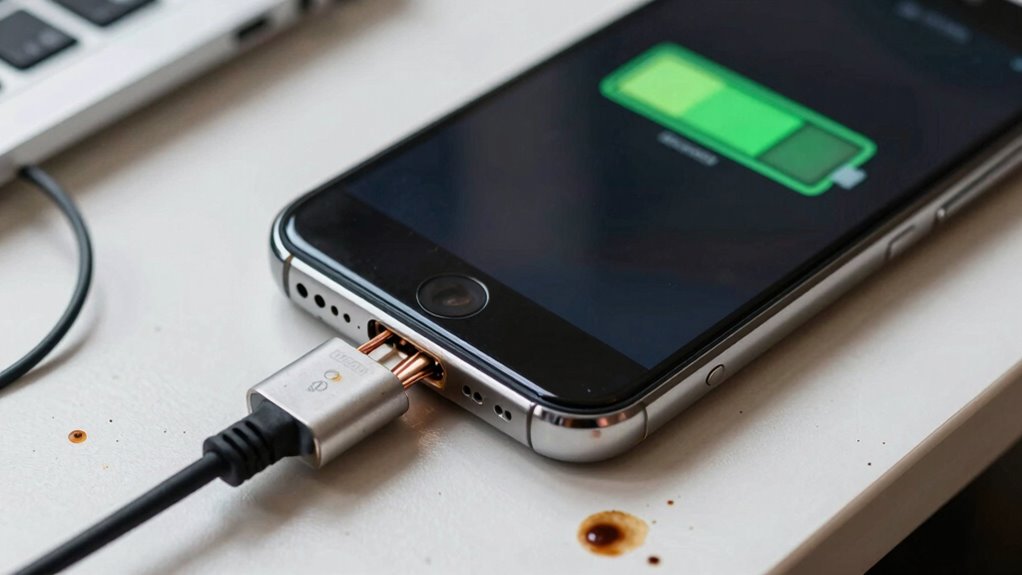

The charging habit that shortens your battery life is keeping your device plugged in overnight or at 100% for extended periods. Continually reaching full charge and staying there causes high voltage stress, heat buildup, and unnecessary charge cycles, all of which accelerate battery wear. To protect your battery’s longevity, avoid constant full charges and unplug once it hits around 80-90%. If you want to learn more about proper charging habits, keep exploring this topic.
Key Takeaways
- Continuously keeping your device plugged in at 100% full charge accelerates battery aging.
- Regularly charging to 100% and leaving it connected increases stress and wear on the battery.
- Using fast chargers excessively can cause heat buildup, damaging internal battery components.
- Deep discharges to 0% and recharging fully can reduce overall battery capacity over time.
- Ignoring optimal charge ranges (20%-80%) leads to unnecessary full cycles and faster battery degradation.
Understanding How Batteries Wear Out

Batteries wear out because of repeated charge and discharge cycles that gradually degrade their internal components. The process hinges on battery chemistry, which determines how materials inside respond to charging stresses. Over time, chemical reactions weaken the electrodes, reducing capacity and efficiency. Charging algorithms also play a vital role; improper or aggressive charging speeds can accelerate wear by generating excess heat or stressing the battery. For instance, fast charging can cause thermal stress, damaging the internal structure faster. Additionally, European cloud innovation emphasizes the importance of sustainable and efficient energy use, which can influence how charging technologies are developed and optimized. Understanding how these factors interact helps you prevent unnecessary wear. To extend your battery’s lifespan, avoid extreme charging speeds and keep charging within recommended parameters. Properly managing these elements can considerably slow down battery degradation, ensuring longer-lasting performance.
The Myth of Overnight Charging
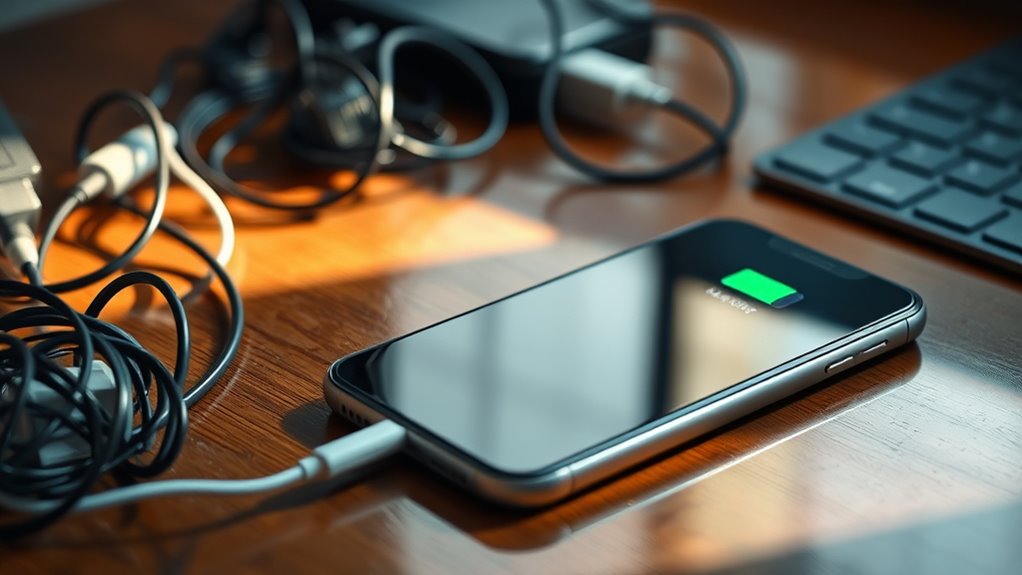
Many believe that leaving your device plugged in overnight harms the battery, but is that actually true? Continuous charging can lead to risks like overheating and faster battery decline if not managed properly. Understanding the right charging practices helps protect your battery’s health and extend its lifespan. Proper charging habits also align with recommendations to avoid unnecessary battery stress, especially as modern devices incorporate advanced battery management systems to minimize potential damage. These systems help regulate charging cycles and prevent overcharging, which is crucial for maintaining battery long-term health.
Overnight Charging Risks
While the idea of leaving your device plugged in overnight seems harmless, it’s actually a common myth that doing so damages your battery. Modern smartphones and laptops are designed to prevent overcharging by stopping the flow of power once the battery reaches 100%. However, keeping your device plugged in can affect battery calibration over time, leading to inaccurate percentage readings. Additionally, prolonged charging at high speeds, especially with fast chargers, can generate heat, which accelerates battery wear. Although overnight charging doesn’t immediately ruin your battery, it can cause subtle long-term effects that reduce overall lifespan. To optimize your battery health, avoid constant full charges and unplug once it hits 100%, helping maintain proper calibration and reducing stress from excessive charging speed. Proper charging habits are essential to prolonging your device’s battery life and ensuring reliable performance over time. For example, managing charge cycles by keeping your battery between 20% and 80% can significantly extend its overall longevity.
Battery Health Decline
Although overnight charging doesn’t immediately damage your device’s battery, it can still contribute to long-term decline in battery health. Keeping your phone plugged in for extended periods causes the battery to undergo unnecessary charge cycles, which gradually weakens its capacity. Over time, this leads to a reduced ability to hold a full charge, meaning you might need a battery replacement sooner than expected. Additionally, charging speed plays a role; fast chargers generate more heat, which accelerates battery aging. While overnight charging itself isn’t the sole culprit, consistently exposing your battery to prolonged, high-temperature conditions can hasten its deterioration. Understanding charge cycles can help you better manage your device’s battery health over time. To further protect your battery, avoid exposing it to extreme temperatures and consider using smart charging features that limit overcharging.
Optimal Charging Practices
Is overnight charging truly harmful to your battery? Not necessarily, but it depends on your habits. Modern smartphones are designed to handle long charges, especially if you use features like wireless charging, which can stop charging once full. However, consistently relying on fast charging can generate more heat, which accelerates battery wear. To optimize your charging practices, avoid leaving your device plugged in at 100% for extended periods. Instead, aim to keep the battery between 20% and 80%, especially during fast charging sessions. If you use wireless charging overnight, ensure your device has temperature controls to prevent overheating. Additionally, understanding charging cycles can help you manage your battery health more effectively. Being aware of battery management systems can further help mitigate unnecessary wear and prolong your device’s optimal performance. Recognizing the importance of temperature regulation during charging can also contribute to longer battery longevity. Incorporating proper charging habits can significantly extend your battery’s lifespan without sacrificing convenience, especially when combined with understanding battery chemistry and its effects on aging.
Effects of Constant Voltage on Battery Health

Constant voltage charging can harm your battery over time because maintaining a fixed high voltage forces the battery to undergo ongoing stress. This constant voltage keeps the battery at near-maximum capacity, which accelerates battery aging. When you stay plugged in at a high voltage, your battery experiences repeated charge cycles that wear down its internal components faster. Over time, this stress reduces the battery’s ability to hold a full charge, leading to decreased performance and shorter lifespan. Additionally, battery degradation is accelerated when a battery is exposed to prolonged high-voltage conditions. By exposing your battery to constant voltage, you’re unintentionally speeding up its degradation process. To protect your battery health, avoid keeping your device plugged in at full charge for extended periods. Instead, aim for partial charging and unplug once it reaches around 80%. Proper charging practices can significantly extend your battery’s overall lifespan and maintain optimal performance over time. Understanding battery chemistry can help you better grasp how different charging habits impact longevity and overall health, including how wave and wind energy considerations can influence sustainable charging solutions. Being mindful of charging cycles is also key to maintaining battery health over the long term.
Why Leaving Your Phone Plugged In Too Long Is Harmful

Leaving your phone plugged in for extended periods can substantially harm its battery health. When you stay connected after reaching 100%, your battery endures stress from continuous charging. This can lead to overheating and degrade the battery’s capacity over time. Power adapters and charging speed play vital roles; fast chargers may increase heat, accelerating damage if left plugged in too long. To minimize harm, avoid leaving your device connected overnight or when fully charged. Using optimized chargers designed for your phone’s battery management can help prevent unnecessary stress. Proper charging practices such as unplugging once fully charged and avoiding high-temperature environments can significantly extend your battery’s lifespan. Here’s a quick comparison:
| Aspect | Impact |
|---|---|
| Charging Speed | Faster charging generates more heat, risking damage |
| Power Adapters | Poor-quality adapters may supply inconsistent power |
| Length of Plug-in | Longer times increase battery wear and tear |
The Role of Charging Cycles in Battery Degradation

Every time you fully charge and then completely drain your battery, you complete a charging cycle, which gradually wears it out. Partial charges can help preserve your battery’s life, but frequent full cycles accelerate degradation. To keep your battery healthy longer, follow recommended charging practices and avoid unnecessary full cycles.
Impact of Full Cycles
Charging your device in full cycles—completely draining the battery before recharging—accelerates battery wear over time. Each full cycle causes wear, gradually reducing capacity and lifespan. Frequent full cycles can disrupt battery calibration, making your device misjudge remaining power and leading to unnecessary shutdowns. Additionally, charging speed plays a role; fast charging can generate more heat, which accelerates degradation during full cycles. To extend your battery’s health, avoid draining it completely and try to keep the charge between 20% and 80%. This approach minimizes stress on the battery and helps maintain accurate calibration. Remember, smaller, more frequent charges are gentler, preserving the battery’s longevity and ensuring consistent performance over time.
Partial Charging Effects
Partial charging, where you recharge your device before it’s completely drained, can actually help preserve the battery’s health over time. Unlike full discharges, partial charging reduces stress on the battery, minimizing the number of full charge cycles and extending its lifespan. Regular partial charges also promote better battery calibration, keeping the device’s power indicator accurate. When you let your battery drain too low, it can cause voltage drops that harm internal chemistry, speeding up degradation. By charging more frequently in smaller increments, you decrease the wear caused by deep cycles. This practice helps maintain consistent capacity and overall battery health. So, embracing partial charging not only prevents unnecessary cycle stress but also supports longer-lasting, healthier batteries.
Optimal Charging Practices
Understanding how charging cycles affect your device’s battery is crucial for maintaining its longevity. Every time you fully charge and discharge your battery, a cycle occurs, gradually weakening its capacity. To maximize battery life, avoid frequent full charges; instead, keep your battery between 20% and 80%. Wireless charging is convenient but can generate heat, which accelerates degradation, so use it sparingly. Fast charging offers quick power boosts but imposes additional stress on your battery’s chemistry, reducing its lifespan over time. To preserve your device’s health, balance fast charging with slower, standard charging methods and minimize unnecessary cycles. By adopting these ideal charging practices, you extend battery performance and avoid premature replacements.
Recognizing Signs of Battery Deterioration

As your device’s battery begins to weaken, you might notice it doesn’t hold a charge as long as it used to. One sign is frequent needing to recharge, even after short use, which indicates the battery’s capacity is diminishing. You may also experience unexpected shutdowns or your device shutting off before reaching 0% charge. If you find yourself recalibrating the battery often—forcing it to recognize its true capacity—it’s a clear sign of deterioration. Additionally, inconsistent charging frequency, like leaving your device plugged in for extended periods, can speed up battery wear. Pay attention to these signs, as they suggest your battery’s health is declining and might benefit from a replacement or proper calibration to optimize performance.
Best Practices for Charging Your Device Safely

Once you’ve identified signs of battery deterioration, adopting proper charging habits becomes essential to prolong your device’s lifespan. To do so, consider the following best practices:
- Use wireless charging stations when possible to reduce wear on charging ports.
- Avoid constantly using fast charging, as it can generate excess heat that damages the battery over time.
- Keep your device between 20% and 80% battery levels; frequent full discharges or charges strain the battery.
Tips to Maximize Your Battery’s Lifespan

To maximize your battery’s lifespan, focus on maintaining ideal charging habits and avoiding practices that cause unnecessary stress on the battery. Regularly calibrate your battery by fully charging and discharging it once every few months to ensure accurate battery readings. Keep charging speed in mind—avoid fast chargers when not needed, as rapid charging can generate heat and accelerate wear. Instead, opt for slower, steady charging to reduce stress. Keep your device between 20% and 80% charge whenever possible, avoiding full cycles that strain the battery. Additionally, avoid exposing your device to high temperatures during charging, which can damage the battery over time. Implementing these tips helps preserve battery health, extending its overall lifespan and maintaining peak performance longer.
Frequently Asked Questions
Can Using Fast Chargers Damage My Battery Over Time?
Yes, using fast charging can cause some battery degradation over time, but it’s usually minimal if you don’t do it constantly. Fast charging heats up your battery, which accelerates wear, but occasional use won’t substantially harm your device. To protect your battery, avoid always relying on fast chargers and try to use standard charging when possible. This helps prolong your battery’s overall lifespan and performance.
Does Keeping My Device at 100% Charge Harm the Battery?
Keeping your device at 100% charge can harm the battery over time by affecting voltage stability and causing unnecessary wear. To maintain peak battery health, you should perform regular battery calibration and avoid constant full charges. This helps the battery’s chemistry stay balanced, preventing capacity loss and prolonging its lifespan. Remember, keeping your device between 20% and 80% is generally better for long-term battery health.
How Does Temperature Affect Battery Aging During Charging?
Temperature acts like a silent thief, slowly stealing your battery’s lifespan. When you charge in thermal stress conditions—either too hot or too cold—it accelerates aging through damaging temperature cycles. High temperatures cause chemical reactions that degrade battery components, while cold temperatures can temporarily reduce capacity. To protect your battery, avoid charging in extreme heat or cold, and keep your device in a stable, moderate environment during recharging.
Is It Better to Charge in Short Bursts or Full Sessions?
You should prefer short, frequent charging sessions over full sessions to prolong your battery life. Trickle charging helps maintain ideal charge levels without overloading the battery, reducing unnecessary charging cycles. Avoid letting the battery drain completely or staying at high charge levels for long periods. By managing your charging habits this way, you minimize stress on the battery, ultimately extending its lifespan and maintaining better performance over time.
Do Third-Party Chargers Impact Battery Longevity?
Did you know that using third-party chargers can reduce your device’s battery lifespan by up to 20%? Third-party chargers often lack proper battery compatibility, which can lead to inconsistent power delivery and harm your battery over time. To protect your device, stick with official or certified chargers, and check that they’re compatible with your device’s battery specifications. This simple step helps maintain your battery’s health longer.
Conclusion
To keep your battery healthy, avoid habits like overnight charging and leaving your device plugged in too long. Did you know that every full charge cycle reduces your battery’s capacity by about 20%? By following best practices, you can markedly extend your battery’s lifespan and save money in the long run. Stay mindful of how you charge, and your device will perform well for years to come.