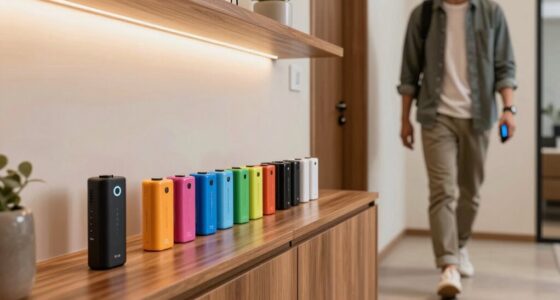
When you see a device labeled water-resistant, it means it has been designed to withstand some exposure to moisture, like splashes or light rain, but isn’t fully waterproof. These ratings, often shown as IP codes, specify how well a device can handle water at certain depths and durations. Keep in mind that water resistance isn’t permanent and varies by model. To learn more about what your gadgets can handle and how to protect them, continue exploring.

Get bike and ride gear delivered free — and shop member deals
- Fast, free delivery on millions of items
- Access to Prime Big Deal Days deals on October 6–7
- Prime Video, Amazon Music and more included
Key Takeaways
- Water-resistant devices can handle light rain or splashes but are not fully waterproof for prolonged water exposure.
- An IP rating indicates how well a device resists water, with higher ratings providing better protection.
- Water resistance may degrade over time, so regular inspection and maintenance are essential.
- For daily commuting, using waterproof cases or pouches adds extra protection against unexpected water contact.
- Understanding device limits helps prevent damage during rain, spills, or accidental splashes while on the go.
Understanding the Water-Resistance Ratings
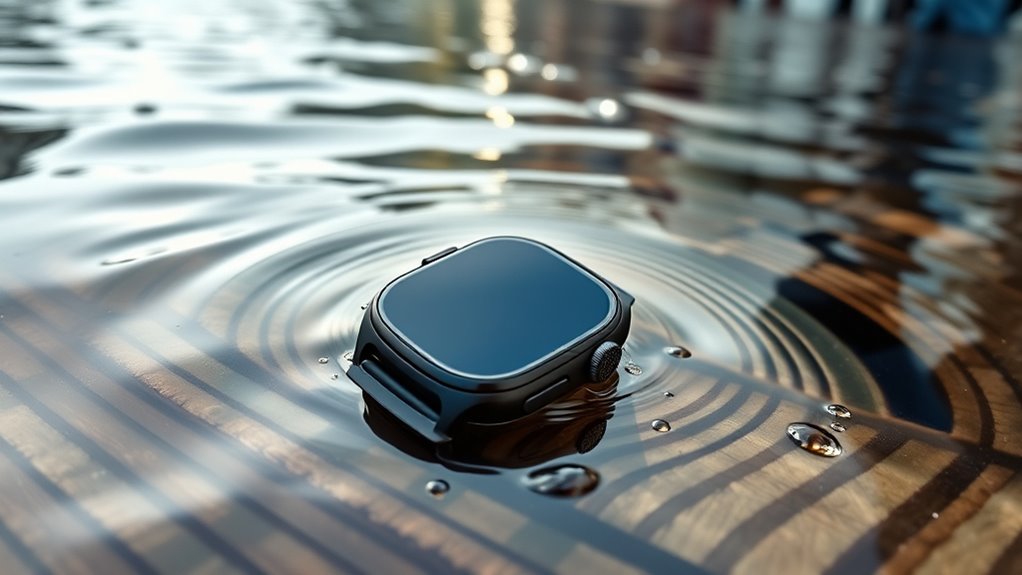
Water-resistance ratings are essential for understanding how well your electronic device can withstand exposure to water. These ratings indicate the device’s waterproof durability, helping you determine when it’s safe to use it in wet conditions. Ratings are often based on testing with moisture barriers that block water penetration at specific depths and durations. For example, a device labeled with a certain IP (Ingress Protection) rating suggests how well it resists dust and water, but ratings also reflect the effectiveness of moisture barriers. Knowing these ratings helps you avoid accidental damage, especially when you’re outdoors or near water. For instance, understanding the testing procedures used to determine these ratings can provide insights into the device’s actual water resistance capabilities. Additionally, water resistance standards are periodically updated to reflect new testing methods and technological advancements, emphasizing the importance of staying informed about the latest classifications. Keep in mind that water resistance isn’t permanent—over time, the integrity of moisture barriers can degrade, reducing your device’s waterproof durability.
What Do Ingress Protection (IP) Codes Signify?
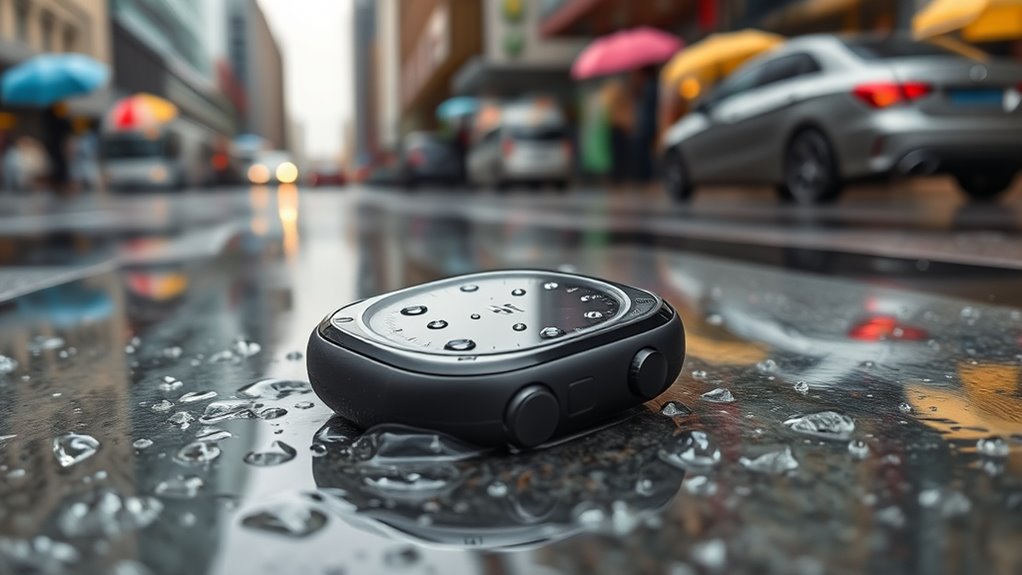
Ingress Protection (IP) codes provide a standardized way to measure how well your device resists dust and water. These IP ratings help you understand a device’s durability against environmental factors. The IP code consists of two digits: the first indicates dust protection, and the second reflects water resistance. For example:
| Digit | Description | Level of Protection |
|---|---|---|
| 1 | Dust protected | Entry of large objects protected |
| 2 | Water droplets resistant | Dripping water protection |
| 3 | Limited dust ingress | Protection against spraying water |
Knowing these IP ratings helps you choose electronics suited for your daily commute, ensuring water resistance matches your needs. The ratings clarify exactly what kind of exposure your device can handle, giving you confidence on the go.
Real-World Scenarios: How Water Resistance Protects Your Devices

Imagine you’re caught in a sudden rainstorm while jogging with your smartwatch; thanks to its water-resistant design, it continues to track your activity without any issues. This waterproof design relies on moisture barriers that prevent water from seeping into sensitive components. Whether you’re caught outside during a downpour or accidentally spill a drink on your device, water resistance helps protect against damage. These moisture barriers are essential in blocking water ingress, ensuring your device stays functional even in wet conditions. You don’t have to worry about stopping your commute or outdoor activities because of weather; your electronics are built to withstand such scenarios. Water resistance offers peace of mind, allowing you to focus on your day without constantly fearing water-related mishaps. In addition, understanding water-resistant standards can help you choose the right device for your needs and ensure it performs reliably in various environments. Knowing the specific water resistance ratings can guide you in selecting devices suitable for different water exposure levels, especially when considering device durability in outdoor conditions.
Limitations of Water-Resistant Devices During Commuting
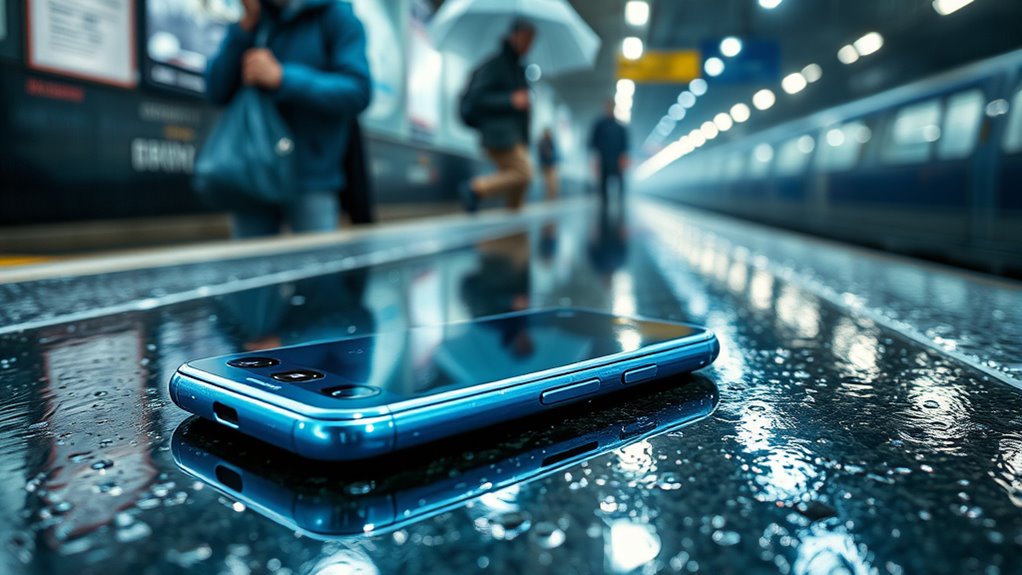
While water resistance helps protect your devices from rain showers and accidental splashes, it doesn’t mean they are invulnerable to all water-related issues during everyday commuting. Water-resistant devices can handle light rain and minor splashes, but sustained exposure or powerful water jets can still cause damage. For example, if you’re caught in a sudden rain shower or accidentally splash water while commuting, your device might withstand it temporarily, but prolonged or forceful contact can breach the device’s resistance. Moreover, water resistance often has limits—certain depths or durations can compromise the seal. Understanding water resistance is essential to gauge how much water exposure your device can safely handle. Additionally, Free Floating techniques can influence how well your device maintains its water resistance over time, especially if not properly maintained or if subjected to impact. Regularly inspecting your device for cracks or damage can help prevent unexpected failures. Damage caused by water intrusion may not always be immediately apparent, so taking proactive measures is crucial. Keep in mind that even minor cracks or wear can reduce effectiveness, making your device vulnerable during unpredictable weather or accidental water contact. Water resistance ratings can vary significantly between models and manufacturers, so understanding the specific rating of your device is vital. Safety considerations from reliable backup power guidance highlight the importance of understanding device limitations in unpredictable conditions.
Tips to Safeguard Electronics From Water Damage
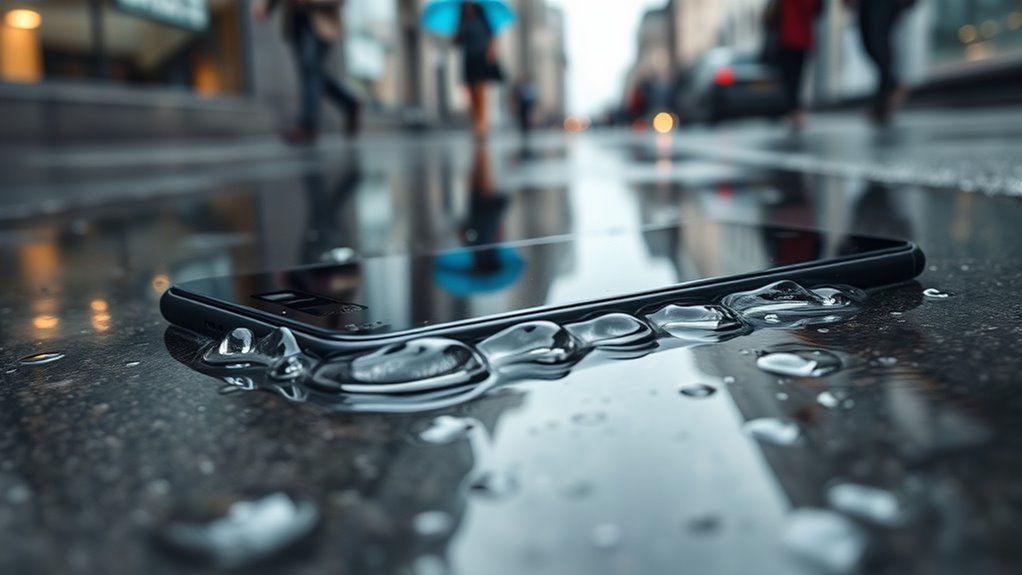
To effectively protect your electronics from water damage, it is vital to take proactive measures. First, use waterproof cases or pouches to shield your devices during rain or accidental splashes. Always keep batteries at peak levels; a well-charged battery can help prevent potential data loss if the device gets wet. Avoid exposing electronics to water sources whenever possible, and store them in dry, secure spots when not in use. Practicing battery safety by removing batteries from non-waterproof devices before cleaning or storage minimizes corrosion risk. Additionally, choosing devices with high electronic durability ensures they withstand occasional exposure. Regularly inspect your gadgets for signs of wear or damage, and avoid shortcuts that compromise water resistance. Proper ventilation considerations can also help prevent internal moisture buildup that may lead to damage. Understanding net worth growth hacks and how they relate to luxury and protection can motivate you to invest in quality equipment and accessories. Using waterproof electronic accessories can provide an extra layer of defense against water ingress, especially if they are rated for outdoor use. Being aware of water-resistant technology features can help you select devices better suited for outdoor and commuting needs. Implementing proper device maintenance practices can further extend your gadgets’ lifespan and resilience against water-related issues. These steps help safeguard your devices and extend their lifespan.
Frequently Asked Questions
How Often Should I Test My Device’s Water Resistance?
You should test your device’s water resistance at least once every six months to guarantee it stays protected. Regular testing helps catch any wear or damage early. Follow maintenance tips like keeping seals clean and avoiding exposure to extreme water conditions. If you notice any cracks or moisture inside, test immediately and consider professional repairs. Staying proactive with testing frequency keeps your device safe during daily commutes.
Are Water-Resistant Devices Safe to Use in Swimming Pools?
Imagine your device as a brave explorer, but pools are treacherous waters. Water-resistant devices aren’t fully safe for swimming, as they still carry a risk of damage in chlorinated water. For pool safety, avoid submerging your electronics, since water can seep in and cause harm. Stick to dry adventures, and treat your tech like a delicate treasure, keeping it away from the deep end to prevent costly mishaps.
Can Water Resistance Vary Between Different Brands of Electronics?
Yes, water resistance can vary between brands due to differences in testing standards and quality control. Some brands rigorously test their devices to meet specific IP ratings, ensuring better water protection, while others may not follow the same standards. When choosing a device, look for established testing standards like IP ratings and research the brand’s reputation to guarantee you get a truly water-resistant product that suits your needs.
What Maintenance Is Required to Keep Water Resistance Effective?
Remember when your first cell phone could survive a splash? To keep water resistance effective, you need regular maintenance. Moisture prevention is key—wipe your device with a soft, dry cloth after exposure to water, check seals and ports for damage, and avoid opening waterproof cases unnecessarily. Follow these maintenance tips, and your electronics will remain protected, even in unpredictable weather, much like those trusty old gadgets from the past.
Does Water Resistance Affect the Device’s Warranty Coverage?
Water resistance can affect your warranty coverage. If water damage occurs, it may be excluded from warranty coverage due to warranty exclusions, especially if the device wasn’t properly maintained or if the damage results from accidental exposure beyond the device’s rated level. You might face repair costs since water damage isn’t always covered, so it’s essential to understand your device’s water resistance limits and handle it accordingly to avoid costly repairs.
Conclusion
Knowing what water resistance means helps you avoid surprises during your commute. While your devices may be better equipped to handle splashes and rain, they aren’t invincible. Keep in mind that water-resistant isn’t water-proof—don’t push your luck. By following simple tips, you can keep your electronics safe and sound. After all, it’s better to be safe than sorry, especially when it comes to protecting your tech in the unpredictable world of daily travel.
Fall Picks
fall essentials
As an affiliate, we earn on qualifying purchases.