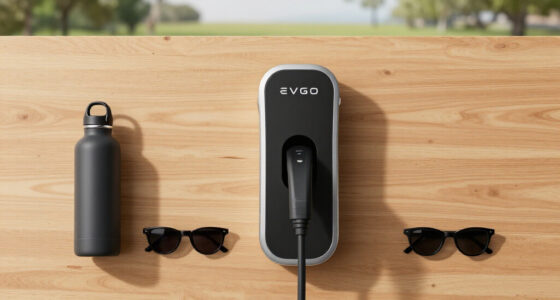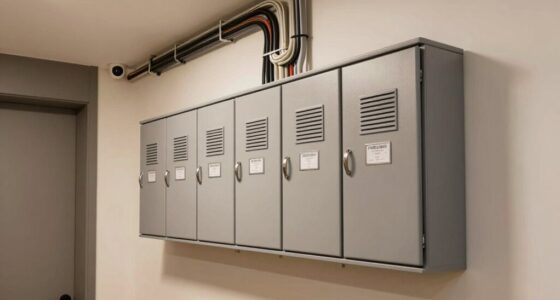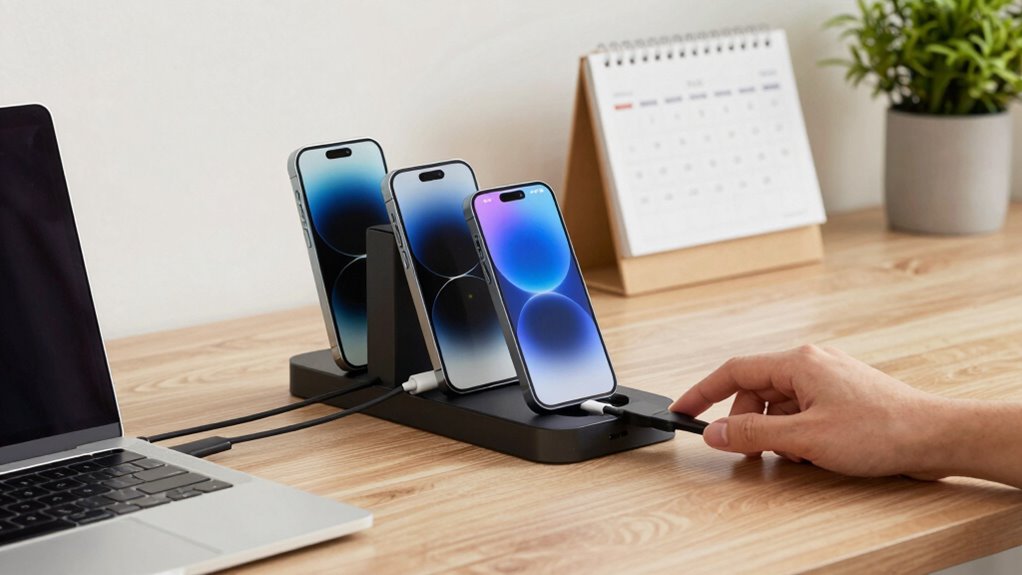

To charge your devices safely at work, always use manufacturer-approved chargers and avoid cheap, incompatible options. Keep your charging area clean, dry, and well-ventilated, ensuring cords are organized and away from soft materials that trap heat. Never leave devices unattended if they feel hot, and unplug once fully charged. Regularly inspect cords for damage and replace damaged equipment immediately. Stay mindful of safety standards—you’ll find more tips to keep your devices and yourself safe here.
Key Takeaways
- Use only manufacturer-approved chargers compatible with your devices to ensure safety and optimal battery health.
- Charge devices on hard, flat surfaces in well-ventilated areas away from soft materials like blankets.
- Regularly inspect charging cords and adapters for damage and replace them immediately if compromised.
- Avoid overcharging by unplugging devices once fully charged to prevent overheating and battery strain.
- Keep your charging area clean, dry, and organized to reduce hazards and promote safe device charging.
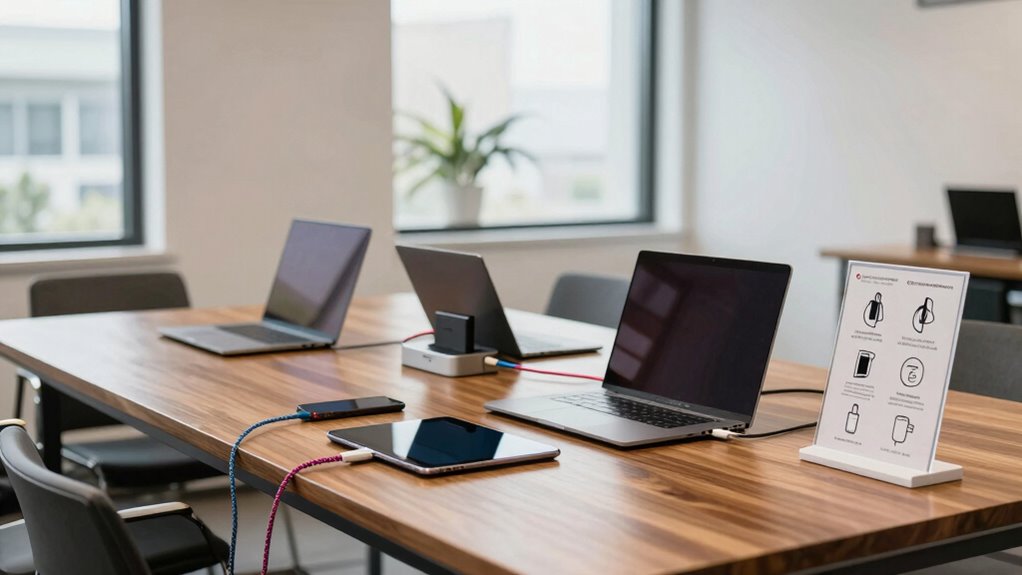
When you rely on electronic devices during your workday, ensuring safe charging practices is essential to prevent accidents and protect your equipment. Battery safety is a critical aspect of this, especially when you’re constantly plugging and unplugging devices in a busy office or coworking space. Following charging best practices not only extends the lifespan of your gadgets but also reduces the risk of overheating, fires, and other hazards. The first step is to always use the charger that came with your device or one approved by the manufacturer. Using incompatible or cheap third-party chargers might seem convenient, but they often lack proper safety features, which can compromise your battery’s health or cause dangerous malfunctions.
Use only manufacturer-approved chargers to ensure safe, reliable device charging and prevent hazards.
Keep an eye on your device while it’s charging. Avoid leaving it unattended for long periods, especially if it feels hot to the touch or is charging in a cluttered environment. Overheating is one of the main dangers in improper charging, and it can lead to battery swelling or even fires. It’s best to charge devices on hard, flat surfaces that allow heat dissipation and stay away from soft materials like blankets or cushions that trap heat. When you’re in a shared workspace, make sure your cords are neatly organized and not creating a tripping hazard, which could cause accidents and damage to your device. Additionally, understanding battery chemistry can help you better grasp how to care for your device’s battery. Being aware of safety standards can also guide you in choosing the right charging equipment. Proper ventilation during charging is crucial to prevent overheating, especially in confined spaces. Regularly checking for device compatibility ensures that your charger is suitable and safe for your specific device model.
Practicing good battery safety also means not overcharging your device. Modern devices typically have built-in protections to stop charging once the battery is full, but constantly leaving your device plugged in for hours beyond 100% can still strain your battery over time. Unplug your device once it reaches a full charge and avoid letting the battery drain completely before recharging. Regularly calibrating your battery by doing shallow discharges—like charging from around 20% to 80%—can help maintain its health and accuracy. Additionally, being aware of proper ventilation can help prevent overheating during charging sessions. Keeping your charging area clean and dry is also essential to avoid potential issues caused by moisture or dust.
In addition, keep your charging area clean and dry. Moisture and dust can interfere with charging ports and lead to short circuits. If your device or charger shows any signs of damage, such as frayed cords or bent connectors, replace them immediately. Never attempt to repair damaged chargers yourself, as this can pose serious safety risks. By adopting these battery safety measures and adhering to charging best practices, you can ensure your devices stay safe, functional, and long-lasting throughout your workday.

iPhone Charger,2Pack 6FT USB Wall Charger Fast Charging USB Cable Charging Cube Travel Plug Block with 6Foot Fast Cuble Lightning Cable Cord for iPhone 14 13 12 11 Pro Max XS XR X 8 7 SE2022 iPad
- Compact and Lightweight Design: Small, lightweight, perfect for travel
- 6FT Extra Long Lightning Cable: High-quality copper wire for fast charging
- Fast Data Transfer: Up to 480 Mbps for quick syncing
As an affiliate, we earn on qualifying purchases.
As an affiliate, we earn on qualifying purchases.
Frequently Asked Questions
Are There Specific Safety Certifications for Workplace Charging Stations?
Yes, there are specific safety certifications for workplace charging stations. You should look for stations that meet established Charging station standards and Certification requirements, such as UL (Underwriters Laboratories) or UL-listed certifications. These guarantee the charging stations comply with safety, electrical, and quality standards. Confirming these certifications helps prevent hazards, ensures reliable operation, and keeps your workplace compliant with safety regulations. Always choose certified stations for safer charging experiences.
How Often Should Charging Equipment Undergo Safety Inspections?
You should inspect your charging equipment at least quarterly to stay ahead of potential issues. Regular charging station maintenance keeps everything running smoothly and minimizes risks. Follow electrical safety protocols diligently, checking for worn cords, loose connections, or damage. Remember, an ounce of prevention is worth a pound of cure; staying proactive ensures safety and compliance, preventing costly accidents or downtime. Consistent inspections are your best defense against electrical hazards.
Can Using a Personal Charger at Work Compromise Safety Standards?
Using a personal charger at work can compromise safety standards if it isn’t properly certified or maintained. Personal charger safety varies, and workplace charger risks increase when devices aren’t approved for professional environments. You should verify your charger meets safety standards, uses quality components, and is in good condition. This helps prevent electrical hazards, fires, or damages, ensuring safer charging practices and reducing potential workplace accidents.
What Are the Emergency Procedures if a Charging-Related Fire Occurs?
Think of a charging-related fire as a sudden storm—you need a plan to weather it. Your emergency procedures should include unplugging devices immediately, alerting everyone nearby, and calling emergency services. Fire prevention is key, so guarantee fire extinguishers are accessible and staff are trained in their use. Quickly following these steps helps contain the blaze and keeps everyone safe, turning chaos into control.
Are There Legal Regulations for Installing Charging Stations in Office Buildings?
Yes, there are legal regulations for installing charging stations in office buildings. You need to take into account workplace liability and guarantee compliance with local building codes and electrical standards. Securing charging station permits is essential to avoid legal issues. By following these regulations, you protect your employees and your business from potential liabilities. Always consult with local authorities or a qualified electrician to ensure your installation meets all safety and legal requirements.

Stun Gun Charger Cord Compatible with Police 305, Police 519, Police 928-58, VTS-979 – 53, VTS-195, VTS-T01, Avenger, Guard Dog Security, Jolt, Stun Master and Most Other(Expandable to 8inch, 1pack)
- Expandable Length: Extends up to 8 inches
- Universal Compatibility: Fits multiple stun gun models
- Fast Charging: Quickly powers your stun gun
As an affiliate, we earn on qualifying purchases.
As an affiliate, we earn on qualifying purchases.
Conclusion
By following these simple tips, you’ll keep your devices safe and your workspace secure, like a lighthouse guiding ships through treacherous waters. Remember to use certified chargers, avoid overcharging, and keep your cords organized. Just as a well-maintained garden flourishes, your charging habits will guarantee your devices stay healthy and ready to go. Stay vigilant, and charging safely will become second nature, letting you focus on what truly matters without worry.

750W Charging Station for Multiple Devices, Zobirez 10-Port Fast Charger, 5 USB-C 120W Each and 5 USB-A 30W Each, Desktop Charging Hub for Laptop Phone Tablet, Black
- Multi-Device Charging Capacity: Charges 10 devices simultaneously with 750W
- High-Power USB-C Ports: 5 USB-C ports up to 120W each for laptops
- Fast USB-A Charging: 5 USB-A ports up to 30W each for accessories
As an affiliate, we earn on qualifying purchases.
As an affiliate, we earn on qualifying purchases.

GE Surge Protector Power Strip, 10 Ft Extension Cord, 6 Outlet Extender
- Number of Outlets: 6 grounded outlets for multiple devices
- Surge Protection: 800 Joules surge protection with circuit breaker
- Extension Cord Length: 10-foot durable extension cord
As an affiliate, we earn on qualifying purchases.
As an affiliate, we earn on qualifying purchases.