
To store a spare battery without adding stress at home, keep it in a cool, dry place away from direct sunlight and moisture. Use non-conductive containers or the original packaging, and label each battery clearly. Regularly inspect for damage, and dispose of damaged ones safely. Keep batteries out of reach of children and in an accessible spot for easy retrieval. Proper storage practices can make your life easier and safer—discover more tips to streamline your battery management.

Get bike and ride gear delivered free with Prime
- Fast, free delivery on millions of items
- Prime Video, Amazon Music and more included
- Member-only deals all year
Key Takeaways
- Use clearly labeled, non-conductive containers to keep batteries organized and easily accessible.
- Store batteries in a dedicated, temperature-controlled area away from children and pets.
- Regularly inspect batteries for damage or leaks to prevent unexpected issues.
- Keep spare batteries in their original packaging or protective cases to avoid damage.
- Establish a routine for checking and replacing batteries to maintain readiness without stress.

Storing a spare battery properly guarantees it remains safe and ready for use when you need it. The key to effective storage isn’t just about having the spare on hand; it’s about maintaining its quality and safety over time. To do that, you need to pay attention to battery safety and storage temperature, both of which play vital roles in preserving your battery’s lifespan and preventing accidents.
First, always handle spare batteries with care. Avoid exposing them to physical damage or extreme conditions that could compromise their safety. When storing, keep batteries in a cool, dry place away from direct sunlight and moisture. High temperatures can cause batteries to degrade faster, or in worst cases, lead to leaks or fires. Conversely, extremely cold environments can reduce battery performance and make them less reliable when you need them. The ideal storage temperature generally falls between 50°F and 77°F (10°C to 25°C). Maintaining this range helps preserve battery capacity and minimizes risk.
Store spare batteries in a cool, dry place between 50°F and 77°F to preserve safety and performance.
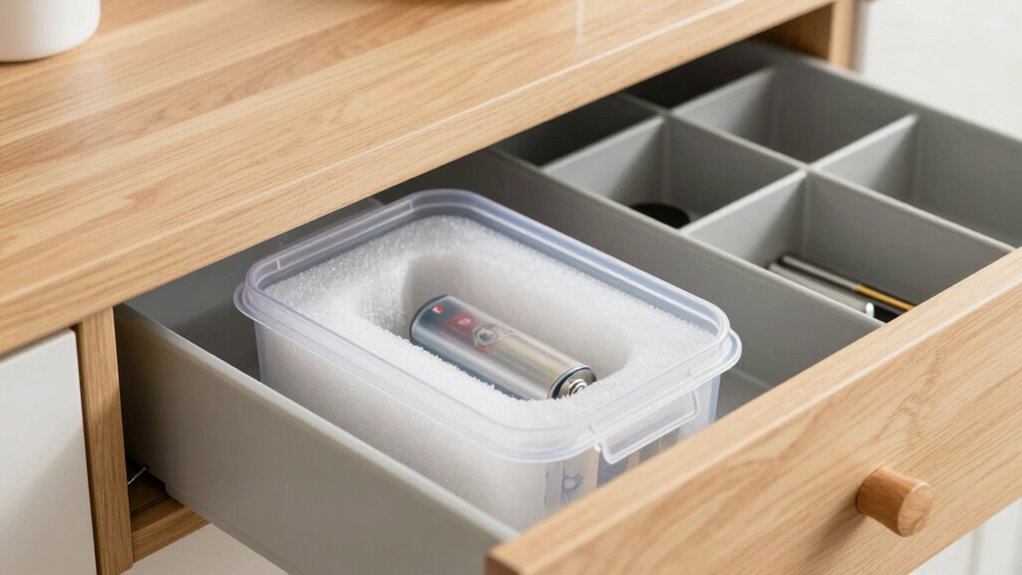
Using proper containers is essential. Store batteries in their original packaging if possible, or in a non-conductive container that prevents accidental contact with metal objects. This prevents short circuits, which can cause sparks or fires. Also, keep batteries separate from other metal items like keys or coins that could cause a short. If you’ve got multiple batteries, label them clearly, so you always know which is which and avoid confusion when you need to replace or use one. Proper storage techniques also help prevent accidental discharges and maintain battery integrity over time. Additionally, understanding battery chemistry can aid in choosing the best storage practices for different types of batteries. Regularly inspecting batteries and understanding their performance characteristics can help you identify potential issues early, prolonging their usability.
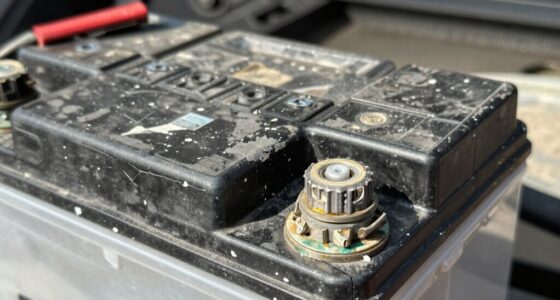
It’s also wise to periodically check your stored batteries. Look for any signs of damage such as bulging, corrosion, or leaks. If you notice any of these, dispose of the battery safely—don’t try to use or recharge it. Remember, battery safety isn’t just about preventing accidents; it’s also about ensuring your equipment functions properly when you need it most. Proper storage practices help you avoid unexpected failures and extend the life of your batteries.
Finally, store your spare batteries where they’re easily accessible but out of reach of children or pets. This reduces the risk of accidental ingestion or mishandling. Keep a regular schedule for inspection and replacement, especially if you store batteries for long periods. With these simple precautions, you’ll keep your spare batteries safe, functional, and stress-free to manage, so they’re ready whenever you need them without adding unnecessary worry to your home life. Additionally, understanding battery safety can help you make informed decisions about storage and handling practices.
As an affiliate, we earn on qualifying purchases.
Frequently Asked Questions
Can Spare Batteries Be Stored in a Refrigerator?
Yes, you can store spare batteries in a refrigerator, but it’s not always ideal. Refrigerator storage helps maintain a stable temperature, which can prolong battery lifespan. Just make certain the batteries are in a sealed container to prevent moisture damage and avoid placing them near food or drinks. Keep the temperature moderate—around 15°C or 59°F—to prevent battery capacity loss and ensure they stay in good condition longer.
How Long Can a Spare Battery Be Stored Safely?
Think of your spare battery as a delicate seed, needing just the right environment to thrive. Generally, you can store it safely for 2-5 years, depending on the battery type, but always consider its lifespan. Keep it in a cool, dry place—around 15°C to 20°C—since storage temperature impacts its longevity. Avoid extreme heat or cold, which can drain the battery’s life faster.
Is It Safe to Store Batteries Near Flammable Materials?
Storing batteries near flammable materials isn’t safe because it creates a fire hazard. Always keep batteries in a cool, dry place away from anything that could catch fire. Make certain proper ventilation around the storage area to prevent heat buildup that might cause a battery to overheat or leak. Avoid stacking batteries in tight spaces, and use designated containers to minimize risk. Safety first to protect your home and loved ones.
Do Different Battery Types Require Different Storage Conditions?
Yes, different battery types need unique storage conditions. You should consider battery chemistry because it affects how they react over time. For example, lithium-ion batteries prefer cool, dry storage temperatures to prevent overheating or capacity loss. Nickel-based batteries, like NiMH, also need a cool environment but are more tolerant of temperature variations. Always check the manufacturer’s recommendations for specific storage temperature ranges to guarantee safety and longevity.
How Often Should I Check My Stored Batteries?
Did you know batteries lose about 20% of their capacity each year if not checked? You should check your stored batteries every 3 to 6 months to maintain ideal battery lifespan. Follow proper storage guidelines—keep them in a cool, dry place and avoid extreme temperatures. Regular inspections help prevent leaks and guarantee your batteries remain ready when you need them, reducing stress and extending their usability.
battery storage container for home
As an affiliate, we earn on qualifying purchases.
As an affiliate, we earn on qualifying purchases.
Conclusion
Storing a spare battery doesn’t have to add stress to your home life. Keep it in a cool, dry place away from metal objects, and regularly check its condition. Did you know that over 60% of device failures are caused by poorly stored batteries? By taking simple precautions, you guarantee your backup is ready when you need it, without turning storage into a hassle. Stay organized and keep your devices powered smoothly!
As an affiliate, we earn on qualifying purchases.
non-conductive battery storage box
As an affiliate, we earn on qualifying purchases.
As an affiliate, we earn on qualifying purchases.
Halloween Picks
halloween
As an affiliate, we earn on qualifying purchases.