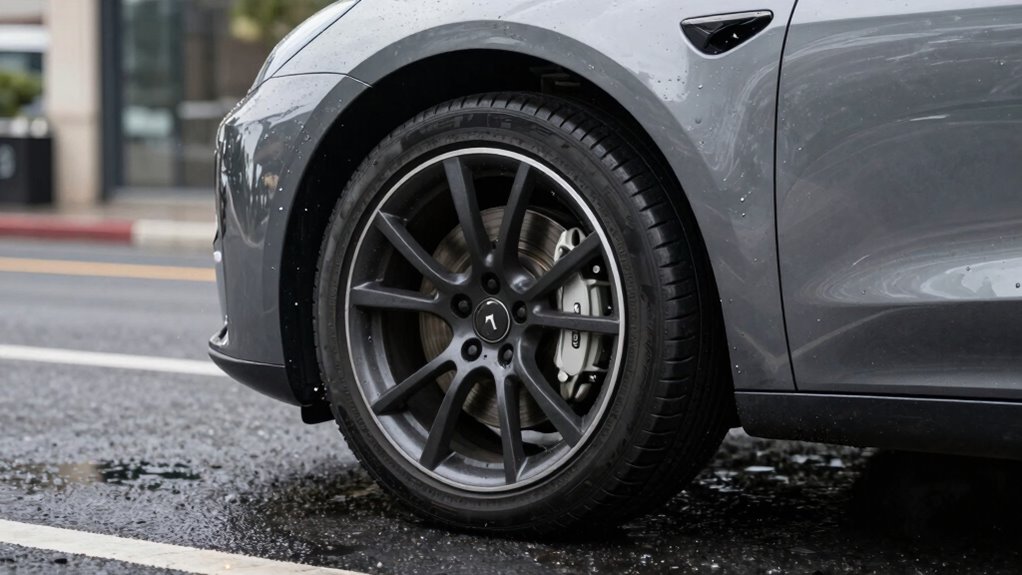

To quickly check if your brakes need work, find a safe, open space and gently accelerate to 20-30 mph. Press the brake pedal firmly and observe how it responds. A firm, steady resistance means your brakes are likely good, but if the pedal feels spongy, sinks, or you notice pulsation or pulling, it’s time to get them inspected. Pay attention to unusual noises too. Stick around to discover more signs of brake issues to keep you safe on the road.

Get bike and ride gear delivered free with Prime
- Fast, free delivery on millions of items
- Prime Video, Amazon Music and more included
- Member-only deals all year
Key Takeaways
- Accelerate to 20-30 mph in a safe area, then gently press the brake pedal to assess feel and response.
- A firm, steady pedal indicates healthy brakes; a spongy or sinking pedal suggests issues like air in lines or leaks.
- Listen for squealing, grinding, or screeching noises, which signal worn brake pads or debris lodged in the system.
- Observe if the vehicle pulls to one side during braking, indicating uneven brake pad wear or caliper problems.
- Prolonged stopping distance or delayed response during the test are signs that your brakes may need professional inspection.
Ever wondered how confidently your vehicle responds when you hit the brakes? Performing a quick braking feel test can give you valuable insight into your brake system’s condition. It’s a simple, effective way to determine if your brakes are functioning properly or if they might need professional attention. To start, find a safe, open space where you can test your brakes without risking other road users or obstacles. Once you’re ready, accelerate to a moderate speed—around 20-30 mph—and then firmly press the brake pedal. Pay close attention to how the pedal feels and how your vehicle responds.
During the test, you should notice a firm, steady resistance as you press the brake pedal. If it feels spongy or sinks toward the floor, this could be a sign of air in the brake lines or a leak in the system. Similarly, if the pedal pulsates or vibrates, it might indicate warped rotors or uneven brake pad wear. As you come to a stop, observe whether the vehicle halts smoothly or pulls to one side. Pulling can point to uneven brake pad wear or caliper issues, whereas a prolonged stopping distance might suggest worn brake pads or low brake fluid levels.
Another critical aspect of the braking feel test procedures is how quickly your vehicle responds once you press the pedal. A delayed reaction or a “soft” pedal that sinks before the vehicle slows down are warning signs of brake failure. These symptoms could mean your brake fluid is contaminated, or the master cylinder isn’t functioning properly. If you notice any of these signs of brake failure during your test, it’s essential to have your brakes inspected by a professional immediately. Ignoring these symptoms can lead to complete brake failure, risking your safety.
You should also listen for any unusual noises during the test, such as squealing, grinding, or screeching sounds. These noises often indicate worn brake pads, debris lodged in the brake system, or other issues that need attention. Conducting regular brake system checks helps you stay aware of your brakes’ health and catch problems early. Remember, your brakes are critical for safety, so don’t ignore signs of brake failure. If your vehicle doesn’t feel right or if you notice any irregularities during the braking feel test, it’s best to get a professional diagnosis. Addressing brake issues early can save you money and, more importantly, keep you safe on the road.
Frequently Asked Questions
How Often Should I Perform a Braking Feel Test?
You should perform a braking feel test at least once a month to guarantee your brakes are responsive. During this test, use your normal braking technique to gauge how your brakes feel and respond. Incorporate this into your regular brake maintenance schedule, especially if you notice any unusual softness or noise. Regular testing helps catch issues early, keeping you safe and extending the lifespan of your brake system.
Can Brake Feel Vary With Different Terrains?
You’ll definitely notice brake feel changing with terrain variation and driving conditions. On steep hills or uneven surfaces, your brakes might feel excessively soft or grabby, making every stop an adventure. Different terrains can cause your brake performance to fluctuate wildly, so don’t ignore these sensations. Always pay attention during your braking feel test, especially on challenging terrains, to ensure your brakes are in top shape and keep you safe no matter where you drive.
What Are Signs of Brake System Failure Besides Feel?
Besides feeling for issues, watch for signs like brake fluid leaks under your vehicle or a spongy, soft brake pedal, which indicate problems. Also, listen for squealing or grinding noises during braking, and check for increased stopping distances. Regularly inspect brake pad wear, and make certain brake fluid levels are adequate, as low fluid can cause brake failure. Address these signs promptly to maintain your braking system’s safety and reliability.
Is a Soft Brake Pedal Always a Sign of Trouble?
A soft brake pedal can signal trouble, especially if it feels like pushing through thick syrup. When brake fluid levels drop or air enters the system, pedal softness occurs, making your stopping power less responsive. You might notice it sinking slowly or feeling spongy under your foot. This isn’t normal—it’s a warning sign that your brake system needs attention before a potential failure. Always check the brake fluid and get it inspected promptly.
Can Brake Feel Be Affected by Tire Conditions?
Yes, brake feel can be affected by tire conditions. If your tires have poor grip or are worn out, you’ll notice reduced responsiveness during braking. The tire grip and the road surface interact to influence brake performance, making stops feel softer or less precise. Ensuring your tires are properly inflated, treaded, and suited for current road conditions helps maintain ideal brake feel and overall safety.
Conclusion
Now that you’ve done the braking feel test, you can better tell if your brakes need attention. Remember, a sudden, firm stop indicates healthy brakes, while a soft or spongy feel signals issues. Did you know that about 70% of brake failures are due to worn-out pads or fluid problems? Regular checks can prevent accidents and save you money. Stay alert, trust your instincts, and keep your brakes in top shape for safe, confident driving.
Halloween Picks
halloween
As an affiliate, we earn on qualifying purchases.