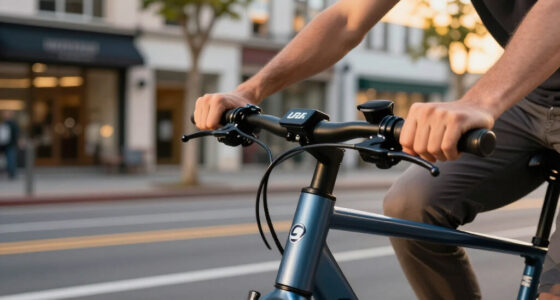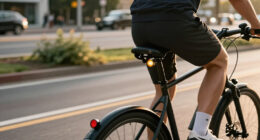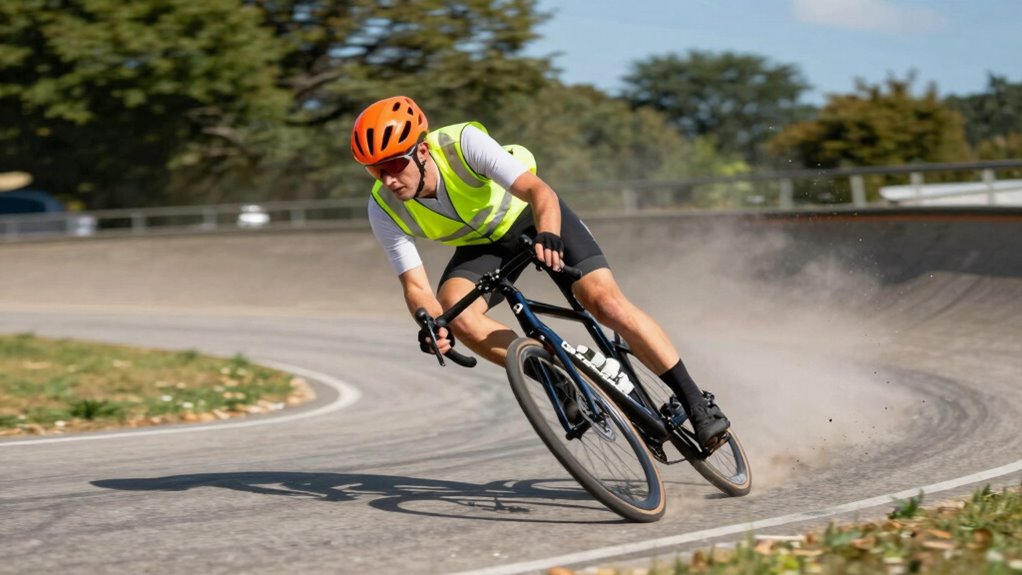

To practice emergency stops safely, start in an open area like a parking lot or designated training zone. Focus on applying firm, gradual pressure to your brakes to develop smooth, controlled stops. Practice reacting quickly to simulated hazards at low speeds, then gradually increase your pace as your confidence grows. Repeating these drills helps develop instinctive responses, so you can stop safely when real emergencies happen. Continue exploring these techniques to master quick, effective stopping under pressure.

Get bike and ride gear delivered free with Prime
- Fast, free delivery on millions of items
- Prime Video, Amazon Music and more included
- Member-only deals all year
Key Takeaways
- Use an open, flat area like a parking lot to practice emergency stops safely.
- Start at low speeds to build confidence and proper braking technique.
- Apply firm, gradual pressure to brake to avoid wheel lockup and skidding.
- Simulate hazards by placing objects or using visual cues to trigger quick stops.
- Gradually increase speed and complexity to develop instinctive, controlled emergency responses.
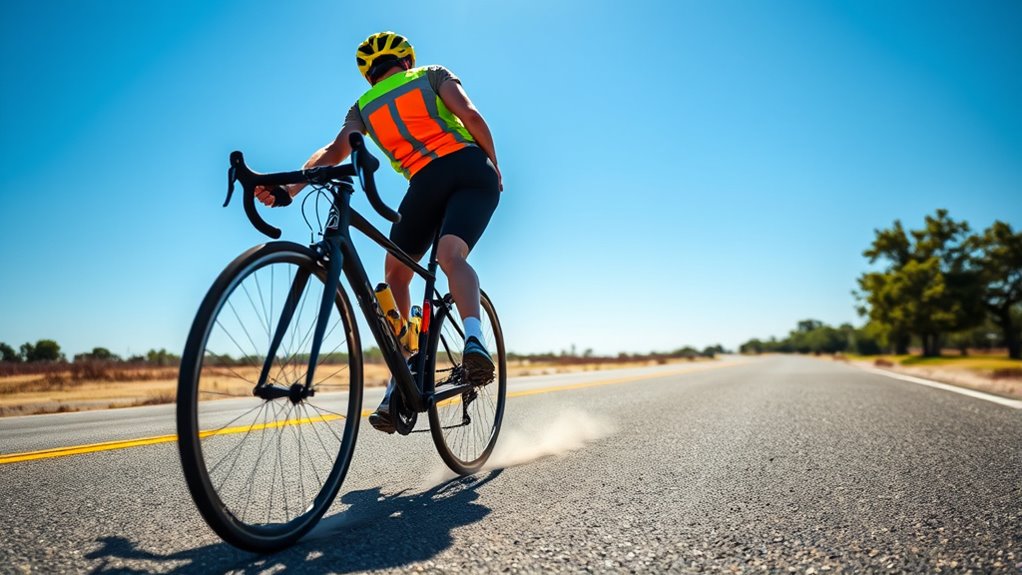
Ever wondered how to respond quickly and safely in an emergency stop situation? Practicing this skill is vital for your safety and confidence on the road. The key lies in mastering effective braking techniques and understanding your reaction time. When approaching an emergency stop scenario, your goal is to brake smoothly, promptly, and with control, so you can avoid obstacles without losing stability. To do this, you need to develop a clear understanding of your reaction time—the interval between recognizing a hazard and beginning to brake—and how to minimize it through practiced responses.
Master effective braking and reduce reaction time to respond swiftly and safely in emergencies.
The first step is to familiarize yourself with proper braking techniques. When you see a potential hazard, don’t slam the brakes suddenly unless it’s an absolute emergency; instead, apply firm, progressive pressure to the brake lever or pedal. This gradual increase in braking force helps prevent the wheels from locking and reduces the risk of skidding or losing control. With consistent practice, you’ll develop a feel for how much pressure to apply based on your bike’s response, which improves your overall braking technique. Remember, the goal is to decelerate quickly while maintaining stability. Over-braking can cause your bike to lock up, especially if you’re not familiar with your braking system, so controlling your brake application is essential.
Reaction time plays a significant role in emergency stops. The faster you recognize a problem and start braking, the shorter your stopping distance will be. To improve reaction time, stay alert and attentive while riding. Avoid distractions, and keep your focus on the road ahead. Practice drills where you simulate sudden hazards, such as a pedestrian stepping onto the road or a sudden obstacle. When doing these drills, ensure you’re in a safe, open area, like an empty parking lot or a designated training zone, so you can react without the risk of crashing. As you practice, aim to reduce your reaction time by consciously preparing yourself to respond as soon as a hazard appears. Incorporating techniques from home theatre projectors, such as quick adjustments and calibration, can help enhance your ability to respond swiftly and accurately in real situations.
Another effective way to improve your emergency stopping skills is to practice in controlled environments, gradually increasing the difficulty. Start at a low speed, simulate a hazard, and execute your braking techniques. Over time, increase your speed slightly and challenge yourself to react faster. Consistent practice helps engrain the proper response, making your reactions instinctive during real emergencies. Remember, the key to safe emergency stops isn’t just about braking hard but doing so with control and awareness. By honing your braking techniques and reducing reaction time through practice, you’ll become a more confident rider capable of handling sudden stops safely and effectively.
Frequently Asked Questions
Can Emergency Stops Be Practiced on Public Roads?
Practicing emergency stops on public roads isn’t recommended, as it can be dangerous and may violate legal considerations. You could endanger yourself and others, and law enforcement may view it as reckless driving. Instead, find a safe, designated area like an empty parking lot or closed course. This way, you can practice emergency stops safely without risking legal trouble or accidents on public roads.
What Safety Gear Is Recommended During Emergency Stop Drills?
They say safety first, and that’s especially true during emergency stop drills. You should wear protective clothing to shield your skin from potential scrapes and eye protection to prevent debris from causing injury. A helmet, gloves, and sturdy footwear are also recommended. Always make certain your gear fits well and is in good condition. Remember, proper safety gear helps you stay safe while practicing critical skills effectively.
How Often Should I Practice Emergency Stops?
You should practice emergency stops at least once a month to maintain sharp braking techniques and vehicle control. Regular drills help you respond instinctively and reduce reaction time in real situations. Focus on applying proper braking techniques, like progressive pressure, and keep your vehicle control steady during stops. Consistent practice guarantees you’re confident and prepared, minimizing the risk of accidents when sudden stops are necessary.
Are There Different Techniques for Different Vehicle Types?
Yes, there are different techniques for different vehicle types. You should learn vehicle-specific techniques, like how motorcycle emergency procedures differ from car stops. For motorcycles, practice quick, controlled braking while maintaining balance, whereas cars require firm, straight-line stops with pedal modulation. Understanding these differences helps you respond effectively in emergencies, reducing the risk of crashes. Always tailor your practice to your vehicle for safer, more reliable emergency stops.
What Should I Do if I Panic During an Emergency Stop?
If you panic during an emergency stop, stay calm to avoid losing control. Remember, studies show that most accidents happen when drivers panic. Use panic management techniques like taking deep breaths and focusing on steady steering. Stress reduction is key—remind yourself that you’re in control. Keep your hands firmly on the wheel, and don’t slam the brakes. Staying composed helps you react safely and regain confidence quickly.
Conclusion
Practicing emergency stops can feel tense, but remember, safety is your priority. With controlled drills, you gain confidence and control, turning hesitation into quick reactions. It’s about precision over speed, calmness over chaos. As you master these techniques, you’ll find yourself more prepared for real emergencies. Confidence grows where fear once lingered, and safety becomes second nature. In the end, it’s not just about stopping fast, but stopping safely—turning potential crashes into confident control.
Columbus Day / Indigenous Peoples' Day Picks
long weekend sales
As an affiliate, we earn on qualifying purchases.