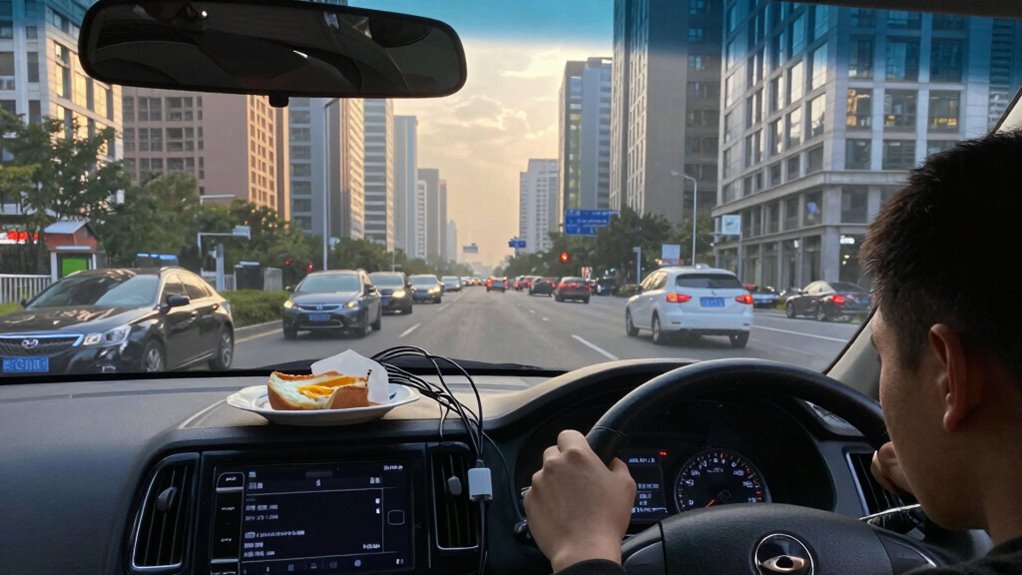

If your daily commute leaves you feeling exhausted, stressed, or mentally drained, it’s a sign it’s too long for your current situation. Notice if you’re rushing, feeling overwhelmed before the day even starts, or spending excessive hours in traffic or crowded transit. Longer commutes can impact your energy, focus, and overall well-being. If these signs sound familiar, there are better strategies to improve your routine—keep going to find out more.
Key Takeaways
- Feelings of exhaustion, stress, or mental drain before starting work indicate a potentially excessive commute.
- Commuting exceeding one hour each way often signifies an unsustainable travel routine.
- Noticeable decline in focus, productivity, or overall well-being linked to your travel time suggests it’s too long.
- Rushing, feeling overwhelmed, or skipping breaks due to travel time are signs your commute may be excessive.
- If commuting impacts your physical health or personal life negatively, it likely needs reevaluation.

When your daily commute starts to feel overwhelming or leaves you exhausted before the workday even begins, it’s a clear sign that your current setup might be too long. You might find yourself dreading the mornings or feeling drained by the time you reach your destination. If you’re working remotely some days or considering it, your commuting habits can serve as a valuable indicator of whether your current routine is sustainable. Longer commutes often lead to increased stress, less free time, and diminished overall well-being. If you notice that your commute is eating into your mornings or evenings, it’s time to reassess.
Think about how much energy you have when you arrive at work. Do you feel alert and ready to tackle your tasks, or do you often start the day feeling sluggish and mentally drained? Extended commutes tend to sap your energy, making it harder to focus and be productive. They can also impact your mental health, leading to frustration or feelings of being trapped in a cycle of endless travel. If you’re working remotely, it’s easier to notice these effects since you don’t have to leave your home. Still, your habits—such as staying in bed longer or skipping breaks—might be a response to a lengthy, stressful commute that you’re trying to compensate for.
Extended commutes drain your energy, making it harder to focus and impacting your mental well-being.
Your commuting habits can tell you a lot about whether your current setup is sustainable. Are you consistently rushing and feeling stressed just to get to work on time? Do you find yourself spending hours in traffic or on crowded transit? These signs suggest your commute may be too long. If you’re spending more than an hour each way, that’s a strong indicator that it’s time to rethink your routine. Remote work options can greatly cut down on this travel time, giving you back precious hours. If your employer offers flexible schedules or partial remote work, consider negotiating for these options to reduce your daily travel load. Additionally, understanding the average commute times can help you evaluate whether your daily travel is reasonable or excessive.
Ultimately, your well-being and productivity are the best measures of whether your commute is too long. If it’s taking a toll on your physical health, mental clarity, or personal life, it’s worth exploring ways to shorten it. Whether that means relocating closer to work, switching jobs, or leveraging remote work opportunities, the goal is to create a setup that minimizes stress and maximizes your time and energy. Recognizing the signs early can help you make smarter choices about your work routine and improve your overall quality of life.
ergonomic travel pillow for long commutes
As an affiliate, we earn on qualifying purchases.
As an affiliate, we earn on qualifying purchases.
Frequently Asked Questions
How Can I Measure My Daily Commute Time Accurately?
You can measure your commute duration accurately by using a reliable GPS app or a smartphone timer during your trips. Enable location tracking for precise travel time measurement, and check the app’s history for consistent data. To improve travel time accuracy, avoid interruptions like pauses or detours. Tracking your commute regularly helps you understand your actual travel time, so you can decide if your current setup suits your daily needs.
What Are Common Signs of Commute-Related Stress?
You often feel exhausted, irritable, or overwhelmed, which signals commute-related stress. You might notice difficulty focusing at work or a decline in your work-life balance. Physical signs like headaches or muscle tension also indicate stress. If your commute leaves you anxious or fatigued, it’s time to contemplate stress management strategies or reevaluate your daily routine to improve overall well-being and maintain a healthier work-life balance.
How Does Long Commutes Affect Mental Health?
Long commutes can negatively impact your mental health by increasing stress triggers and causing fatigue. You might feel overwhelmed, anxious, or irritable more often, and your overall mood could decline. The constant pressure of travel time reduces relaxation and personal time, leading to burnout. Recognizing these signs helps you understand how your commute affects mental health, encouraging you to explore ways to reduce travel stress or adjust your routine for better well-being.
Are There Apps to Help Optimize My Route?
Did you know the average commuter spends over 54 hours a year stuck in traffic? Traffic apps are a game-changer for route planning, helping you avoid delays and save time. Apps like Google Maps, Waze, and Apple Maps provide real-time traffic updates, alternate routes, and estimated arrival times. Using these traffic apps, you can optimize your route, reduce stress, and make your daily commute more efficient and less frustrating.
When Should I Consider Changing Jobs Due to Commute?
You should consider changing jobs when your commute starts negatively impacting your work-life balance and job satisfaction. If you find yourself constantly stressed, exhausted, or missing out on personal time due to long travel hours, it’s a clear sign. Prioritize a role closer to home or with flexible options. A shorter, more manageable commute can boost your overall happiness and productivity, making it worth exploring new opportunities.
noise cancelling headphones for commuting
As an affiliate, we earn on qualifying purchases.
As an affiliate, we earn on qualifying purchases.
Conclusion
If your daily commute feels like a journey too grand for your current setup, it’s a gentle nudge to reconsider your routine. Sometimes, the road ahead isn’t just about distance but about finding a balance that nurtures your well-being. A shorter, more mindful route might be just what you need to keep your spirit energized and your days brighter. Remember, a smoother path often leads to a happier journey—sometimes, it’s worth charting a new course.
compact portable charger for travel
As an affiliate, we earn on qualifying purchases.
As an affiliate, we earn on qualifying purchases.
comfortable anti-fatigue standing mat
As an affiliate, we earn on qualifying purchases.
As an affiliate, we earn on qualifying purchases.