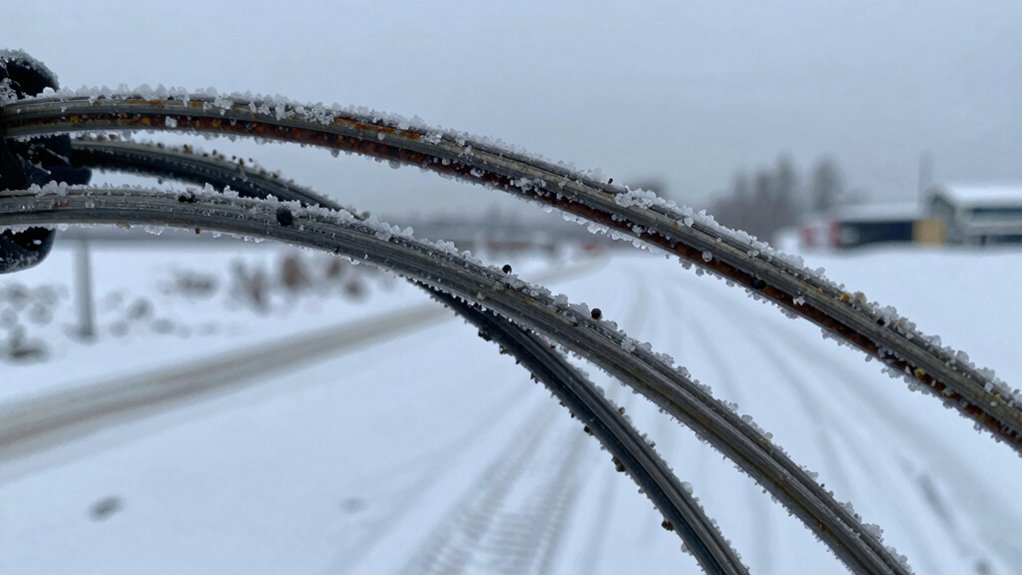

Salt, grit, and moisture from winter conditions can cause your brake cables to corrode, stick, and lose responsiveness. Exposure to salt and grit accelerates rust formation and wears down the cable lining, making braking feel stiff or unresponsive. Cold temperatures can also cause cables to freeze or become sticky. To keep your brakes working smoothly, it’s vital to regularly clean, lubricate, and inspect cables. Keep going to discover effective tips for maintaining reliable brakes during winter.
Key Takeaways
- Salt and grit cause corrosion and rust on brake cables, leading to sticking and reduced responsiveness.
- Moisture from salt and grit accelerates cable wear and promotes ice formation, hindering smooth movement.
- Grit particles embed in lubrication, increasing friction and causing cables to stick during cold weather.
- Salt residue attracts moisture, promoting corrosion and sticky cables over time.
- Regular cleaning, lubrication, and rust prevention help minimize salt and grit effects on brake cables.
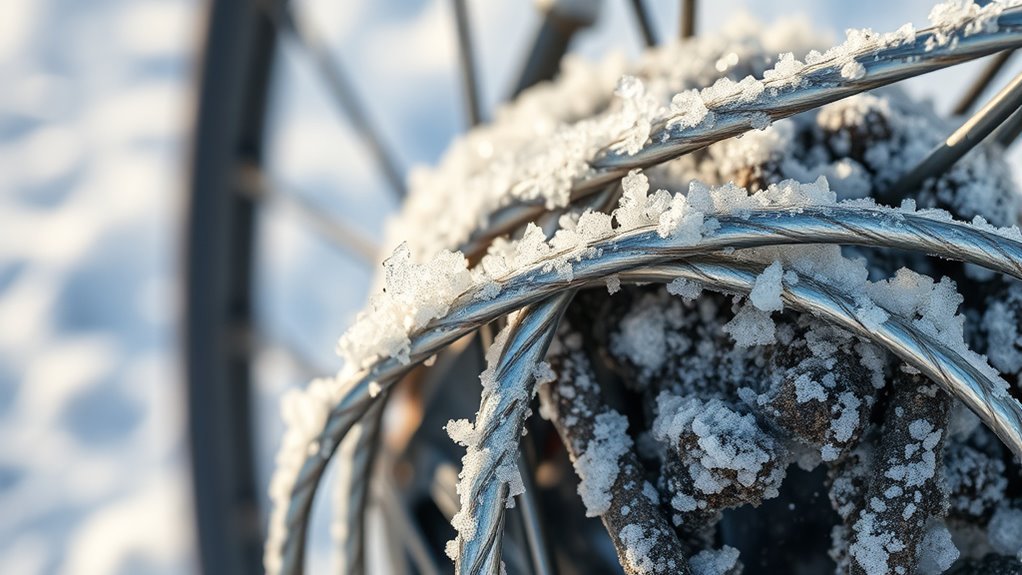
Winter weather can take a toll on your bike’s brake cables, causing them to freeze, corrode, or become less responsive. As snow, salt, and grit coat the roads, your cables are exposed to harsh conditions that can accelerate wear and damage. To keep your bike performing safely, it’s essential to understand how to prevent corrosion and maintain proper cable lubrication.
Corrosion prevention starts with regular inspection. Salt and moisture are the main culprits behind rust forming on your brake cables. When these elements settle on the metal, they create a corrosive environment that weakens the cable’s integrity over time. To combat this, keep your cables clean and dry after rides in winter conditions. Wipe down the cables and surrounding areas with a clean cloth, removing any salt residue. Applying a protective coating or rust inhibitor specifically designed for bike components adds an extra layer of defense against corrosion. These products help prevent moisture from settling and slow down rust formation, extending the lifespan of your brake cables.
Cable lubrication plays a vital role in ensuring smooth operation during cold months. When you lubricate your cables properly, you reduce friction, which is especially important when grit and grime accumulate. Use a high-quality, water-resistant lubricant designed for bike cables. Apply it generously to the inner cable, making sure it reaches the points where the cable contacts the housing and levers. This not only improves responsiveness but also helps prevent the cable from sticking or freezing in place. During winter, it’s a good idea to re-lubricate more frequently, as snow and grit can wash away or clog the lubricant, causing the brake action to feel sluggish or stiff.
Additionally, understanding the importance of cable tension and its proper adjustment can prevent unnecessary strain and improve brake performance during winter riding. If your cables do freeze or become sticky, avoid forcing the brakes. Instead, gently work on freeing the cable using warm water or a hairdryer to melt any ice. Afterward, reapply lubricant to restore smooth movement. Regular maintenance, including checking cable tension and replacing frayed or corroded cables promptly, keeps your braking system reliable through the winter months.

PJ1 1-12 Cable Lube – 11 Ounce
Cleans and lubes in one easy application
As an affiliate, we earn on qualifying purchases.
As an affiliate, we earn on qualifying purchases.
Frequently Asked Questions
Can Salt Damage My Bike’s Brake Cables Permanently?
Salt can cause corrosion on your bike’s brake cables over time, potentially leading to permanent damage if not addressed. To prevent this, you should regularly clean and lubricate your cables for corrosion prevention. If the cables become severely corroded or stick despite maintenance, cable replacement might be necessary to ensure your bike’s safety and smooth braking. Don’t ignore signs of rust or stiffness—stay proactive to protect your ride.
How Often Should I Lubricate Brake Cables During Winter?
Think of your brake cables as tiny engines that need regular oil to run smoothly through winter’s icy grip. You should lubricate your cables every 2-4 weeks during winter, especially after riding in salt or grit. This simple winter maintenance keeps friction at bay, preventing rust and sticking. By maintaining a regular cable lubrication routine, you guarantee your brakes respond swiftly, even when winter tries to slow you down.
Are There Specific Brake Cable Types Better Suited for Winter?
You should opt for stainless steel or coated brake cables in winter, as their materials withstand corrosion better. Cables with a polymer or rubber coating can also be advantageous because they provide extra protection against salt and grit. These coating options help keep the cable moving smoothly and prevent sticking. Choosing cables with durable, corrosion-resistant materials ensures better performance and longevity during harsh winter conditions.
Does Grit From Plowed Roads Affect Brake Cable Performance?
Grit from plowed roads can substantially impact your brake cable performance. As grit accumulates, it traps moisture and accelerates road salt corrosion, causing cables to stick or become sluggish. You might not notice it right away, but over time, this buildup hampers response and safety. Regular maintenance, including cleaning and lubricating your cables, is essential to prevent grit and salt from compromising your braking system during winter’s harsh conditions.
Can I Prevent Brake Cables From Freezing in Extremely Cold Weather?
Yes, you can prevent brake cables from freezing in extremely cold weather. To do this, guarantee your cables are well-insulated with proper cable insulation, which helps keep moisture out. Additionally, store your bike in a dry, sheltered area during winter to reduce exposure to moisture and grit. Regularly lubricate the cables to prevent rust and sticking, and consider applying a winter-specific lubricant for extra protection.
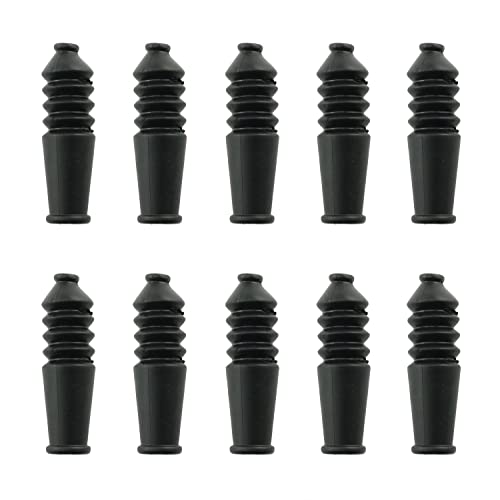
HJGarden 10PCS Bicycle V-Brake Cable Brake Boot Rubber, Brake Boot Rubber, Black
Package: contains 10 pieces of V-brake elbow dust boot, which is enough for you to replace in your…
As an affiliate, we earn on qualifying purchases.
As an affiliate, we earn on qualifying purchases.
Conclusion
As you push your bike through the snowy streets, it’s no surprise that salt and grit have found their way onto your brake cables. Coincidentally, just as you need reliable brakes most, those tiny particles cause them to stick. Remember, regular maintenance and a quick clean can prevent surprises when winter’s chill hits. So, next time you face icy roads, stay prepared—your smooth ride might just depend on it.
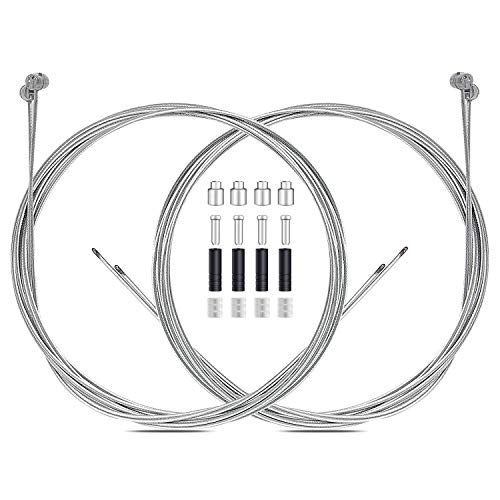
4PCS Premium Bike Brake Cable Set,Universal Standard Bicycle Brake Cable, Professional Bicycle Brake line For Front and Rear Mountain MTB or Road Bikes,include Free Cable Cap End Crimps accessories 2M
【2M LENGTH COMPLETE REPLACEMENT SET】 The Brake cable is Universal standard, Each cable consists of 19 wires,You will…
As an affiliate, we earn on qualifying purchases.
As an affiliate, we earn on qualifying purchases.

Rock N Roll Cable Magic Lubricant, 1-Ounce
This is the stuff for handlebar, seat post and any other joints
As an affiliate, we earn on qualifying purchases.
As an affiliate, we earn on qualifying purchases.