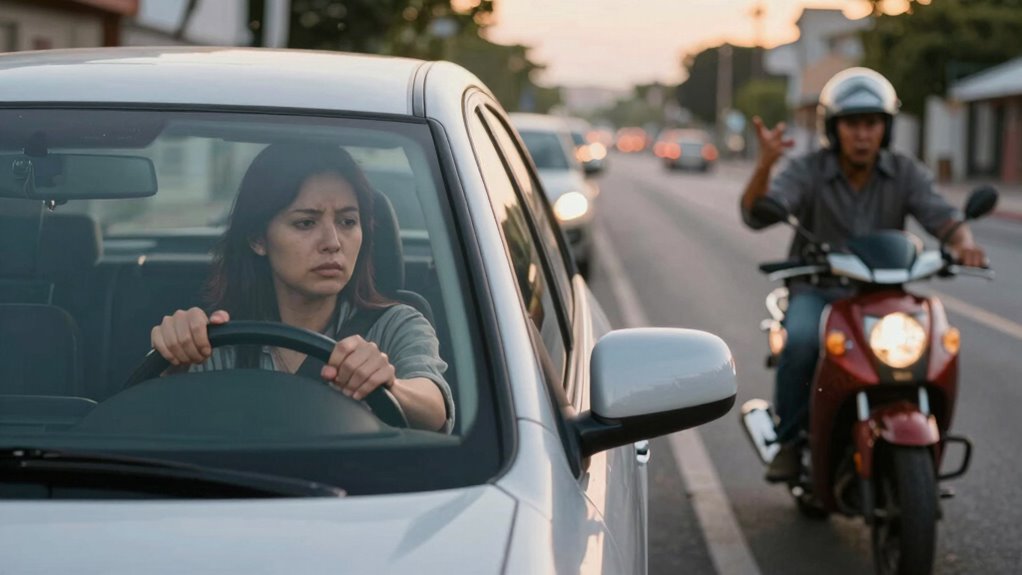

When you face road rage, stay calm by taking deep breaths or counting to ten to pause before reacting. Focus on safety over anger, avoid eye contact with aggressive drivers, and respond calmly with neutral words like “Have a good day.” If you feel overwhelmed, safely pull over to breathe or reset. By practicing these simple techniques, you’ll prevent escalation and maintain control—discover more tips to stay composed during stressful driving moments.
Key Takeaways
- Recognize early signs of anger and take deep breaths or count to ten to pause reactions.
- Avoid eye contact and refrain from engaging aggressive drivers to prevent escalation.
- Shift focus to safety and visualize a calm, safe arrival to reinforce peaceful responses.
- If overwhelmed, pull over safely to breathe and reset before continuing to drive.
- Use neutral, polite language and small actions, like a brief window roll-down, to communicate calmly.

Road rage can strike unexpectedly, turning a minor frustration into a dangerous confrontation. When you’re behind the wheel and someone cuts you off or delays your progress, it’s easy to feel anger bubbling up. But your response can make all the difference. Managing your emotions on the road starts with emotional regulation—your ability to stay calm and composed during stressful situations. Recognizing your feelings early gives you a chance to choose a better reaction rather than reacting impulsively. Instead of letting anger take over, take a deep breath or count to ten. These simple de escalation techniques help you pause and regain control before your emotions escalate further.
Managing emotions early helps prevent road rage from escalating into dangerous situations.
When you notice yourself getting upset, remind yourself that reacting aggressively won’t solve anything. Instead, try to shift your focus. Think about the bigger picture—your safety and the safety of others. A calm, measured response can diffuse tension. If another driver is aggressive or rude, avoid eye contact and don’t engage. Responding with anger only fuels the conflict. Instead, keep your voice steady if you need to speak or roll down the window briefly to say something neutral, like “Have a good day,” and then ignore any provocation. These small actions are de escalation techniques that help prevent situations from spiraling out of control. Building skills in emotional regulation is essential for maintaining composure on the road, especially during stressful situations.
It’s also helpful to visualize a peaceful outcome. Imagine yourself arriving at your destination safely and calmly. This mental image reinforces your goal of staying composed. If you find yourself feeling overwhelmed, pull over safely if possible, take a few deep breaths, and reset. Remember, your ability to control your emotional regulation directly impacts how you handle road rage. You can choose to respond thoughtfully rather than react impulsively.
Practicing these strategies consistently will make it easier over time. The goal isn’t to suppress your feelings but to manage them effectively. When you employ de escalation techniques, you’re actively choosing to keep the situation from escalating further. This not only keeps you safer but also helps create a calmer environment on the road. Road rage is natural, but how you handle it can prevent accidents, injuries, and unnecessary stress. By staying mindful, using calming techniques, and maintaining emotional regulation, you can navigate even the most frustrating driving moments with calm and confidence.
Frequently Asked Questions
How Can I Recognize Early Signs of Road Rage?
You can recognize early signs of road rage by paying attention to your feelings and reactions. If you notice rising anger, clenched fists, or rapid breathing, it’s a cue for emotional regulation. Keep in mind that anger management is key; take deep breaths, stay calm, and avoid aggressive gestures. Recognizing these signs early helps you prevent escalation and maintain control, making your driving experience safer and less stressful.
What Are Quick Mental Exercises to Stay Calm?
When feeling overwhelmed on the road, use quick mental exercises like breathing techniques—inhale deeply for four seconds, hold, then exhale slowly for four seconds. Practice mindfulness exercises by focusing on your surroundings or sensations, like the feel of the steering wheel. These strategies help you stay calm, reduce stress, and prevent escalation. Keep practicing these techniques to make staying composed a natural response whenever you encounter stressful driving situations.
Should I Avoid Eye Contact With Aggressive Drivers?
Avoid eye contact with aggressive drivers, as studies show it can escalate tension. When you make eye contact, they might interpret it as a challenge or aggressive signaling, increasing the risk of conflict. Instead, keep your focus on the road and your surroundings, maintaining a calm demeanor. This non-confrontational approach helps de-escalate potential road rage situations and keeps you safe. Remember, your safety comes first—don’t give aggressive drivers a reason to escalate.
How Can I Prevent Road Rage From Affecting My Mental Health?
You can prevent road rage from affecting your mental health by practicing mindfulness techniques and stress management. When you feel anger rising, take deep breaths, focus on the present moment, and remind yourself that staying calm benefits your well-being. Use these strategies regularly, especially during stressful drives, to keep your mind clear and reduce the negative impact of road rage on your mental health.
What Are Legal Considerations When Confronting an Aggressive Driver?
When confronting an aggressive driver, you should consider legal liability and follow proper reporting protocols. Always prioritize your safety and avoid direct confrontation that could escalate the situation. If you witness dangerous driving, contact law enforcement and provide detailed descriptions, including license plates and vehicle types. Remember, reporting these incidents helps authorities address aggressive behavior legally, protecting everyone on the road without risking personal legal issues or escalation.
Conclusion
Next time you feel your anger rising on the road, remember that staying calm can defuse the situation. Responding with patience rather than aggression keeps everyone safe and preserves your peace of mind. After all, isn’t it better to arrive at your destination with your nerves intact than to risk an unnecessary confrontation? Practicing these calm responses not only improves your driving experience but also contributes to a safer, more respectful road environment for all.