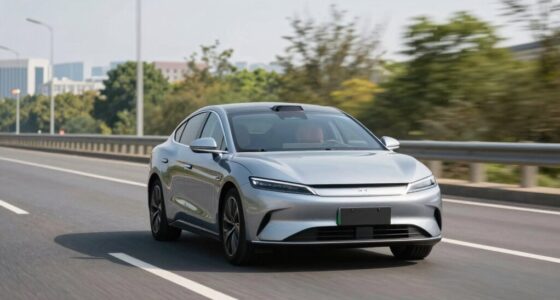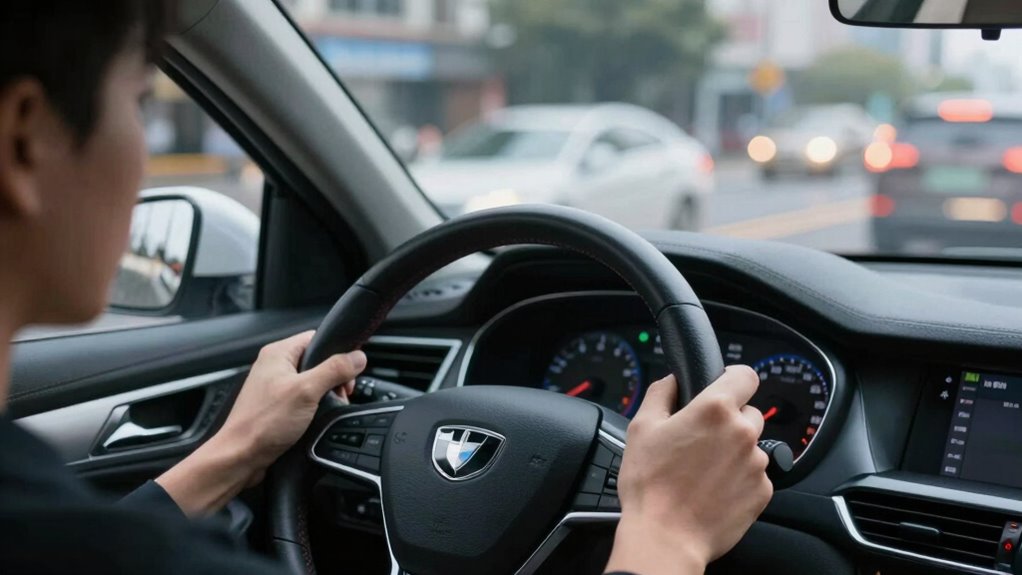
Skilled commuters quickly observe subtle cues like head movements, eye contact, and small hand gestures that signal an upcoming turn. You notice body language shifts, such as leaning or shifting position, and changes in vehicle alignment. These physical signals often come before turn signals activate, giving you an early warning of the driver’s intentions. Paying close attention to these details helps you anticipate actions better—if you look deeper, you’ll discover even more ways to improve your awareness.
Key Takeaways
- Drivers often display subtle head movements or eye contact indicating an upcoming turn.
- Hand gestures or small physical cues near the steering wheel signal intended maneuvers.
- Slight vehicle shifts or positioning on the road suggest an imminent turn.
- Turn signals may activate just before the turn, but physical cues are more reliable.
- Continuous observation of driver body language provides early warning of their next move.
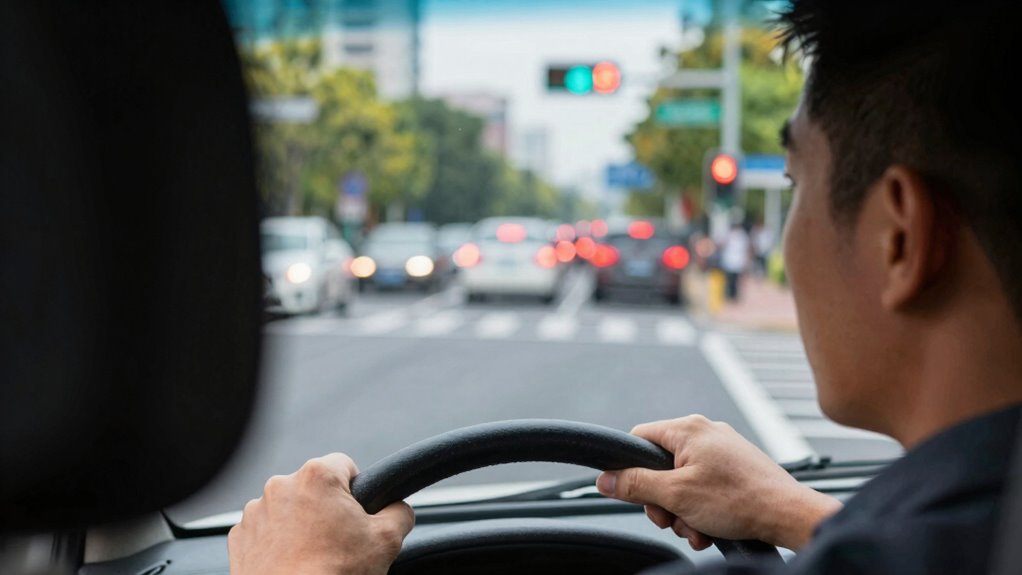
When a driver prepares to turn, skilled commuters instinctively pick up on subtle cues that indicate their intentions before the turn is even executed. Your heightened pedestrian awareness allows you to notice small details that others might overlook. For example, you observe a driver’s head movement or slight change in eye contact, signaling their intent to turn. These signaling cues are often subtle but tell you a lot about what’s coming next. You might see a driver’s hand move towards the steering wheel, or perhaps a quick glance in the side mirror indicating they’re preparing to change direction. These small gestures serve as silent communication, alerting you to the upcoming maneuver.
Skilled commuters notice subtle cues like head movements and eye contact to anticipate driver turns early.
Your ability to pick up on pedestrian awareness is equally crucial. You understand that drivers often react to your presence, and they tend to signal their intentions to ensure safety. For instance, you might notice a driver easing off the accelerator or a slight shift in their position on the road. They might also activate their turn signal just moments before executing the turn, but even if they don’t, you can often anticipate their move based on their body language. This ongoing observation helps you stay a step ahead, giving you more time to prepare and respond appropriately.
As you approach an intersection or a driveway, you keep a close eye on the driver’s behavior. You notice that they’re slightly leaning their head or subtly shifting their hands, which often indicates an imminent turn. These cues are especially helpful in busy areas where multiple vehicles and pedestrians are present. Your attentiveness to signaling cues allows you to adjust your speed or position yourself more safely, avoiding potential conflicts. You also understand that some drivers might not use their signals at all, so you rely heavily on their physical cues and overall vehicle movement. Recognizing driver body language can often provide early warning of their intentions. Being aware of driver signals is essential for maintaining safety and predicting their next move. Additionally, your awareness of road positioning helps you gauge their next step more accurately. Recognizing driver awareness can enhance your ability to anticipate their actions even further.
Furthermore, your knowledge of traffic flow enhances your situational awareness, enabling you to predict how drivers will react based on the overall movement of vehicles around you. Your awareness extends beyond just watching the driver. You’re constantly scanning your surroundings, observing pedestrians who might step into the crosswalk or other vehicles that could influence the driver’s decision. This comprehensive awareness helps you anticipate actions, making you more prepared for turns or stops. The combination of pedestrian awareness and the ability to read signaling cues makes you a skilled commuter, capable of navigating complex traffic situations smoothly and safely. In essence, your vigilance and perceptiveness provide you with a significant advantage, allowing you to act proactively rather than reactively.
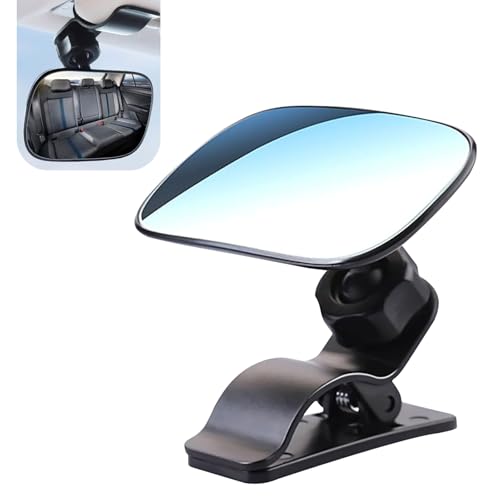
DYEKNEE 1 PC Car Sun Visor Child Observation Mirror, 3.5" x 2.2" HD Glass 360 Degree Adjustable Curved Large View Mirror, Multi-function Clip-on Makeup Mirror, Universal for Most Cars (Black)
- Child Observation: Monitor children safely while driving
- HD Glass Mirror: Clear, distortion-free high-definition view
- 360-Degree Adjustable: Fully rotatable for optimal viewing
As an affiliate, we earn on qualifying purchases.
As an affiliate, we earn on qualifying purchases.
Frequently Asked Questions
How Do Skilled Commuters Predict a Driver’s Turning Intentions Early?
You notice a driver’s turning intentions early by observing subtle cues like driver hesitation and the way they position their vehicle. Skilled commuters also pay close attention to road signage that indicates upcoming turns. These cues help you anticipate their actions, allowing you to stay prepared. Recognizing hesitation and understanding signage give you an edge in predicting turns before the driver even signals, enhancing safety and smooth navigation.
What Cues Do Skilled Commuters Look for in Driver Body Language?
Imagine you’re a detective, deciphering clues. You notice a driver’s eye contact flickering toward mirrors and their vehicle posture subtly shifting, signaling intent. Skilled commuters watch for these cues—like a quick glance for eye contact or a slight lean—that reveal a driver’s next move. These tiny details tell you when a driver is about to turn, helping you react early and stay safe on the road.
Are There Specific Environmental Factors That Influence a Driver’s Turn Signals?
Environmental factors like road signage and vehicle positioning heavily influence a driver’s turn signals. When you notice clear signage indicating a turn or lane change, drivers are more likely to signal early. Similarly, if a vehicle shifts position within its lane or approaches an intersection, it signals intent. You can often predict a driver’s move by observing how they position their vehicle relative to road markings and signage cues.
How Does Traffic Flow Affect a Commuter’s Ability to Anticipate Turns?
Traffic flow considerably impacts your ability to anticipate turns; smooth traffic patterns make it easier to predict when a driver will signal or slow down. You notice road signage early, providing clues about upcoming turns. When traffic is congested or unpredictable, you stay alert for subtle cues like brake lights or lane shifts, helping you anticipate turns even before a driver signals. This awareness keeps your commute safer and more efficient.
Can Weather Conditions Impact a Commuter’s Ability to Notice a Turn Early?
Back in the day, weather definitely impacts your ability to notice a turn early. Heavy rain or fog can obscure vehicle signage and make the road surface slick, delaying your perception of an upcoming turn. When visibility drops, you might not see the turn signal or road markings in time. So, always stay alert, especially in adverse weather, and pay close attention to the road surface and signage to anticipate turns better.

TIANWIDJEW 12V LED Indicator Small Light Waterproof, 1/2"(12mm) Panel Cutout 12V 24V Metal LED Indicator with 22AWG 150MM Wire – High Beam, Single Arrow Left/Right, Parking Indicat-or, 4PCS
- Pack of 4 for affordability: Includes green, blue, and red indicators
- High-quality construction: Nickel-plated metal housing with laser-etched pattern
- Universal voltage compatibility: Operates on 12V and 24V systems
As an affiliate, we earn on qualifying purchases.
As an affiliate, we earn on qualifying purchases.
Conclusion
As a skilled commuter, you catch the subtle signs before a driver turns—glances, hand movements, hesitation. But what if the next moment reveals something unexpected? Will you be ready to react quickly or be caught off guard? Your keen eye keeps you one step ahead, constantly sensing what’s about to happen. The road holds secrets, and your vigilance might just be the key to steering surprises lurking around the bend. Are you prepared for what’s next?
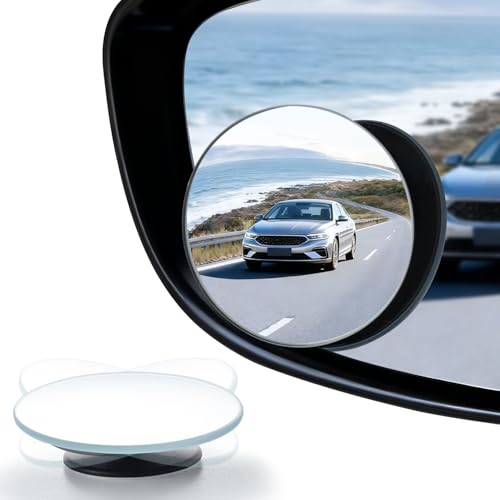
LivTee Blind Spot Mirror, 2" Round HD Glass Frameless Convex Rear View Mirrors Exterior Accessories with Wide Angle Adjustable Stick for Car SUV and Trucks, Pack of 2
- 360 Degree Adjustable: Rotate and sway for optimal view
- Enhanced Safety: Eliminate blind spots for safer driving
- HD Glass Clarity: Clear, frameless, rust-resistant convex mirror
As an affiliate, we earn on qualifying purchases.
As an affiliate, we earn on qualifying purchases.
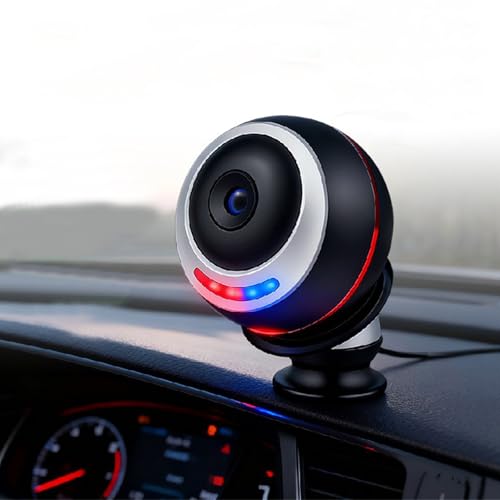
AI Driver Fatigue Alarm System with Facial Recognition, Dashboard Mounted Camera with Night Vision and Real-Time Distraction Detection
- AI Facial Recognition: Real-time behavior analysis with high-performance AI chip
- High-Speed DMS Module: Supports 25 fps with HD lenses for detailed tracking
- Night Vision Function: Infrared lights enable clear night and low-light detection
As an affiliate, we earn on qualifying purchases.
As an affiliate, we earn on qualifying purchases.