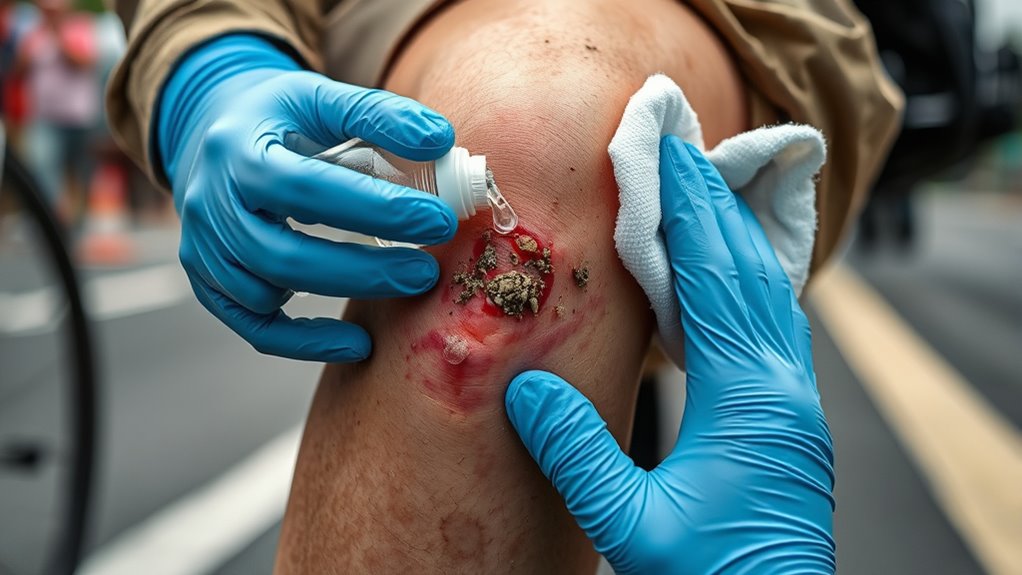
If you get road rash, start by washing your hands or wearing gloves to prevent infection. Gently rinse the wound with clean water to remove dirt and debris, avoiding harsh scrubbing. Pat it dry with a clean cloth, then apply a mild antiseptic. Cover it with a sterile bandage, and change the dressing when it gets dirty or wet. Keep an eye out for signs of infection—stay safe and learn more about proper wound care.

Get bike and ride gear delivered free — and shop member deals
- Fast, free delivery on millions of items
- Access to Prime Big Deal Days deals on October 6–7
- Prime Video, Amazon Music and more included
Key Takeaways
- Wash hands thoroughly or wear disposable gloves before treating the wound.
- Rinse the road rash gently with clean, running water to remove dirt and debris.
- Pat the area dry with a sterile gauze or clean cloth without rubbing.
- Apply a mild antiseptic solution to minimize bacteria, avoiding harsh chemicals like hydrogen peroxide.
- Cover the wound with a sterile, non-stick bandage and change it regularly to keep the area clean.
Have you ever wondered what to do if someone nearby suddenly collapses or starts choking during your daily commute? It’s a situation that can happen unexpectedly, especially when you’re on the go. Knowing basic first aid can make a significant difference, and understanding how to handle road rash from a bike accident is no exception. When you’re out biking, safety should always be a priority, and that means not only following traffic laws but also knowing how to treat injuries like abrasions or road rash properly.
Bike safety is essential, and part of that involves being prepared for accidents. If you fall off your bike or someone else does nearby, the first step is to assess the situation carefully. Make sure the area is safe before approaching the injured person. Once you’re sure it’s safe, check for responsiveness and breathing. If the person is unresponsive but breathing, keep them comfortable and avoid moving them unless there’s an immediate danger, like ongoing traffic or fire. If they are not breathing, you’ll need to start CPR if you’re trained, calling emergency services immediately.
Assess the scene first, then check responsiveness and breathing before helping an injured cyclist.
When dealing with road rash, your main goal is to prevent infection and promote healing. Start by washing your hands thoroughly or wearing disposable gloves if available. Gently rinse the wound with clean, running water to remove dirt, gravel, and debris embedded in the skin. Do not scrub harshly; a gentle stream is enough to clear away surface contaminants. After cleaning, pat the area dry with a clean cloth or sterile gauze—not rubbing, which can cause further skin damage. Applying a mild antiseptic solution can help minimize bacteria, but avoid using harsh chemicals like hydrogen peroxide or iodine directly on the wound, as they can damage tissue. Using appropriate carrier oils with antiseptics can also soothe the skin and support healing.
Cover the wound with a sterile, non-stick bandage or dressing to protect it from further contamination. If you’re riding, it’s advisable to change the dressing once you reach your destination or when it becomes wet or dirty. Keep an eye on signs of infection, such as increased redness, swelling, warmth, or pus — if these appear, seek medical attention promptly. Remember, safety on the road also involves knowing traffic laws and riding responsibly, but being prepared to treat minor injuries like road rash is equally critical. By taking these steps, you can help ensure quicker healing and reduce the risk of complications, making your commute safer for everyone involved.
As an affiliate, we earn on qualifying purchases.
Frequently Asked Questions
Can I Use Hydrogen Peroxide on Road Rash?
You shouldn’t use hydrogen peroxide on road rash because it can damage healthy tissue and slow healing. Instead, consider alternative remedies like saline solution or mild soap and water for cleaning. For home cleaning tips, gently rinse the wound without scrubbing, and keep it moist with an appropriate dressing. This approach reduces infection risk and promotes faster healing, making your recovery smoother and less painful.
When Should I See a Doctor for Road Rash?
You should see a doctor for road rash if it’s deep, bleeding heavily, or shows signs of infection like pus or increased redness. Also, seek help if you notice swelling, severe pain, or if it doesn’t heal after a few days. While home remedies like keeping it clean and applying antibiotic ointment help, knowing when to seek help guarantees proper healing and prevents complications.
Is It Okay to Pop Blisters From Road Rash?
Popping blisters from road rash is a huge mistake that could ruin your skin healing process! You shouldn’t do it, because bursting a blister risks infection and delays recovery. Keep your skin intact to protect it from germs and promote natural healing. If a blister is painfully large or about to burst on its own, see a doctor. Otherwise, let it heal naturally for the best results.
How Can I Prevent Infection in Road Rash?
To prevent infection in road rash, you should clean the wound thoroughly with soap and water, then apply an antiseptic. Keep the area properly covered with a sterile bandage to protect it from dirt and bacteria. Change the dressing regularly and watch for signs of infection, like redness or swelling. Proper wound coverage and maintaining hygiene are essential steps to prevent infection and promote healing.
Should I Apply Antibiotic Ointment Daily?
You shouldn’t apply antibiotic ointment daily without consulting a healthcare professional. While some home remedies and natural treatments like honey or coconut oil can help keep the wound moist and prevent infection, overusing ointments might cause irritation or resistance. Focus on cleaning the road rash properly, then use natural treatments as advised. If the wound shows signs of infection, seek medical attention instead of relying solely on home remedies.
As an affiliate, we earn on qualifying purchases.
Conclusion
So, next time you hit the road, remember these quick tips—your road rash could be just a stumble away from proper care. It’s funny how life throws surprises, sometimes turning an everyday commute into an unexpected first aid lesson. Staying prepared not only keeps you safe but also reminds you that a little knowledge can make all the difference when it counts. After all, sometimes the smallest actions have the biggest impact. Stay cautious, stay prepared.
As an affiliate, we earn on qualifying purchases.
As an affiliate, we earn on qualifying purchases.
Fall Picks
fall essentials
As an affiliate, we earn on qualifying purchases.