
TL;DR

Get bike and ride gear delivered free with Prime
- Fast, free delivery on millions of items
- Prime Video, Amazon Music and more included
- Member-only deals all year
Paul Seixas has called for higher standards in race organisation after 19-year-old Finlay Tarling died in a collision with a non-race vehicle at the Volta a Portugal. A police investigation is ongoing, and Seixas’s comments follow a rider safety protest and continued reports of cars entering race courses.
French rider Paul Seixas has called for better standards in race organisation after Finlay Tarling, 19, died in a collision with a non-race vehicle on the Volta a Portugal course on August 14. Speaking to Canal+ this week, Seixas said riders being struck by cars during races “shouldn’t happen”; police are still investigating Tarling’s death.
Seixas said Tarling’s death had affected riders across the sport. The Decathlon CMA CGM rider told Canal+’s Clique that he had raced with Tarling and described the news as “terrible.” He said cyclists were left thinking that another rider had died in a race, and that there were sometimes concerns about how events were organised.
“The organisers are doing their best, but sometimes there need to be better standards,” Seixas said. He also called the circumstances of Tarling’s death frightening and said it was serious that riders could lose their lives after colliding with cars during professional races.
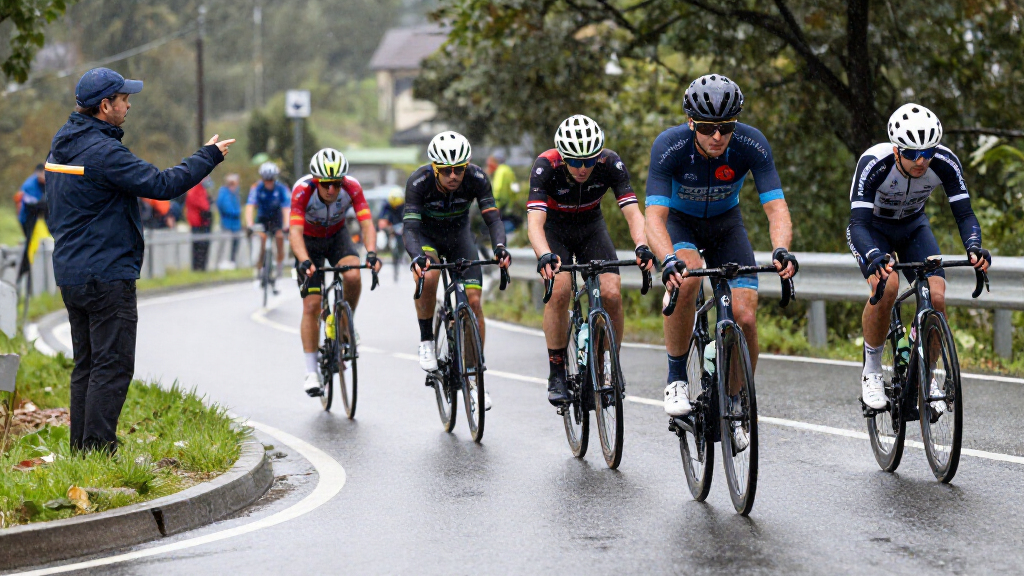
Seixas took part in a five-minute safety protest before this year’s Il Lombardia, which he later won. Riders including Tom Pidcock and Ben Healy also posted a joint statement on social media calling on the UCI and race organisers to “take accountability and act” against cars on race courses. The statement said: “We will not stand for this any longer.”
Cars on Race Courses Remain a Risk
Seixas’s comments focus attention on a hazard that can put riders in immediate danger: non-race vehicles entering or crossing race routes. Tarling’s death makes the consequences especially severe, while reports of later incidents suggest that the problem has not been resolved. The available account does not establish whether those later events involved injuries.
For riders and their families, the issue is whether event safety arrangements can keep public traffic away from the peloton and other competitors. Race organisers must manage courses that use public roads, but the presence of cars on a route can create risks even when a race is underway and marshals are in place. Calls for action from riders add pressure on governing bodies and organisers to show what practical measures can prevent repeat incidents.
Popular right now

Shark Rocket Pet Plus Corded Stick Vacuum, Lightweight, Bordeaux, HV322

Ninja CREAMi 7-in-1 Ice Cream Maker, NC299AMZ

TCL T7 Series 85-Inch 4K 144Hz QLED Smart Google TV
As an affiliate, we earn on qualifying purchases.
Protests and Existing Safety Measures
The UCI launched SafeR in 2023 as a body focused on cycling safety. The source report says it describes the body as independent, though its funding comes from the UCI, race organisers, riders and teams. In September, the UCI called for safety-tracking systems to be introduced across professional road races “as quickly as possible.” The source does not specify a rollout schedule or confirm that the systems are in place at every race.
Safety concerns have also been raised by British rider Matthew Brennan, who told BBC Sport last month that it was “disgraceful” that “nothing has changed” following Tarling’s death and called for an independent safety body. That is Brennan’s assessment, not a finding from an investigation. In the weeks after Tarling’s death, the report describes further vehicle-related incidents at the Sauerlandrundfahrt, Coppa Bernocchi and Eneco Tour.
Organisers have pointed to the difficulty of securing long public-road courses. Kiko García, technical director of the Vuelta a España and managing director of the International Association of Cycling Race Organisers, told Cycling Weekly that a 200-kilometre race can have hundreds of small roads connecting to the route. He described safety as every organiser’s first priority while calling the issue urgent to fix.
““We will not stand for this any longer.””
— Riders’ joint statement shared on social media
Investigation and Safety Changes Pending
The police investigation into the collision that killed Tarling remains ongoing. The source report does not provide findings about how the vehicle entered the course, whether any party will face charges, or what changes investigators or organisers may recommend. It also does not give a confirmed timetable for the UCI’s proposed safety-tracking systems.
The later vehicle incidents cited in the report raise questions about how effectively race routes are being secured, but the source does not provide full details about the circumstances or consequences of each incident. Seixas’s remarks are a call for improved standards; they do not identify a specific new rule or safety plan.
UCI and Organisers Face Calls to Act
The next confirmed development to watch is the outcome of the police inquiry into Tarling’s death. Riders have called on the UCI and race organisers to take action, while the UCI has already urged rapid adoption of safety-tracking systems. The source material does not state when those systems will be implemented or describe a new set of race-organising rules.
Further updates from investigators, the UCI, SafeR or race organisers could clarify what measures will follow and how they will be applied across events. Until then, the scale and timing of any changes remain open.
Key Questions
What happened to Finlay Tarling?
Tarling, 19, died on August 14 after colliding with a non-race vehicle that had entered the course at the Volta a Portugal. A police investigation is ongoing.
What did Paul Seixas say about race safety?
Seixas said riders being hit by cars during races “shouldn’t happen” and called for better standards in race organisation. He said Tarling’s death had affected him and other riders.
Have cycling authorities announced new safety rules?
The source report says the UCI called in September for safety-tracking systems to be introduced across professional road races as quickly as possible. It does not confirm a full implementation schedule or a new set of rules.
Why is it difficult to keep cars off race routes?
Organisers use public roads and must manage access points along long courses. Kiko García said a 200-kilometre race can have hundreds of small roads joining the route, making traffic control difficult.
Source: cyclingweekly.com