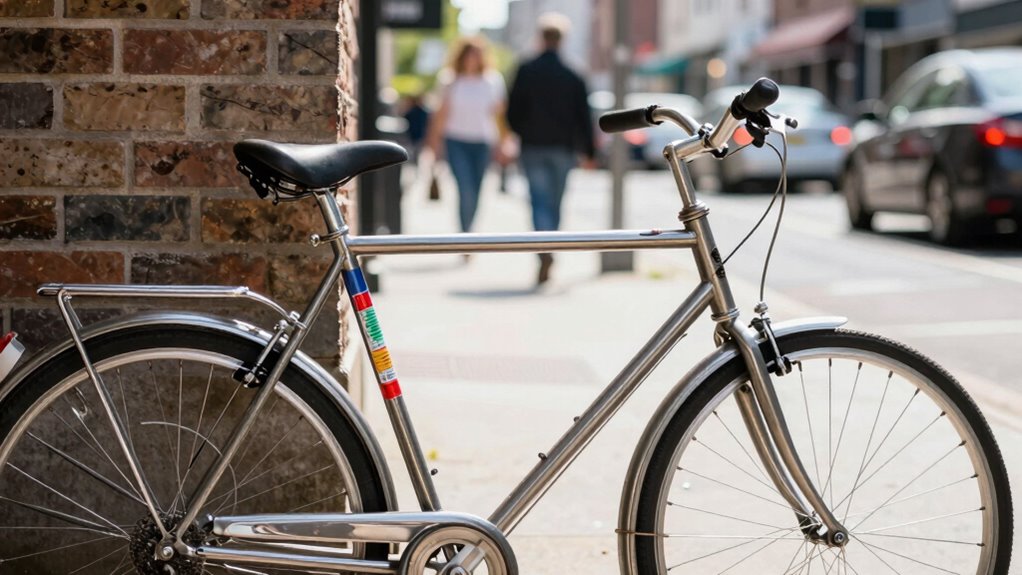

Registering your bike helps you prove ownership, making it easier to recover if stolen and aiding law enforcement in identifying your bike. It also complies with local laws and shows you’re a responsible cyclist. However, registration doesn’t prevent theft or guarantee recovery—think of it as a helpful tool, not a safeguard. For more tips on protecting your bike and understanding its limits, keep exploring the essentials of bike registration.
Key Takeaways
- Bike registration helps identify your bike if it’s lost or stolen, aiding law enforcement in recovery.
- It demonstrates compliance with local laws and promotes responsible cycling within the community.
- Registration provides a record of ownership with a unique ID number, useful for theft reports.
- It does not prevent theft or guarantee bike recovery; security measures like locks are essential.
- Registration is most effective when combined with safety practices such as proper locking and wearing protective gear.

Registering your bike might seem like a hassle, but it’s an important step to protect yourself and comply with local laws. When you go through the registration process, you’re taking a proactive step toward ensuring your cycling safety. While it doesn’t guarantee the security of your bike against theft, it does provide a way for authorities to identify your bike more easily if it gets lost or stolen. Knowing your bike is registered can also make it simpler to recover, giving you peace of mind during your rides. Plus, many areas see bike registration as a way to promote responsible cycling and foster a safer biking community. By registering your bike, you demonstrate that you’re committed to following local regulations, which often include safety measures like wearing helmets, using lights at night, and obeying traffic laws.
The registration process itself is usually straightforward. Typically, you’ll need to provide some basic information about your bike, such as the make, model, serial number, and sometimes a receipt of purchase. Some cities or municipalities also ask for your contact details, so authorities can reach you if needed. You might have to visit a local government office or complete an online form, depending on where you live. Many places now offer digital registration options, making the process faster and more convenient. Once registered, your bike is often assigned a unique identification number, which you should keep handy. It’s a good idea to record this number somewhere safe, like on your phone or in a bike registry app, in case you need to report it stolen or prove ownership later. Additionally, understanding the role of technology in bike registration can help you utilize digital tools effectively for tracking and recovery.
However, it’s important to understand what bike registration does and doesn’t do. It’s not a guarantee that your bike won’t get stolen or that it will be recovered immediately if it does. It’s primarily a tool for identification and law enforcement, not theft prevention. Registration doesn’t replace other safety measures like using proper locks, wearing protective gear, or riding defensively. Instead, think of registration as one part of a broader approach to cycling safety. It helps authorities identify your bike, which can be essential if you’re involved in an accident or if your bike is stolen. But the real key to safety lies in your riding habits, awareness, and taking precautions like parking in well-lit areas and locking your bike securely.
Frequently Asked Questions
Do I Need to Register My Bike if I Only Ride It Locally?
If you’re only riding your bike locally, you may not need to register it, depending on your local laws. Many areas offer registration exemptions for bikes used solely within certain boundaries. However, it’s essential to check your city or state regulations because registration requirements vary. Even if registration isn’t mandatory, registering your bike can help recover it if stolen and prove ownership when needed.
How Long Does the Bike Registration Process Take?
The registration process usually takes a few days to a couple of weeks, depending on your local authority. You might experience registration delays or longer processing times if there’s a backlog or incomplete paperwork. To avoid delays, make sure you fill out all forms correctly and provide any necessary documentation. Check with your local DMV or registration office for specific timelines, and consider online options for faster processing whenever available.
Can I Register an Antique or Vintage Bike?
Certainly, you can register an antique or vintage bike. Many regions have specific antique bike registration rules that recognize the unique status of older bicycles. These vintage bicycle rules often include exemptions from certain requirements or special registration processes. To get started, gather proof of ownership and age, then contact your local DMV or registration authority. Doing this guarantees your treasured vintage bicycle is properly documented and legally protected.
What Are the Penalties for Unregistered Bikes?
If you ride an unregistered bike, you could face legal repercussions like fines or citations. Enforcement measures vary by location but often include patrol checks and bike inspections. Not registering your bike may also lead to difficulty proving ownership if stolen. To avoid these penalties, it’s best to register your bike promptly, ensuring you’re compliant with local laws and reducing potential legal issues while riding.
Is Bike Registration Required for Electric Bikes?
Yes, bike registration is generally required for electric bikes, but it depends on your local electric bike laws. Many areas consider e-bikes as bicycles, exempting them from registration, so you should check bike registration exemptions in your jurisdiction. If your electric bike exceeds certain speeds or power limits, registration might be obligatory. Stay informed to avoid penalties and ensure you’re complying with the rules governing electric bikes in your area.
Conclusion
Registering your bike might seem like just another chore, but it truly protects you. Imagine losing your bike and having it stolen; with registration, authorities can quickly trace and return it. For example, Sarah’s bike was stolen, but because she registered it, the police recovered it within days. Don’t wait until it’s too late—register your bike today. It’s a simple step that could save you from heartache and help keep your bike safe.