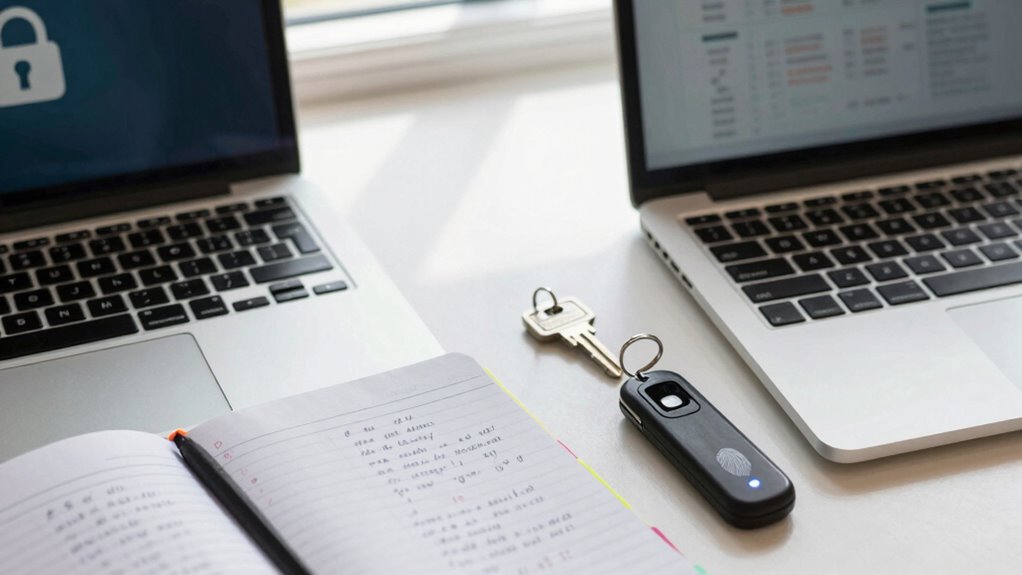

By creating unique, strong passwords for each account and using a password manager, you make it much harder for hackers to access your info. Stay alert for phishing scams by verifying links and messages before clicking. Regularly update your devices and enable two-factor authentication to patch vulnerabilities and add extra layers of security. Making these small habits routine can greatly improve your protection. Keep going to discover even more simple steps to bolster your security online.

Get bike and ride gear delivered free — and shop member deals
- Fast, free delivery on millions of items
- Access to Prime Big Deal Days deals on October 6–7
- Prime Video, Amazon Music and more included
Key Takeaways
- Create unique, complex passwords for each account and use a password manager to securely store them.
- Regularly update software and security settings to patch vulnerabilities and enable two-factor authentication.
- Be vigilant with email links and verify suspicious messages through separate channels to avoid phishing scams.
- Dedicate weekly time to review security news, recognize threats, and educate others on cybersecurity best practices.
- Build consistent security routines, making habits automatic to ensure ongoing, layered protection.
Ever wonder how simple daily habits can markedly boost your security? Sometimes, it’s the small, consistent actions that make the biggest difference. For example, practicing good password management is a crucial habit. Instead of reusing the same password across multiple sites, you create unique, complex passwords for each account. Using a password manager can simplify this process, storing all your passwords securely and helping you avoid the temptation to use easily guessable passwords. This way, even if one account is compromised, your other accounts remain protected. Developing this habit might take a little effort initially, but it pays off by substantially reducing your risk of hacking or identity theft. Additionally, understanding encryption basics can help you better appreciate how your data is protected during transmission and storage.
Alongside password management, cultivating phishing awareness is equally essential. Phishing scams often come in the form of deceptive emails or messages that appear legitimate but are designed to steal your personal information. To stay safe, always scrutinize links and email addresses before clicking anything. Be suspicious of messages that create a sense of urgency, ask for personal data, or seem out of character for the sender. Staying alert to these tactics helps you avoid falling victim to scams that could compromise your finances or identity. Making a habit of verifying suspicious messages with a quick phone call or separate email instead of clicking links makes a huge difference. Incorporating security awareness into your routine can further strengthen your defenses against cyber threats. Recognizing common scam tactics can make you more vigilant and less likely to be deceived. Regularly educating yourself about cybersecurity threats can also help you stay a step ahead of cybercriminals.
You also benefit from consistently updating your software and security settings. Regularly installing updates patches vulnerabilities and keeps your devices protected against the latest threats. Turning on two-factor authentication whenever possible adds an extra layer of security, even if someone manages to steal your password. These may seem like small steps, but over time, they stack up to create a formidable barrier against cyber threats. The key is making these practices part of your daily routine, so they become second nature. Being aware of cybersecurity best practices can help you choose the most effective measures to implement regularly.
Finally, staying informed about current security threats helps reinforce your habits. When you know what scams or tactics are trending, you’re less likely to fall for them. Allocate a few minutes each week to read security news or tips, and share what you learn with friends and family. That way, you’re not only protecting yourself but also helping others develop good security habits. These small, consistent efforts—managing passwords wisely, staying alert to phishing attempts, and keeping your devices updated—build a strong foundation that can protect you from many cyber threats. Over time, these habits become automatic, providing a layer of defense that’s hard for cybercriminals to bypass.
As an affiliate, we earn on qualifying purchases.
Frequently Asked Questions
How Often Should I Update My Passwords?
You should update your passwords every three to six months to keep your accounts secure. Make sure your new passwords are complex, combining uppercase, lowercase, numbers, and symbols. Using a password manager helps you create and remember strong, unique passwords without hassle. Regular updates reduce the risk of hacking, especially if a breach occurs. Staying consistent with these habits considerably enhances your online security.
What Are Common Signs of a Security Breach?
Imagine your digital world suddenly flickering like a faulty screen—that’s a sign of a security breach. You might notice unexpected account activity, strange emails, or login alerts from unfamiliar devices. Beware of cybersecurity myths that downplay these signs, as phishing detection becomes essential. Stay vigilant: monitor your accounts closely, question odd messages, and act swiftly to protect your personal info from lurking threats.
Is Two-Factor Authentication Necessary for All Accounts?
Yes, two-factor authentication is necessary for all accounts to enhance your security. It adds an extra layer beyond just passwords, often involving biometric verification like fingerprint or facial recognition. This practice boosts your security awareness and helps prevent unauthorized access, even if your password gets compromised. Implementing two-factor authentication across your accounts minimizes risks and makes it considerably harder for hackers to breach your personal information.
How Can I Secure My Smart Home Devices?
Think of your smart home as a fortress; you guard it by locking doors and securing windows. Enable device encryption on all gadgets to keep data safe and use network segmentation to create separate zones for your devices, limiting potential breaches. Regularly update firmware and change default passwords. These small steps act like walls and moats, transforming your smart home into a resilient stronghold against cyber threats.
What Should I Do if I Suspect My Account Was Hacked?
If you suspect your account was hacked, act quickly by changing your password and enabling two-factor authentication. Use account recovery options to regain access, and review recent activity for unauthorized actions. Stay vigilant against phishing prevention by avoiding suspicious links or emails. Regularly update your security settings and monitor your account for unusual activity to prevent future breaches. Acting swiftly helps safeguard your personal information and restore your account security.
two-factor authentication security key
As an affiliate, we earn on qualifying purchases.
As an affiliate, we earn on qualifying purchases.
Conclusion
By adopting these small security habits, you’re building a fortress brick by brick, making it much harder for threats to breach your defenses. Remember, even the strongest castle is only as secure as its weakest wall. Stay vigilant, stay consistent, and let these simple actions be your shield against potential risks. When you make security a routine, you’re not just protecting your information—you’re creating an unbreakable chain of defense that grows stronger every day.
phishing awareness training course
As an affiliate, we earn on qualifying purchases.
As an affiliate, we earn on qualifying purchases.
As an affiliate, we earn on qualifying purchases.
Fall Picks
fall essentials
As an affiliate, we earn on qualifying purchases.