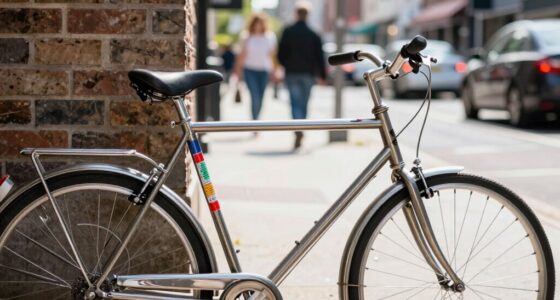
If your bike gets stolen, act quickly by contacting local authorities and filing a police report with details like make, model, and serial number. Use any security gadgets or footage to locate it, and notify nearby bike shops and community groups to spread the word. Share details on social media and monitor online marketplaces for signs of your bike. Implement prevention tips to avoid future thefts. If you want to learn more about effective recovery steps, keep going.
Key Takeaways
- Contact police immediately with detailed bike information and file a report.
- Use security devices and document the scene with photos and witness statements.
- Report the theft to insurance and gather all evidence for claims and recovery efforts.
- Share bike details on social media and community groups to increase awareness.
- Monitor online marketplaces and suspicious listings daily to identify potential stolen bike sales.
Immediate Actions to Take Right After Discovering the Theft

The moment you realize your bike has been stolen, act quickly to increase your chances of recovery. Contact your local authorities immediately and file a police report, providing detailed information about your bike’s make, model, and serial number. Next, check if your bike insurance covers theft; this can help you recover some costs. Use security gadgets like GPS trackers or cameras if you have them installed, as they can help locate your bike quickly. Notify nearby bike shops and community groups, since stolen bikes are often sold locally. Don’t delay—timely action is vital for recovery, and having your insurance details ready can streamline claims later. Acting fast ensures you do everything possible to retrieve your bike and protect your investment. Additionally, understanding the role of security devices can significantly improve your chances of recovery. Being aware of European cloud solutions can also help ensure your personal data remains protected during such incidents. Implementing bike registration programs can further aid in recovering stolen bikes by providing law enforcement with identifiable information. Moreover, staying informed about community watch programs can enhance neighborhood efforts to prevent bike thefts and support recovery.
Gathering Evidence and Documenting the Crime

When your bike is stolen, gathering solid evidence is essential to supporting your case and increasing the chances of recovery. Start by taking clear photo documentation of the scene, including any signs of forced entry or suspicious activity. Capture images of your bike’s location, nearby security cameras, and any damages caused during the theft. Additionally, collect witness statements from anyone who saw the theft or suspicious individuals around the area. Write down their accounts accurately, noting details like time, description, and actions. These pieces of evidence strengthen your case and can be valuable for authorities. Keep all photos and witness information organized, as they will be vital when reporting the crime and assisting in the recovery process. Remember that crime scene documentation is a crucial step that can significantly aid law enforcement in their investigation. Being aware of local crime trends can also help you understand the context and improve your preventative measures in the future. Incorporating smart security devices, such as cameras or GPS trackers, can further enhance your ability to document and recover your property. Additionally, maintaining a detailed inventory of your bike and accessories can be helpful during recovery efforts and when filing reports.
Notifying Authorities and Filing a Report
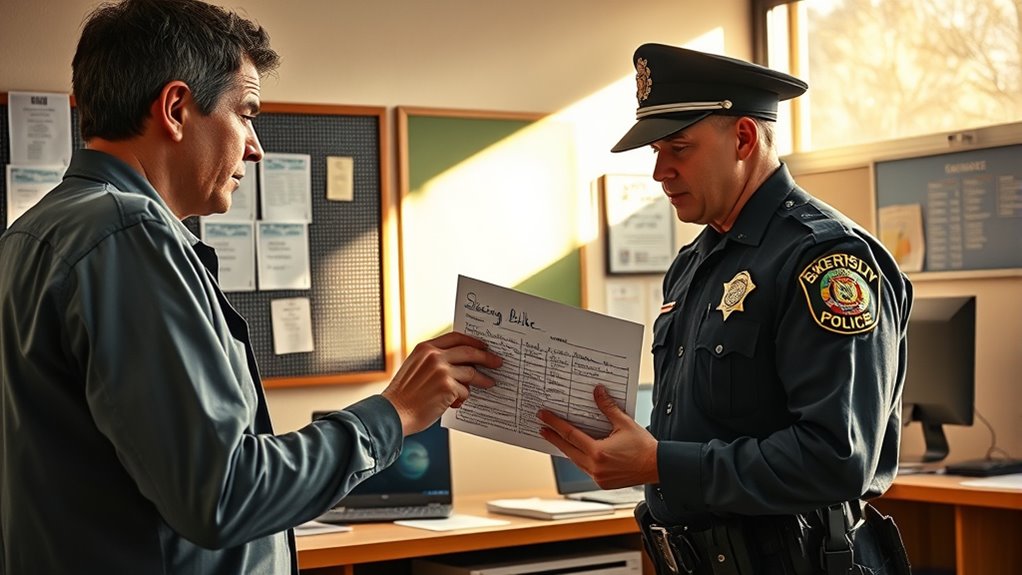
Reporting a stolen bike promptly to the authorities is a key step in increasing the chances of recovery. When you file a police report, provide detailed information such as the bike’s make, model, serial number, and any distinguishing features. This documentation is essential for insurance claims, helping you recover costs or replace your bike. Make sure to get a copy of the report for your records. If you’re unsure about the legal process or your rights, consider seeking legal advice to understand your options and next steps. Timely reporting also helps authorities track stolen bikes and potentially recover your property. Remember, the sooner you act, the better your chances of recovering your bike and supporting your insurance claim. Additionally, maintaining a detailed record of your bike’s unique identifiers can assist law enforcement in bike recovery efforts, which often involves coordinated law enforcement actions. Keeping an up-to-date bike registration with authorities can also expedite recovery and verification processes. Staying informed about local laws related to bike theft can further improve your chances of successful recovery.

You can quickly reach a wide audience by sharing your bike’s details on social media platforms. Engaging your local community through neighborhood groups and flyers increases the chances of recovery. The more people who see your post, the better your chances of finding your stolen bike. Utilizing online resources can also help spread awareness and connect you with potential witnesses or local repair shops that might have seen your bike. Additionally, sharing details about your bike’s physical characteristics can make it easier for others to identify and remember it. Incorporating reputable sources and precise descriptions in your post enhances credibility and attracts more attention. Remember to include information about the bike’s style and brand, which can be crucial in identifying it quickly.
Maximize Social Media Reach
Sharing details about your stolen bike on social media can quickly amplify your search efforts. Use viral hashtags related to bike theft or your area to increase visibility and reach a wider audience. These hashtags help your post appear in searches and trending topics, making it easier for others to spot your bike. Additionally, consider influencer outreach—connect with local bike enthusiasts, community pages, or local influencers who can share your post. Their larger followings can considerably boost your chances of finding your bike. Be clear and include key details like the bike’s description, location, and photos. The more widespread your message, the higher the likelihood someone will recognize your bike and help recover it. Social media’s reach is powerful—use it strategically. Effective social media usage can significantly improve your chances of recovery. Incorporating viral hashtags and engaging with online communities dedicated to bike safety can further enhance your search.
Engage Local Community
Leveraging social media and local networks can substantially boost your efforts to recover a stolen bike. Share detailed photos and descriptions on platforms like Facebook, Twitter, or neighborhood apps, encouraging others to keep an eye out. Engage your community by posting in local groups and asking neighbors to spread the word. Reach out to community watch programs and neighborhood patrols—they often have established channels for reporting suspicious activity. Informing these groups quickly can increase the chances of spotting your bike or catching the thief. The more eyes on the lookout, the better. Collaborating with local community members creates a network of vigilance, making it harder for stolen bikes to go unnoticed and increasing your chances of a swift recovery. Additionally, understanding air fryer safety tips can help ensure safe handling of any equipment used during recovery efforts. Being aware of support breakfast options in your area can also be beneficial if you need to organize a community breakfast to raise awareness or gather support.
Checking Local Surveillance Footage and Online Marketplaces

You should review nearby surveillance footage to see if it captured your bike’s theft. Monitoring online marketplaces can help spot your bike if someone tries to sell it. Using targeted search strategies increases your chances of finding your bike faster.
Surveillance Footage Search
When your bike goes missing, checking local surveillance footage can be a crucial step in identifying the thief. Review security camera analysis from nearby shops, streets, and public areas to spot suspicious activity. Coordinate with neighbors through neighborhood watch groups to gather additional footage and insights. Focus on footage timestamps around the theft time, and look for unfamiliar individuals or vehicles. Sharing relevant clips with police increases your chances of recovery. Here’s a quick overview:
| Action | Tips |
|---|---|
| Check security cameras | Focus on high-traffic areas and timestamps |
| Coordinate with neighbors | Exchange footage and observations |
| Analyze footage | Look for suspicious persons or vehicles |
| Share with authorities | Provide clear clips for investigation |
Marketplace Monitoring Strategies
Have you considered monitoring online marketplaces alongside checking local surveillance footage? Regularly browse online listings like eBay, Facebook Marketplace, and local buy/sell groups. Thieves often post stolen bikes for quick cash, so staying vigilant can lead to spotting your bike. Set up community alerts or notifications for keywords related to your bike’s make and model. Sharing details with neighbors and local online forums can expand your reach. Keep an eye on suspicious activity and unusual postings, and document any potential leads. Combining these online checks with surveillance footage review increases your chances of recovery. Prompt action on suspicious listings or alerts can help you coordinate with authorities quickly. Staying proactive online complements physical surveillance efforts and maximizes your chances of recovering your stolen bike.
Preventative Measures to Protect Your Bike in the Future

Taking proactive steps can substantially reduce the risk of bike theft. Start with robust bike lock security—use high-quality U-locks or heavy-duty chains, and lock your bike to immovable fixtures. Consider the location; avoid secluded or poorly lit areas. Additionally, explore insurance coverage options tailored for cyclists, which can help recover losses if theft occurs. To stay organized, review the following options:
| Insurance Coverage Options | Security Tips |
|---|---|
| Specialized bike insurance | Lock your bike through the frame |
| Personal property insurance | Use multiple locks |
| Theft reimbursement policies | Park in visible, busy areas |
Implementing these measures makes your bike a less attractive target and provides peace of mind.
Tips for Collaborating With Law Enforcement and Community Support
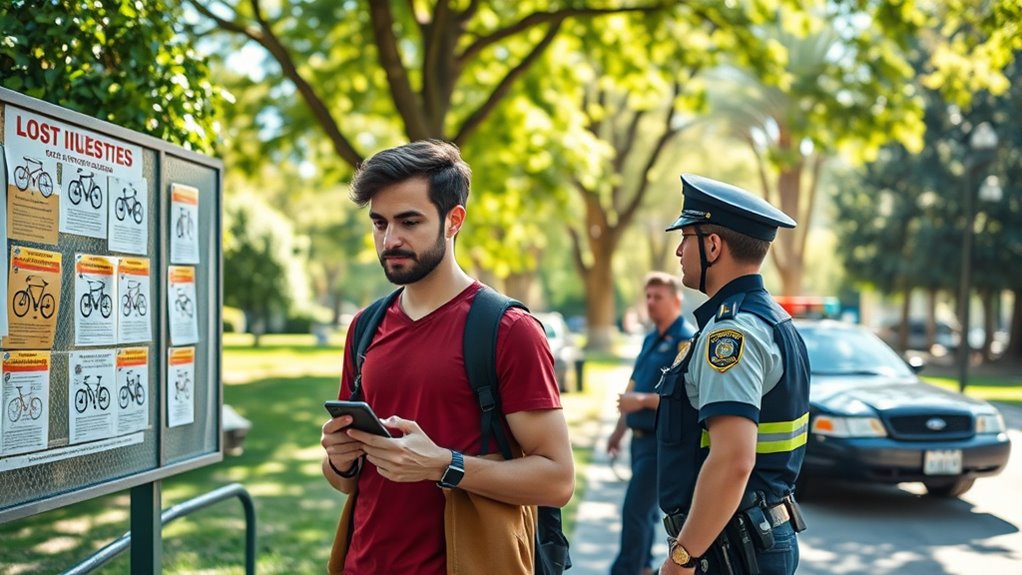
Collaborating effectively with law enforcement and your community can considerably increase the chances of recovering a stolen bike. Reach out to local police promptly and provide them with detailed information, including photos, serial numbers, and any surveillance footage. Join or activate your neighborhood watch and community patrols to stay informed about suspicious activity. Sharing your bike’s description through community groups or social media can help spread the word quickly. Attend community meetings to build relationships with neighbors and law enforcement officers. Staying engaged fosters a collaborative environment where information flows freely, increasing the likelihood of spotting your bike. Your active participation helps create a vigilant community that can respond swiftly and coordinate efforts to recover stolen property.
Frequently Asked Questions
How Long Does It Typically Take to Recover a Stolen Bike?
Recovery time varies, but acting quickly helps. If your bike has strong bike lock security and you notify neighbors or a neighborhood watch, chances improve. Usually, if the police find your bike, recovery can take a few days to a week. Staying vigilant and informing local authorities early increases your chances of quick recovery. Don’t delay; the sooner you act, the better your chances of reclaiming your bike.
Can Insurance Help Me Recover My Stolen Bike?
Ever wonder if insurance can help you recover your stolen bike? Yes, it can. Your insurance claims might include theft coverage, which could reimburse you for the loss or help you replace your bike. While it doesn’t typically lead to the recovery of the actual bike, filing a claim guarantees you get some financial back. So, always check your policy’s theft coverage and contact your insurer promptly.
What Are the Chances of Getting My Bike Back?
Your chances of getting your bike back depend on bike theft statistics and recovery success rates, which vary by location. Generally, recovery success rates are low—about 20-30%. You improve your odds by reporting the theft promptly, providing detailed descriptions, and checking local pawn shops and online marketplaces. While it’s not guaranteed you’ll recover your bike, acting quickly and staying vigilant increases your chances.
Should I Try to Track My Bike Myself?
You should definitely try to track your bike yourself. Using GPS tracking devices can give you real-time updates, and surveillance cameras nearby might have captured the theft. While some worry about privacy or technical issues, these tools substantially increase your chances of recovery. Act quickly, check GPS apps, and review footage. Combining these efforts can make a difference, so don’t hesitate to take matters into your own hands.
How Can I Prevent Future Bike Thefts Effectively?
To prevent future bike thefts, you should upgrade your locks to high-security options like U-locks or chain locks, making theft more difficult. Additionally, adopt smarter parking strategies by always locking your bike in well-lit, busy areas and avoiding secluded spots. Consider securing your bike to immovable objects and removing accessories when parking. These steps considerably reduce the risk of theft and keep your bike safer.
Conclusion
Remember, acting quickly is like catching lightning in a bottle—you increase your chances of recovery. Stay proactive, stay connected with authorities and your community, and keep spreading the word. Your bike’s return depends on your swift actions and persistence. Don’t let frustration stall your efforts; instead, turn it into momentum. With determination, you can turn the tide and bring your bike back home, just like turning a lost key into the start of a new journey.