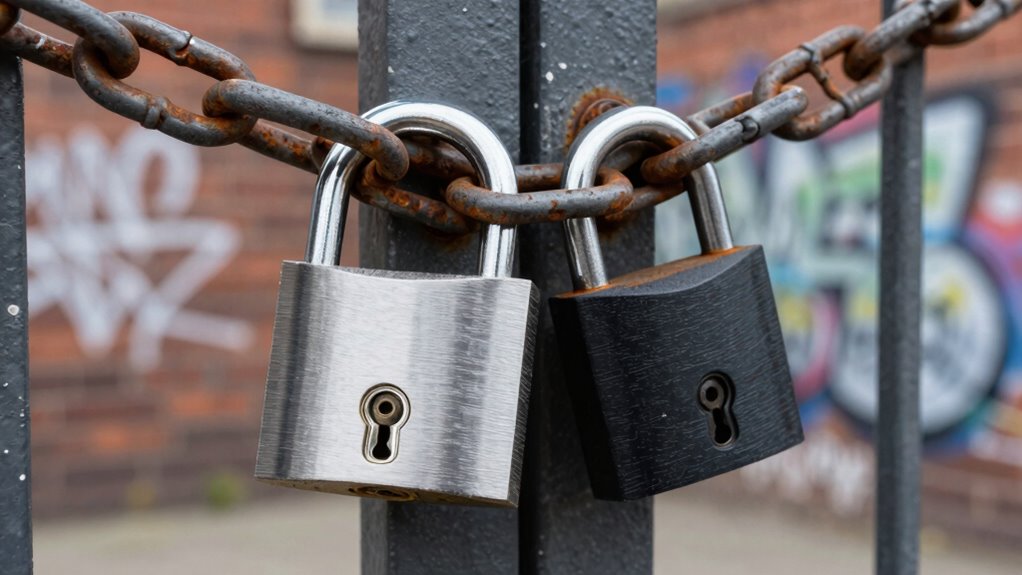

To use two locks effectively and deter thieves, position them at different points on your door or gate to create multiple security layers. Make sure the locks are compatible and avoid placing them directly next to each other. Use high-quality, resistant locks like deadbolts and padlocks to increase security. Regularly check and maintain your locks to guarantee they work properly. Keep these strategies in mind, and you’ll discover even more ways to strengthen your security.
Key Takeaways
- Place locks at different points along the door to create multiple barriers for thieves.
- Ensure lock compatibility to prevent interference and maintain security integrity.
- Use a combination of high-quality deadbolts and padlocks for effective layering.
- Regularly inspect and maintain locks to ensure proper function and security.
- Incorporate smart lock features for remote monitoring and enhanced control as part of the layered strategy.

While using two locks might seem like extra security, many people don’t know the best way to do it effectively. The key is understanding how to properly position the locks and ensure they work well together. Lock placement is vital; if you’re not strategic about where you put your locks, you might give thieves an easy way in. For example, placing one lock on the main door and another on a secondary lock point, like a deadbolt or a hasp, can greatly increase security. But simply adding a second lock isn’t enough — you need to make sure both are placed where they can provide maximum protection without creating vulnerabilities.
Proper lock placement enhances security without creating vulnerabilities or easy access points.
You should also pay attention to lock compatibility. Not all locks work well together, especially when used on the same door or gate. For example, using two different types of locks, like a cylinder lock paired with a padlock, can be effective if they’re compatible with the door’s hardware. Compatibility means the locks fit securely and operate smoothly without interfering with each other. If one lock is too bulky or incompatible with the door frame, it could weaken the overall security or make the locking process more difficult. Always check the specifications of your locks to make sure they’re designed to work with your door type and hardware.
Another aspect of effective lock layering involves spacing. Don’t place the second lock directly next to the first; instead, position it at different points along the door or gate. This makes it more difficult for a thief to bypass both locks with a single tool or method. The idea is to create multiple barriers, each requiring different skills or tools to overcome. When selecting locks, opt for ones that are resistant to picking and cutting. Combining a high-quality deadbolt with a sturdy padlock can be an effective strategy, but only if they’re compatible with the door and placed correctly.
Additionally, you can enhance security by integrating smart locks that offer features like remote access and activity logs, making it easier to monitor and control access. Finally, don’t forget about maintenance and regular checks. Even the best lock setup won’t provide security if one lock is damaged or malfunctioning. Regularly inspect your locks to ensure they’re functioning properly and that their placement is still ideal. Proper lock placement and compatibility work together to create a layered security approach that thieves dislike, and with some careful planning, you can make your home much harder to breach.
Frequently Asked Questions
Can Using Two Locks Increase the Risk of Damage to My Belongings?
Using two locks can increase the risk of damage if they’re not compatible or applied improperly. If the locks aren’t designed for your belongings, they may cause scratches or stress on the material. To prevent damage, choose lock types that are compatible with your items and handle them carefully. Proper layering and correct lock application considerably reduce the chances of damage while enhancing security.
What Are the Best Types of Locks to Use Together?
Think of lock compatibility as a well-choreographed dance where each partner complements the other. To guarantee smooth performance, choose locks made from durable materials like hardened steel or brass, and opt for different lock types—such as a padlock combined with a cylinder lock. Regular lock maintenance keeps them resilient, preventing rust and ensuring reliable security. Combining high-quality locks with proper care creates a formidable barrier against intruders.
How Do I Avoid Common Mistakes When Layering Locks?
To avoid common mistakes when layering locks, you should guarantee lock compatibility so they work well together without interfering. Always check that each lock is suitable for your specific needs and environment. Additionally, perform regular lock maintenance, like lubricating and inspecting for wear, to keep them functioning smoothly. This prevents weaknesses that thieves could exploit, keeping your security effective and reliable over time.
Are There Specific Lock Brands Recommended for Layering?
Oh, absolutely, because choosing the perfect lock brand is the secret to thwarting thieves. For layering lock options, go for reputable brands like Abloy, Mul-T-Lock, or Medeco—they’re known for durability and high security. These lock brand recommendations help you create a formidable barrier. Remember, the key isn’t just in the lock brand but also in how you layer and install them properly for maximum protection against any sneaky intruder.
How Often Should I Replace Layered Locks for Maximum Security?
You should replace your layered locks every 3 to 5 years to maintain maximum security. Regular lock maintenance guarantees they stay effective, preventing wear and potential vulnerabilities. Using proper lock placement strategies also helps, making it harder for thieves to tamper with your locks. Keep an eye on signs of wear or damage, and don’t hesitate to upgrade locks when needed to stay ahead of potential threats.
Conclusion
Now that you know how to use two locks properly, it’s time to put theory into practice. Many believe layering locks deters thieves because it creates extra effort and uncertainty. While no lock is foolproof, studies suggest that combining different types of locks considerably reduces theft chances. Remember, the real trick is making your bike or belongings less attractive to thieves. So, use two locks correctly—you might just outsmart those sneaky criminals.