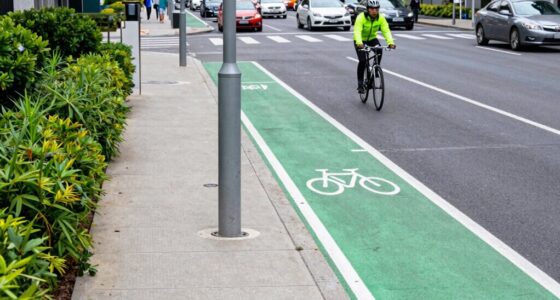
In Georgia, where you can ride your e-bike depends on its class and local regulations. If you have a Class 1 or Class 2 e-bike that speeds up to 20 mph, you can usually ride on bike paths, bike lanes, and streets, but restrictions may apply in certain areas. Class 3 e-bikes that reach 28 mph might face more limitations. Always check local signage and rules before riding to stay compliant and safe—so, there’s more to discover.
Key Takeaways
- E-bike classifications (Class 1, 2, and 3) determine where you can legally ride, such as bike lanes, streets, or trails.
- Class 1 and 2 e-bikes are generally permitted on bike paths, bike lanes, and streets, but check local signage for restrictions.
- Riding on sidewalks is usually prohibited unless explicitly allowed; always follow local rules and signage.
- Municipal regulations may restrict e-bike use in specific parks, trails, or during certain hours; verify local rules beforehand.
- Helmets are recommended for safety, and understanding local laws ensures legal and safe e-bike riding in Georgia.
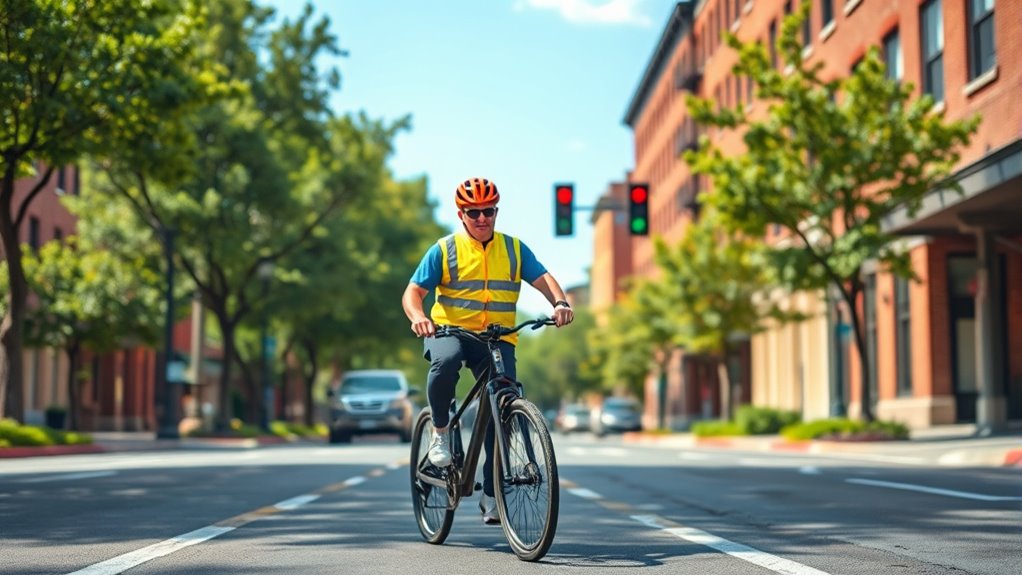
If you’re planning to ride an e-bike in Georgia, it’s important to understand the state’s rules to stay compliant and ride safely. Georgia’s laws regarding e-bikes are designed to clarify where you can ride and how to do so responsibly. One key aspect to contemplate is electric scooter laws, which often influence e-bike regulations since both are classified as low-speed motorized vehicles. Generally, e-bikes are categorized based on their speed and motor power, and understanding these classifications helps determine where you’re allowed to ride. For example, Class 1 and Class 2 e-bikes, which operate at speeds up to 20 mph, are typically permitted on bike paths, bike lanes, and streets, but Class 3 e-bikes—those capable of reaching 28 mph—may have restrictions, often limited to streets or specific pathways.
Understanding e-bike classifications helps determine where you can ride legally and safely in Georgia.
Bike lane regulations are central to riding safely and legally in Georgia. You should assume that bike lanes are reserved for non-motorized bicycles and that riding an e-bike in designated bike lanes is generally permitted if your e-bike falls within the allowed classifications. However, always check local signage and regulations, as some cities might have specific rules about e-bike usage in bike lanes or shared paths. For instance, in urban areas like Atlanta, certain bike lanes might restrict motorized vehicles, including e-bikes, or require riders to slow down. Respect signage and local ordinances to avoid fines or conflicts with pedestrians and other cyclists.
In addition to bike lane regulations, be aware that electric scooter laws can affect where you ride. Many cities treat e-bikes and electric scooters similarly, especially when it comes to riding on sidewalks or streets. Usually, riding on sidewalks is prohibited unless explicitly allowed, and riding on streets with heavy traffic should be done with caution, obeying traffic signals and riding in the same direction as traffic. Helmets are generally recommended, and in some cases required, especially for riders under 16.
To stay compliant, always familiarize yourself with local rules before heading out. Some municipalities may have additional restrictions, like banning e-bike use in certain parks or along specific trails. Keep an eye on signage, and when in doubt, consult local transportation departments or official city websites. By understanding electric scooter laws and bike lane regulations, you’ll ensure your ride is both legal and safe, letting you enjoy Georgia’s scenic routes without worry.
Top picks for "georgia bike ride"
Open Amazon search results for this keyword.
As an affiliate, we earn on qualifying purchases.
Frequently Asked Questions
Are E-Bikes Allowed on Sidewalks in Georgia?
In Georgia, e-bikes are generally not allowed on sidewalks, prioritizing sidewalk safety and pedestrian rights. You should ride your e-bike on bike lanes, trails, or streets where permitted, avoiding sidewalks to keep pedestrians safe. Always watch for signage and local regulations, as some areas may have specific rules. Respecting pedestrian rights guarantees a safer environment for everyone and helps you stay compliant with local laws.
Do I Need a License to Ride an E-Bike?
You don’t need a license to ride an e-bike in Georgia, but it’s crucial to prioritize e-bike safety. Be sure to understand local laws and wear protective gear. While rider licensing isn’t required, responsible riding helps prevent accidents and keeps you safe. Always stay alert, follow traffic rules, and ride within designated areas to guarantee a safe and enjoyable experience on your e-bike.
Are E-Bikes Permitted on Public Transportation?
Yes, you can bring your e-bike on public transportation in Georgia, but always check specific transit policies first. To prevent e-bike theft, consider using high-quality locks and secure storage. Regular e-bike maintenance tips, like checking tire pressure and brake function, ensure smooth rides. Carry your e-bike properly and follow transit rules so you can enjoy seamless commuting. Being prepared helps you avoid issues and keeps your e-bike safe and ready for your next trip.
What Are Age Restrictions for Riding an E-Bike?
You must be at least 15 years old to ride an e-bike in Georgia. Younger riders should be supervised and wear appropriate safety gear, like a helmet, to reduce injury risk. Always follow local regulations, which emphasize safety gear for all riders, regardless of age. If you’re under 15, consider alternative transportation options or supervised e-bike programs to stay safe and compliant with the law.
How Are E-Bike Laws Enforced in Georgia?
When it comes to enforcement, the saying “the proof is in the pudding” holds true. Georgia enforces e-bike laws through local law enforcement agencies that monitor compliance with E bike safety regulations. They make certain riders follow age restrictions, helmet laws, and riding areas. If you break the rules, expect penalties or citations. These agencies actively patrol streets and trails, making sure everyone follows the law and stays safe.
Conclusion
Now that you know the Georgia e-bike rules, you’re basically a superhero on wheels, ready to conquer any street or trail! No longer will you wonder where you can ride—you’re a legal e-bike legend, cruising confidently everywhere from bustling city streets to scenic parks. With these rules, you’re unstoppable, faster than a speeding scooter and more eco-friendly than a forest. Get out there and ride like the rule-savvy superstar you are—Georgia’s roads won’t know what hit ’em!