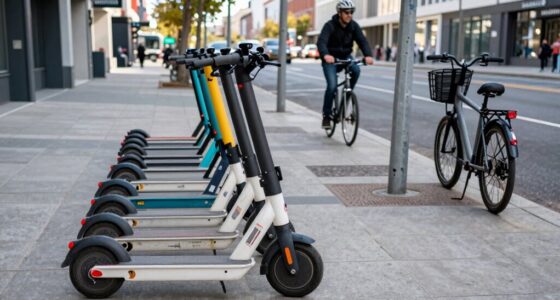

Many new U.S. e-scooter riders overlook key legal basics that can get them fined or hurt. You should check your state’s helmet laws and make sure you wear gear accordingly, as well as understand your insurance options—most don’t default to coverage. Be aware of local rules about where you can ride and age restrictions to avoid penalties. Staying updated on changes in laws helps you stay safe and legal. Keep going, and you’ll discover essential tips to ride responsibly.
Open a free Amazon Business account
Business pricing, bulk buying and tax-exempt orders.
As an affiliate, we earn on qualifying purchases.
Key Takeaways
- Many new riders overlook specific helmet laws, risking legal fines and safety issues.
- Riders often assume personal insurance covers e-scooter accidents, which may not be true.
- New users frequently ignore local riding zones and restrictions, leading to violations.
- Age restrictions are sometimes neglected, resulting in legal penalties or unsafe riding.
- Riders tend to miss updates on legislation, risking unintentional non-compliance.

Getting started with e-scooters in the U.S. means understanding the basic laws that keep you safe and legal. While it might seem straightforward—just hop on and go—there are important rules many new riders overlook. For instance, helmet laws vary from state to state, and knowing whether you need to wear one can save you from hefty fines or injuries. Some states mandate helmets for all riders, regardless of age, while others only require them for minors. If you don’t check your local laws beforehand, you could find yourself riding without the required safety gear, which increases your risk of injury and could lead to legal trouble if you’re involved in an accident.
Understanding state helmet laws helps keep you safe and compliant when riding e-scooters.
Insurance requirements are another area often missed by new riders. Unlike driving a car, riding an e-scooter typically doesn’t automatically include insurance coverage. While some cities or scooter companies might offer optional insurance plans, most riders assume they’re protected without verifying this. That’s a risky assumption because if you’re involved in a collision, you could be held financially responsible for damages or injuries. It’s essential to understand whether your personal auto or renters insurance extends coverage to e-scooter accidents or if you need to purchase additional coverage. Ignoring this step can leave you vulnerable to significant expenses or legal complications, especially if someone else is injured or property is damaged.
Beyond helmet laws and insurance, many riders overlook local regulations regarding riding areas and speed limits**. Some cities restrict scooters to bike lanes or require riding on streets with specific speed limits. Failing to adhere to these rules can result in fines or confiscation of your scooter. Also, many new riders underestimate the importance of understanding age restrictions and proper riding behavior. Most states have minimum age requirements, and ignoring these can lead to legal issues. Riding recklessly or in a manner that endangers others can not only cause accidents but also get you cited or banned from certain areas. Additionally, being aware of local regulations can help you avoid unintended violations that could impact your ability to ride legally in the future. It’s also helpful to familiarize yourself with scooter safety tips to ensure responsible riding. Furthermore, understanding local laws about riding zones ensures you stay within permitted areas and avoid unnecessary penalties. Being aware of these legal nuances can enhance your safety and help you enjoy riding without the worry of legal complications. Also, staying informed about recent updates to legislation** can prepare you for any changes that might affect your riding privileges.
e-scooter helmet with adjustable straps
As an affiliate, we earn on qualifying purchases.
As an affiliate, we earn on qualifying purchases.
Frequently Asked Questions
Are E-Scooter Laws the Same Across All U.S. States?
No, e-scooter laws aren’t the same across all U.S. states. You need to check state-specific regulations, as some states have strict scooter licensing requirements, while others don’t. Local rules also vary, affecting where and how you can ride. Always review your state’s laws before hopping on an e-scooter to avoid fines or penalties, ensuring you ride safely and legally.
Do E-Scooter Riders Need Insurance Coverage?
Think of riding an e-scooter without insurance like skating on thin ice—you might get away with it, but one fall could be costly. Most states don’t require liability coverage for riders, but having insurance can protect you from hefty damages or injuries. Some cities recommend or even mandate insurance requirements, so it’s wise to check local laws. Always consider safety first, and make sure you’re covered.
What Are the Fine Amounts for Riding Illegally?
If you ride an e-scooter illegally, you could face riding fines that range from $50 to $200, depending on your location. Illegal e-scooter penalties vary by city or state, but they generally include fines, potential citations, or even impoundment of your scooter. Always check local laws to avoid these riding fines and penalties, and ride responsibly to stay within legal limits.
Can I Ride an E-Scooter on Sidewalks?
Riding your e-scooter on sidewalks is often a risky dance with sidewalk safety, and in many places, it’s outright illegal. Check local laws before you glide—sidewalk riding can lead to fines or accidents. Remember, good scooter maintenance keeps you safe, but respecting designated riding areas protects everyone. Stick to bike lanes or streets when possible, so you avoid trouble and keep your ride smooth and safe.
Are There Age Restrictions for E-Scooter Riders?
Yes, there are age restrictions for e-scooter riders, typically requiring riders to be at least 16 or 18 years old, depending on your city or state. You should also follow helmet laws for safety and be aware of parking regulations to avoid fines. Always check local laws before riding, as age limits and rules can vary. Staying informed helps you ride legally and safely.
electric scooter insurance options
As an affiliate, we earn on qualifying purchases.
As an affiliate, we earn on qualifying purchases.
Conclusion
By understanding these legal basics, you’ll steer clear of trouble and enjoy your ride safely. Think of the rules as the guiding stars that keep you on the right path amidst the bustling city streets. Stay informed, wear your helmet, and respect local laws—your journey will be smoother and more enjoyable. Remember, knowing the rules isn’t just about avoiding fines; it’s about riding confidently and protecting yourself like a shield in a storm.
As an affiliate, we earn on qualifying purchases.
kids age-appropriate electric scooter
As an affiliate, we earn on qualifying purchases.
As an affiliate, we earn on qualifying purchases.
NFL season / tailgating Picks
team gear
As an affiliate, we earn on qualifying purchases.