Virginia e-bike laws classify bikes by speed and motor power, with most Class 1 and 2 e-bikes not requiring a license or registration. However, if you ride a Class 3 e-bike, you might need registration or a license. Safety gear like helmets is encouraged, especially for younger riders. Knowing these rules helps you stay legal and safe on your commute. To get detailed info, keep exploring the specifics for your e-bike type and local regulations.
Key Takeaways
- Virginia classifies e-bikes by speed and motor power, with Class 1 and 2 typically not requiring licenses.
- Most e-bike riders don’t need a driver’s license unless riding higher-powered Class 3 models.
- Helmets are encouraged or required for riders under 18; visibility gear improves safety.
- Adhere to local regulations on registration and licensing based on e-bike class and speed.
- Always review Virginia’s laws and wear safety gear to ensure safe, legal commuting.
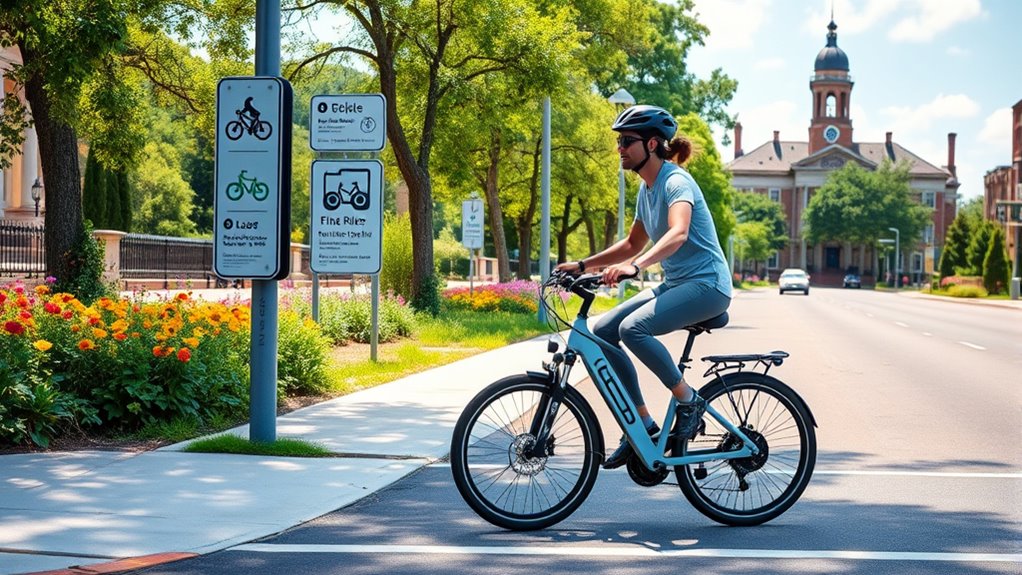
If you’re planning to ride an e-bike in Virginia, it’s important to understand the state’s rules and regulations. Knowing what’s required helps guarantee you stay safe, avoid fines, and enjoy your ride without any legal issues. Virginia classifies e-bikes based on their speed and motor power, so familiarizing yourself with these categories is key. Generally, e-bikes are considered motorized bicycles when they can reach up to 20 mph with motor assistance. For riding in Virginia, you need to pay attention to licensing requirements, which vary depending on the class of your e-bike. Most riders don’t need a driver’s license for Class 1 and Class 2 e-bikes, but if you’re dealing with a Class 3 model that goes faster or has a higher motor output, you might need to register your e-bike or obtain a special license.
Safety gear plays a vital role in your e-bike experience. Virginia law encourages or requires certain safety equipment, such as helmets, especially for riders under 18. Wearing a helmet greatly reduces the risk of head injuries, so it’s wise to always don one, regardless of age. Reflective gear and lights are also recommended, especially if you plan to ride during dawn, dusk, or nighttime, as they improve visibility for both you and other road users. Some local jurisdictions might have specific safety gear requirements, so checking the rules where you’ll ride is a good idea. Additionally, understanding e-bike classifications can help ensure you stay within legal limits and ride responsibly.
Frequently Asked Questions
Are There Age Restrictions for Riding E-Bikes in Virginia?
In Virginia, there are no specific age restrictions for riding e-bikes, but younger riders should be aware of rider licensing requirements based on e-bike classification. If you’re under 16, you might need to follow certain regulations or obtain supervision. It’s wise to verify local laws and safety guidelines to make certain you’re compliant. Always prioritize safety and make sure your rider licensing, if required, is up to date before hitting the road.
Can E-Bikes Be Used on Sidewalks in Virginia?
In Virginia, you generally shouldn’t ride e-bikes on sidewalks because it can jeopardize sidewalk safety for pedestrians. E bike classifications, such as Class 1, 2, or 3, determine where you can ride legally; typically, Class 1 and 2 bikes are restricted from sidewalks, while Class 3 may be permitted in certain areas. Always check local regulations to confirm you’re riding legally and safely, respecting pedestrians and adhering to e bike classifications.
What Insurance Requirements Apply to E-Bike Riders in Virginia?
In Virginia, e-bike riders are not required to carry specific insurance coverage, but liability requirements apply if you’re involved in an accident. You should consider personal liability insurance to safeguard yourself financially, especially if you cause damage or injury. While there’s no mandatory e-bike insurance, having liability coverage can help cover legal costs and damages. Always check with your insurer to ensure you’re protected according to Virginia’s liability standards.
Are E-Bikes Allowed on Public Transportation in Virginia?
Did you know that over 60% of Virginia transit agencies allow e-bikes on their vehicles? You can bring your e-bike on public transportation, but policies vary by transit system. Check specific public transit policies before you travel, as some may restrict certain types of e-bikes or require them to be folded. E-bike accessibility is improving, making your commute more flexible and eco-friendly. Always verify with your local transit provider for the latest rules.
How Do Virginia E-Bike Laws Compare to Neighboring States?
Virginia’s e-bike laws are similar to neighboring states, but there are some differences. You don’t need a license to ride an e-bike here, unlike some states requiring state licensing. Helmet laws are generally recommended but not mandatory for adults, though minors must wear helmets. Compared to states like Maryland or North Carolina, Virginia’s regulations are slightly more flexible, making it easier for you to enjoy your e-bike responsibly.
Conclusion
Now that you know Virginia’s e-bike rules, you’re all set to ride confidently and responsibly. It’s funny how understanding the regulations makes your commute smoother and safer—almost like the rules were waiting to align perfectly with your journey. So, whether you’re cruising through city streets or scenic trails, keep these guidelines in mind. With the right knowledge, every ride becomes more enjoyable and accident-free, proving that sometimes, knowing the rules is the key to seamless adventures.