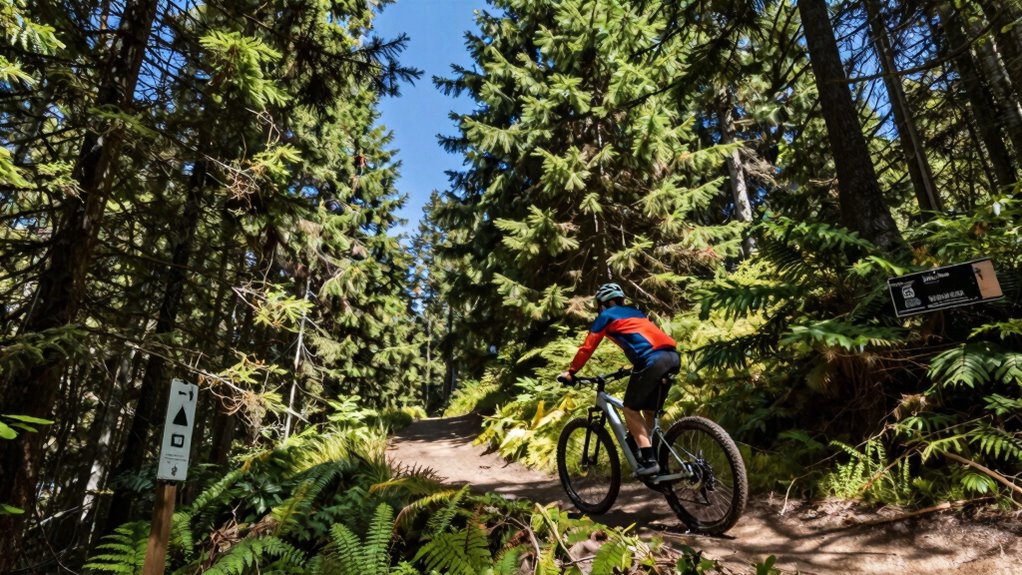

In Washington State, your e-bike rules depend on the trail and signage, which indicate where motorized bicycles are allowed. E-bikes with motors under 750 watts that reach 20 mph are generally permitted on many trails, but it’s essential to check posted signs at trailheads or junctions to confirm. Not all paths allow e-bikes, and some require respecting specific restrictions. Staying informed and observant helps you ride legally and safely—there’s more important trail access info to explore.

Get bike and ride gear delivered free — and shop member deals
- Fast, free delivery on millions of items
- Access to Prime Big Deal Days deals on October 6–7
- Prime Video, Amazon Music and more included
Key Takeaways
- E-bikes under 750W and capable of 20 mph are considered bicycles and generally allowed on many trails in Washington.
- Always check trail signage for motorized vehicle restrictions before riding your e-bike.
- Some trails prohibit e-bikes; verify local rules with park authorities or land managers.
- Respect trail signs, speed limits, and other users to ensure safe, legal, and courteous riding.
- Regulations can vary by location; stay informed to avoid fines or conflicts.
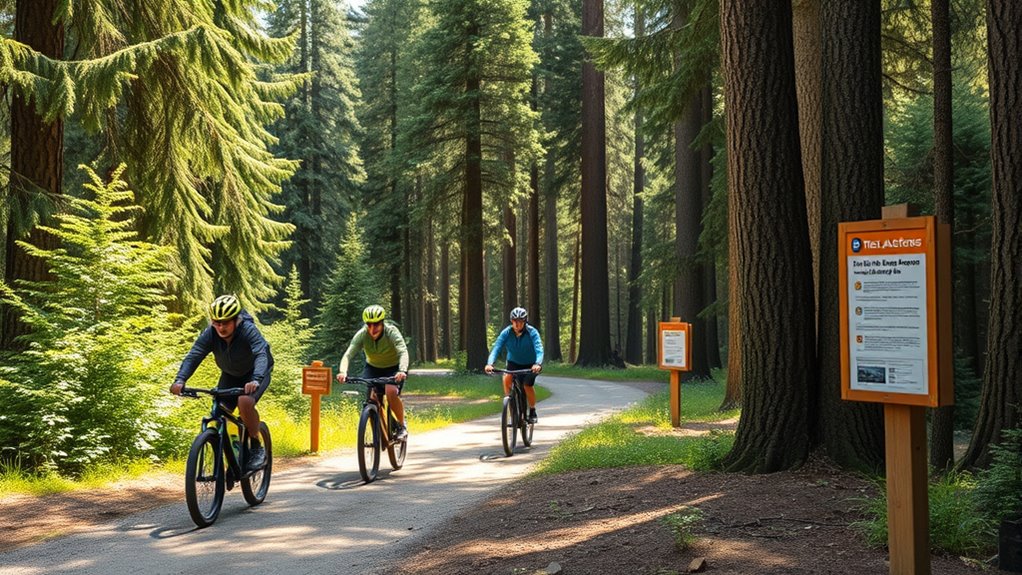
If you’re riding an e-bike in Washington State, it’s important to understand the rules that keep everyone safe. E-bikes, often called motorized bicycles, are a popular way to explore trails, but they come with specific regulations you need to follow. State law distinguishes e-bikes from traditional bicycles based on motor power and speed capabilities. Generally, if your e-bike has a motor of 750 watts or less and can reach speeds of up to 20 mph on level ground, it’s classified as an electric bicycle. This classification allows you to ride on many bike trails, but it’s essential to pay attention to trail signage, which indicates where motorized vehicles are permitted and where they aren’t. Trail signage helps you identify designated areas for motorized bicycles and makes sure you’re riding in zones that are safe and legal for your e-bike.
Understanding trail signage is critical because not all trails allow motorized bicycles. Some paths are reserved exclusively for non-motorized bikes, pedestrians, or horse riders. When you approach a trailhead or a junction, look for signs that specify whether e-bikes are permitted. Ignoring trail signage can lead to fines or conflicts with other trail users. In many popular areas, signs clearly mark the rules, so keep an eye out before entering a trail. If you see signs that prohibit motorized bicycles, respect those restrictions to preserve trail access for everyone. Additionally, motorized vehicle regulations can vary by location, so staying informed helps ensure compliance.
Another key point is that e-bike regulations may vary depending on the trail or park. Some locations restrict e-bikes entirely, while others allow them on designated routes only. It’s your responsibility to confirm the rules before you ride. You can check with local park authorities or land management agencies to find out which trails permit motorized bicycles. Also, be mindful of speed limits and ride responsibly, especially when sharing trails with pedestrians and non-motorized bikers. Maintaining a safe speed and being courteous helps prevent accidents and keeps the experience enjoyable for everyone.
As an affiliate, we earn on qualifying purchases.
Frequently Asked Questions
Are E-Bikes Allowed on All Washington State Trails?
E-bikes aren’t permitted on all Washington state trails; your access depends on trail signage compliance and local regulations. You should check specific trail rules before riding, especially regarding e bike battery regulations, as some areas restrict motorized vehicles. Always look for trail signage compliance to ensure you’re permitted to ride your e-bike. Following these guidelines keeps you legal and helps protect trails and the environment.
What Age Restrictions Apply for E-Bike Riders?
In Washington, the age restrictions for e-bike riders vary depending on the trail and local regulations. Generally, riders must be at least 16 years old to operate motorized bikes on public trails. You don’t need a special rider licensing for e-bikes, but some areas may require proof of age or a rider permit. Always check local rules before riding to guarantee compliance with age restrictions and licensing requirements.
Do E-Bikes Require Insurance or Registration in Washington?
Think of riding your e-bike like steering a ship; you need the right paperwork to stay afloat. In Washington, e-bikes don’t require insurance or registration, so you can cruise freely without extra paperwork. However, if your e-bike is classified as a motor vehicle, you’ll need to go through the registration process and meet insurance requirements. Always check local laws to ensure your ride stays smooth and legal.
Are E-Bikes Permitted on Public Roads and Bike Lanes?
Yes, you can ride your e-bike on public roads and bike lanes in Washington, following electric bike regulations. Make sure your e-bike complies with the legal requirements, like speed and motor power limits. Always prioritize bike lane safety by staying within designated lanes, following traffic laws, and being alert for pedestrians and vehicles. Following these rules ensures a safe and enjoyable riding experience on public roads and bike lanes.
How Are E-Bike Laws Enforced in Washington State?
In Washington, e-bike laws are enforced through routine patrols and rider compliance checks. Law enforcement agencies use enforcement procedures like issuing citations or warnings for violations, such as riding in restricted areas or without proper registration. If you violate e-bike regulations, penalties can include fines or other sanctions. Staying informed and following the rules helps you prevent violation penalties and ensures a safe, legal riding experience on public roads and trails.
As an affiliate, we earn on qualifying purchases.
Conclusion
Now that you know the trail access rules for e-bikes in Washington, you’re ready to hit the trails confidently. Think of these guidelines as your trusty map—guiding you safely through adventures yet to come. Remember, respecting the rules isn’t just about legality; it’s about preserving the joy of riding for everyone. So gear up, stay informed, and let the open trails be your playground—where every pedal stroke writes a new story.
As an affiliate, we earn on qualifying purchases.
As an affiliate, we earn on qualifying purchases.
Halloween Picks
halloween
As an affiliate, we earn on qualifying purchases.