
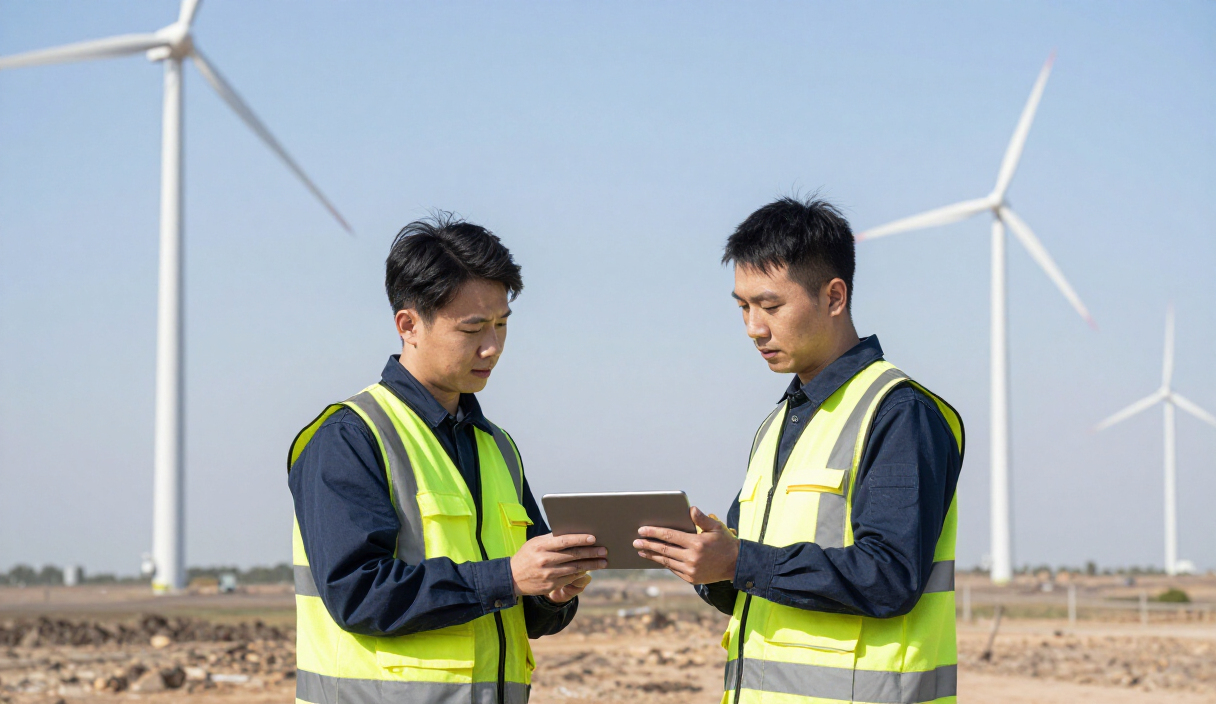
Wind farms stretch construction documentation across distance, teams and time. Turbine positions are distributed, crews rotate, acceptance walks happen in the field, and mobile coverage cannot be assumed. Yet meetings, evidence and defects still need to remain connected to the work being inspected.
Energie & Öko · Documentation across distance
Wind-farm records have to work beyond the signal.
Across turbine positions, rotating crews and field acceptance walks, Gewerkton’s proposition is continuity: capture evidence where the work happens, keep it through handovers and synchronise when coverage returns.
The site reality
Record now. Connect later.
A missing mobile signal does not suspend the need for evidence. Gewerkton Field is designed to preserve the observation at the relevant turbine position instead of asking crews to reconstruct it later from memory.
Deployment reach
6deployment fields
Wind farms and renewables sit alongside data centres and industrial plants, housing and building construction, infrastructure and tunnels, cross-border teams, and projects in Asia.
International teams
27content languages
Regional AI-provider choice spans the EU, US and Asia, including mainland China—supporting documentation across multilingual project teams.
Field’s working record
Dictation becomes site evidence
The renewable-site product line covers evidence, defects, dictated daywork reports, takt information and portal access—created at the point of inspection.
Release horizon
The platform is positioning field capture as the starting point for a connected record across locations, roles and third parties.
“On site, what counts is what’s proven.”
That is the setting in which Gewerkton is positioning its voice-first construction documentation and defect management platform. Wind farms and renewables are one of its six deployment fields, alongside data centres and industrial plants, housing and building construction, infrastructure and tunnels, cross-border teams, and projects in Asia.
The product is in beta now, with a public beta planned for fall 2026. Its most relevant product line for renewable-energy construction is Gewerkton Field, the site app that turns dictation into evidence, defects, daywork reports and takt information. It also includes a portal. The broader platform connects Field with a browser workspace and an operational coordination layer, but the central renewable-site story begins where the work happens: out among the turbine positions, sometimes beyond a reliable data connection.
offline field data collection device
As an affiliate, we earn on qualifying purchases.
As an affiliate, we earn on qualifying purchases.
A construction site measured in kilometres
A wind farm is not a single compact building site. Its working areas are distributed, and that physical separation changes the documentation problem. An acceptance walk at one turbine position may take place far from the meeting in which the relevant decision was recorded. The crew carrying out the work may not be the same crew that returns later. Documentation has to preserve continuity even when the people, location and network conditions change.
Gewerkton’s wind-farm and renewables deployment field is built around precisely these conditions: distributed sites, rotating crews, field acceptance and offline capture in dead zones. Information can be captured without a live connection and synchronised later. That matters because a missing signal does not suspend the need to record what happened.
The practical value of offline capture is straightforward. Site documentation should follow the work rather than the reach of the mobile network. A field record can be made at the relevant position while the observation is current, then synced when connectivity returns. The workflow does not require the site team to postpone the record or reconstruct it elsewhere from memory.
This is where a voice-first interface has a natural role. Gewerkton Field is designed to move from dictation to evidence. It also covers defects, dictated daywork reports, takt and a portal. Instead of treating the field as merely the place where information originates, it makes the field the point at which documentation is created.
As an affiliate, we earn on qualifying purchases.
Keeping decisions attached to the site
Construction meetings and field inspections often happen in different contexts. One produces decisions; the other reveals whether those decisions have been carried through. Across dozens of turbine positions, the challenge is not simply collecting more notes. It is keeping meeting decisions, evidence and defects documented throughout the project.
Gewerkton’s platform spans that chain. Field handles site capture. Gewerkton Studio provides a browser workspace for plans and models. Gewerkton Cloud coordinates operations and model or data exchange between Field, Studio and third parties. Together, the three product lines form one branded system rather than separate products with unrelated records.
That connection is important on distributed projects because the record has to survive movement between locations and roles. A crew can document work in the field, while plans, models and related information are handled in the browser workspace. Operational and data coordination then sits between those environments and any third parties involved.
The emphasis is not on adding ceremony to the working day. It is on keeping evidence close to the event it describes. Gewerkton’s own marketing line puts the principle plainly: “On site, what counts is what’s proven.” For renewable construction, that idea reaches beyond conventional record-keeping. A project’s environmental purpose does not reduce the need for disciplined construction evidence.
construction site evidence capture tool
As an affiliate, we earn on qualifying purchases.
As an affiliate, we earn on qualifying purchases.
Acceptance walks cannot depend on perfect connectivity
Acceptance walks are one of the moments when distributed geography becomes especially visible. The team is moving through the actual installation, and its observations belong to specific field conditions. If the connection drops, the documentation requirement remains.
Offline capture allows that work to continue in dead zones, with synchronisation later. It is a modest-sounding capability, but it reflects an important design choice: connectivity is treated as variable rather than guaranteed. For wind farms, infrastructure and other geographically extended projects, that is closer to the realities of the site.
The same principle applies when crews rotate. A durable record cannot depend on one person remaining available to explain an earlier observation. Evidence, defects and reports need to persist across handovers. Voice-first capture gives the person at the location a direct way to record the relevant information, while the connected platform carries that record beyond the individual visit.
Field’s defect workflow is part of this continuity. Within Gewerkton’s housing and building construction deployment field, defects can include a photo and deadline. That deployment field also includes dictated daywork reports and a signature on the device at handover. Wind-farm work has its own distributed-site conditions, but the common thread is the same: documentation is captured where the work is being reviewed.
mobile data synchronization device
As an affiliate, we earn on qualifying purchases.
As an affiliate, we earn on qualifying purchases.
The EV connection: charging-infrastructure construction
Charging-infrastructure construction sits close to the same operational problem. Sites can be distributed, field crews can move between locations, and documentation must stay with the work rather than with a particular desk or meeting room. The renewable-energy context may differ from one project to another, but the need for reliable field capture remains.
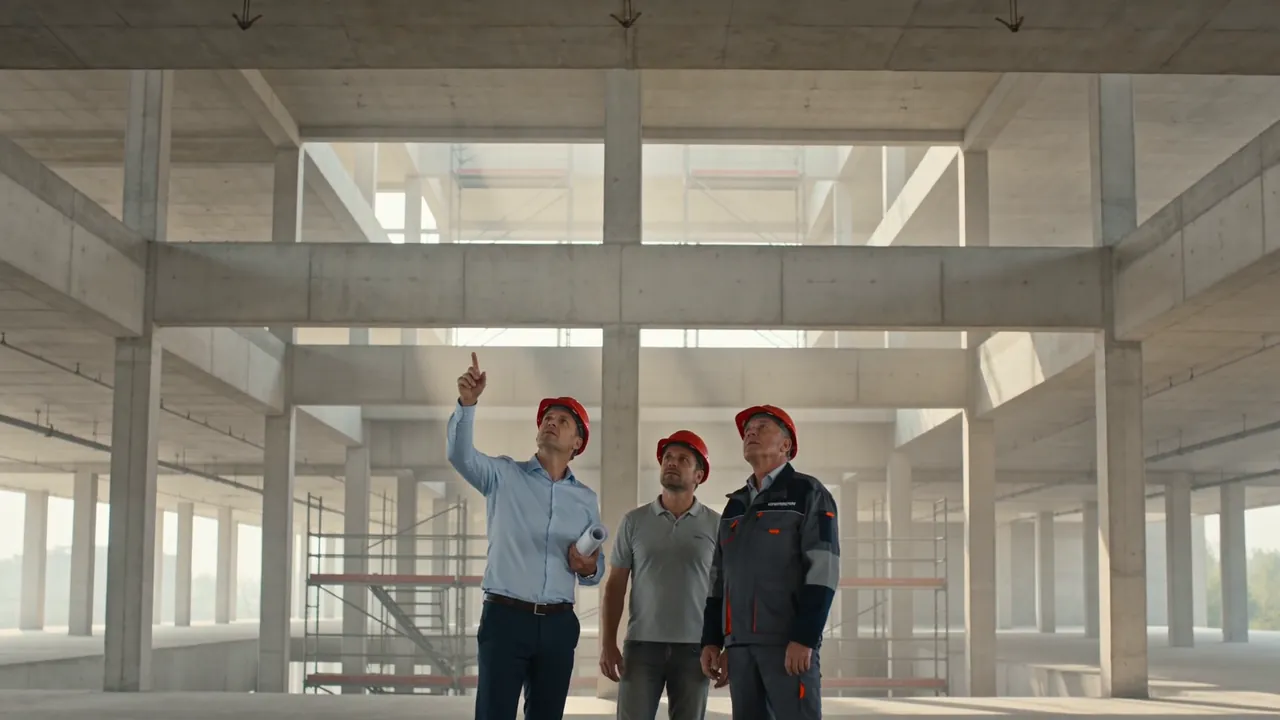
For EV-adjacent construction, the relevant Gewerkton capabilities are therefore not a separate product line. Field remains the voice-first site app for dictation, evidence, defects, daywork reports, takt and portal access. Studio remains the browser workspace for plans and models, while Cloud coordinates the operational and data flow between those environments and third parties.
This matters because charging infrastructure is physical construction. However digital the service delivered at the end may be, the project still produces field observations, decisions and evidence. A site app that can capture offline and sync later helps keep that process moving when connectivity is absent.
The broader lesson is that micromobility and EV infrastructure should not be treated only as technology stories. Their physical rollout depends on ordinary construction disciplines applied across distributed locations. The quality of the record is part of that work.
Documentation makes sustainable claims verifiable
Renewable-energy and green-building projects arrive with a strong sustainability narrative. Yet the purpose of a project and the evidence of how it was built are different things. Documentation discipline is what makes sustainable building claims verifiable.
That does not require grand language. It requires records that stay connected to inspections, decisions, work and defects. If something is observed during an acceptance walk, the record should be made while the team is in the field. If the network is unavailable, capture should continue. If another crew returns, the earlier documentation should remain available rather than disappearing with the previous shift.
For environmentally focused audiences, this distinction is worth making. A wind farm can be part of renewable-energy infrastructure while still facing the same documentation risks as any complex construction project. Distance, crew rotation and weak connectivity do not become less significant because the finished asset generates renewable electricity.
Gewerkton’s approach makes evidence a site-level task. Field is the point of capture; Gewerkton Studio is the browser workspace for plans and models. Where no model exists, the site team can create one in the browser. That gives projects a route into model-based work without assuming that a model was already supplied.
Gewerkton Cloud then handles operations and model or data coordination between Field, Studio and third parties. The three product lines cover distinct parts of the workflow while remaining under one brand.
One platform for multilingual project teams
Renewable construction is also an international undertaking. Gewerkton supports 27 content languages and offers regional AI-provider choice across the EU, US and Asia, including mainland China. Its cross-border deployment field is designed for EU, US and APAC participants working on the same project, each in their own language, while the evidence original remains unambiguous.
Projects in Asia form another defined deployment field. Gewerkton describes multilingual use from capture to report for Chinese, Korean and Vietnamese crews, with data residency by choice. That regional flexibility also appears in its BYO-AI model: the platform supports 13 AI providers, allows customers to bring their own keys, and makes the provider region selectable across the EU, US and Asia, including mainland China. The stated aim is to avoid vendor lock-in.
For wind farms, charging sites and other distributed projects involving cross-border teams, this addresses a basic coordination issue. The person recording information in the field should be able to work in their own language, while the underlying evidence remains clear. Multilingual output is useful only if it does not blur the original record.

Data location remains a project choice
Gewerkton offers an EU cloud or deployment on the customer’s own infrastructure. The choice sits with the project. That is consistent with its wider regional approach, which lets teams select AI providers based in the EU, US or Asia, including mainland China, and bring their own provider keys.
The platform was born in the German market and has its deepest commercial integration there, including GAEB, REB, XRechnung and DATEV. At the same time, it is being presented for global markets rather than confined to its country of origin.
The public-facing site follows a similarly deliberate technical approach. It is available in 27 languages, uses zero trackers, has no cookie banner and runs on a fully egress-free architecture. Its media bank contains more than 51 self-produced clips and posters.
Built differently, still in beta
Gewerkton is being built by a solo founder directing a fleet of coding agents using Codex and Claude. In one night, that fleet shipped 21 software packages, verified with negative controls and mutation tests. That development story is unusual, but it should not obscure the product’s current status: Gewerkton is in beta now, and its public beta is planned for fall 2026.
For prospective users, beta status is material. The platform’s scope is already clearly defined across Field, Studio and Cloud, as are its deployment fields, language coverage, AI-provider options and data-residency choices. But it remains a beta product rather than a generally released, finished platform.
Field documentation is the renewable-site story
Among Gewerkton’s product lines, Field carries the clearest story for wind farms and other renewable sites. Distributed positions, rotating crews, acceptance walks and dead zones all push documentation away from the office and into the physical place where work is inspected.
Voice-first capture responds to that setting directly. Evidence can begin as dictation. Defects and daywork reports can be recorded in the site workflow. Offline capture lets documentation continue without a signal, and synchronisation can happen later. The platform around Field then connects that site record with browser-based plans and models, operational coordination and third parties.
Data centres and industrial plants bring many trades working in parallel under tight deadlines; in that deployment field, meeting decisions become trade-sorted task lists. Infrastructure and tunnel projects bring long durations, numerous change orders and instructions backed by original audio. Housing and building construction brings photo-supported defects, deadlines, dictated daywork reports and device signatures at handover. Each environment has its own pressure points, but the platform’s organising idea remains consistent: capture the record close to the work and carry it through the project.
For renewables, that principle has particular force. Sustainable infrastructure still has to be constructed, inspected and accepted. Its sites may be remote, its crews mobile and its connectivity uneven. Good intentions do not bridge those gaps. Documentation does.
That is the practical case for Field in wind-farm and EV-adjacent construction: keep decisions, evidence and defects documented across locations, let work continue through dead zones, and make the record available after the crew has moved on. If sustainable construction claims are to be verifiable, the proof has to start on site.