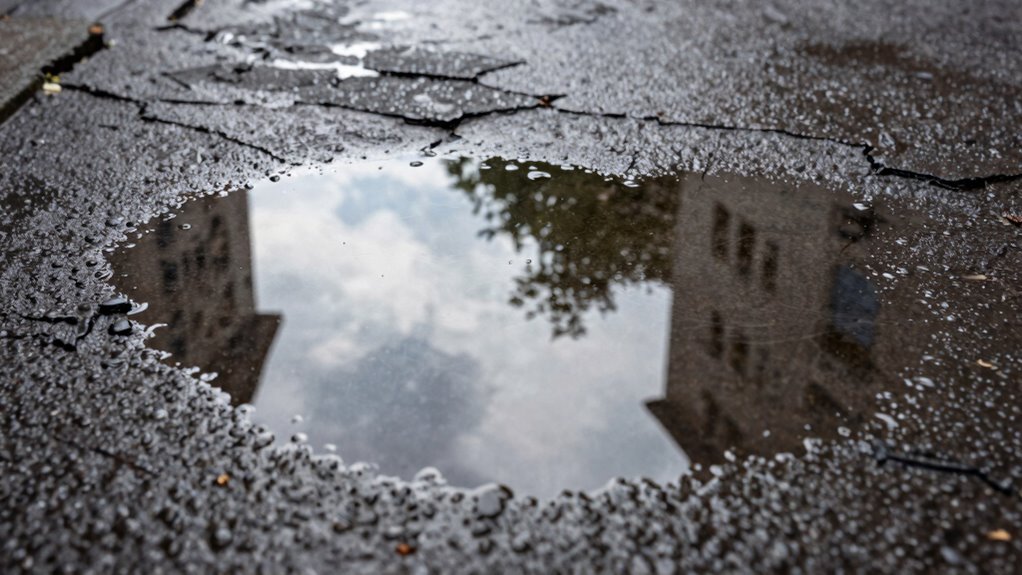

To avoid surprise dives into hidden potholes under puddles, use the edge test before driving through water. Slow down and observe the puddle’s edges—sharp or sloping sides often signal underlying damage or cracks. Irregular edges may hide potholes, so adjusting your route can prevent damage and accidents. By practicing this quick habit, you stay safer on wet roads. Keep exploring to discover more tips that protect your vehicle and boost your safety on unpredictable roads.

Get bike and ride gear delivered free — and shop member deals
- Fast, free delivery on millions of items
- Access to Prime Big Deal Days deals on October 6–7
- Prime Video, Amazon Music and more included
Key Takeaways
- The edge test involves inspecting puddle perimeters to detect sharp edges or slopes indicating hidden potholes.
- Slow approaching puddles allows better visual assessment for irregular edges or sudden drops.
- Noticing irregularities or steep slopes helps identify concealed hazards before driving over them.
- Conducting the edge test reduces the risk of hitting unseen potholes that could damage your vehicle.
- Regularly performing the edge test enhances overall safety by proactively identifying road hazards hidden under water.

The edge test involves carefully observing the perimeter of a puddle before driving through it. When approaching, slow down and look for signs of uneven edges or a sudden drop-off on either side of the water’s surface. These irregularities often indicate the presence of a pothole lurking underneath. If the edge appears sharply defined or the puddle has a noticeable slope, you should consider steering around it. This quick visual cue helps you gauge whether the water has concealed a hazard that could compromise your road safety. Remember, what looks like a shallow pool could be hiding a significant crack or hole just beneath the surface, especially after heavy rainstorms when rainwater accumulation is at its peak. Recognizing these road hazards early can help prevent accidents and vehicle damage.
Practicing this simple ‘edge test’ can save you from costly repairs and dangerous accidents. When you identify a potential hazard, adjust your route slightly to avoid the puddle altogether. If you must pass through, do so cautiously, maintaining a steady speed to minimize the impact of any hidden potholes. This vigilance is particularly critical during adverse weather conditions when the road’s surface visibility is limited. By proactively inspecting puddles and their edges, you’re not only protecting your vehicle but also enhancing your overall road safety. It’s a quick habit that can make a significant difference, especially in areas prone to pothole damage or poorly maintained roads.
Ultimately, understanding the risks posed by rainwater accumulation and employing the edge test ensures you’re better prepared for unpredictable road conditions. Puddles may seem innocuous, but beneath their shiny surfaces can lie hazards that threaten your safety. Taking a moment to assess the edges before driving through puddles is a smart, simple step toward avoiding surprise dives into potholes and keeping your journey smooth and safe.
As an affiliate, we earn on qualifying purchases.
Frequently Asked Questions
How Does the Edge Test Differ From Traditional Pothole Detection Methods?
The edge test differs from traditional pothole detection methods by focusing on surface variability, specifically identifying abrupt changes in pavement edges. Unlike standard techniques that rely on visual inspection or basic sensors, the edge test enhances detection accuracy by analyzing the boundaries of puddles and irregularities. This approach helps you spot hidden potholes more reliably, reducing the chances of surprise dives and ensuring safer navigation on the road.
Can the Edge Test Be Applied to Other Surface Inspections?
Yes, you can apply the edge test to other surface inspections. It effectively detects surface irregularities by analyzing the edges and shifts, making it useful beyond pothole detection. By adapting inspection techniques to focus on edge detection, you can identify cracks, deformations, or other flaws in various materials or surfaces. This method allows you to perform more accurate and proactive maintenance, preventing potential hazards or failures before they become serious issues.
What Equipment Is Required to Perform the Edge Test Effectively?
Performing the edge test effectively is like using a detective’s toolkit. You’ll need a handheld drainage assessment tool, a level or straightedge for surface stability, and a flashlight for better visibility. These tools help you identify hidden dangers beneath the surface, ensuring safety. With the right equipment, you can accurately assess drainage issues and surface stability, preventing surprises like potholes and ensuring safe, reliable surfaces.
Are There Limitations to Using the Edge Test in Certain Weather Conditions?
Weather challenges like heavy rain or fog can limit the effectiveness of the edge test, making it harder to spot puddles or hazards at the surface. Visibility issues may cause you to miss subtle changes or small puddles that hide potholes. In such conditions, rely more on equipment like sonar or visual markers, and exercise extra caution, since the edge test alone might not reveal all dangers.
How Often Should the Edge Test Be Conducted for Optimal Road Safety?
You should conduct the edge test regularly, ideally before and after adverse weather, to guarantee pothole maintenance keeps roads safe. Frequent testing helps catch hidden dangers early, preventing accidents and improving road safety. During periods of heavy rain or snow, increase the frequency to account for changing conditions. Consistent edge testing allows you to identify potholes promptly, reducing damage to vehicles and enhancing overall safety for all road users.
vehicle pothole detection sensor
As an affiliate, we earn on qualifying purchases.
As an affiliate, we earn on qualifying purchases.
Conclusion
By learning to spot puddles, you can avoid hidden dangers, prevent surprise dives, and stay safe on the road. Recognize the puddle, assess the edge, and trust your judgment to navigate safely. Spot the puddle, anticipate the pothole, and act accordingly. In doing so, you protect yourself, preserve your vehicle, and promote safer streets. Remember, the edge test isn’t just a tip—it’s your best defense against unseen hazards lurking beneath the water’s surface.
As an affiliate, we earn on qualifying purchases.
car safety accessories for potholes
As an affiliate, we earn on qualifying purchases.
As an affiliate, we earn on qualifying purchases.
Halloween Picks
halloween
As an affiliate, we earn on qualifying purchases.