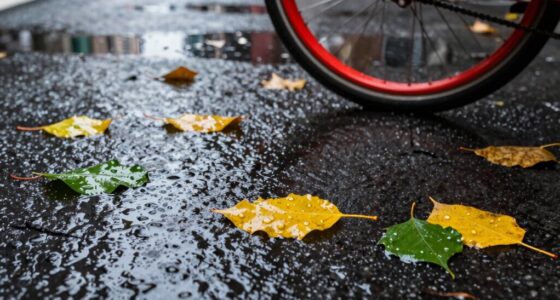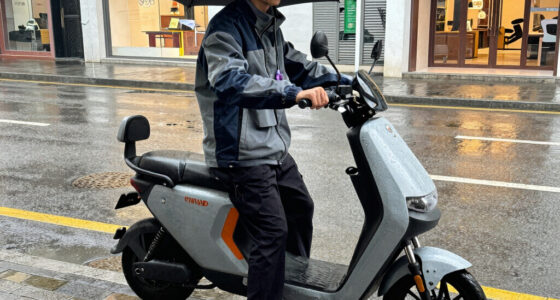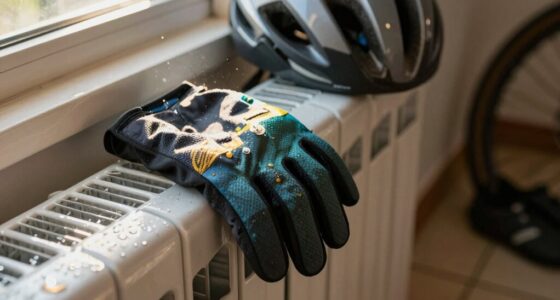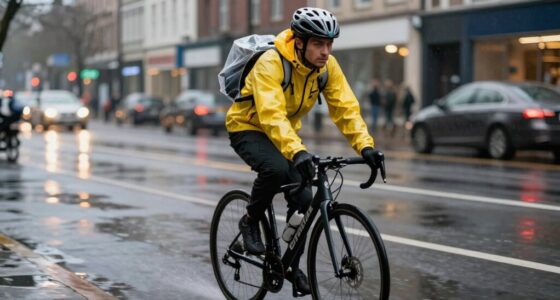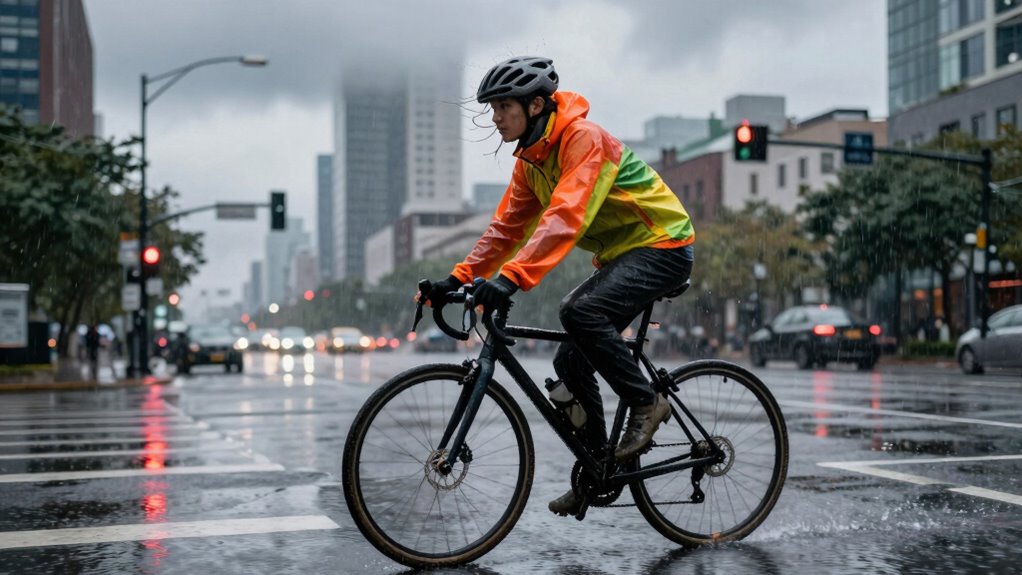

To stay functional on a bike commute in messy weather, pack waterproof gear like jackets, pants, and shoes, and use waterproof bags for essentials. Check weather updates and choose routes with good drainage and shelter from storms. Increase visibility with reflective gear and lights, and carry basic repair supplies. Be adaptable and cautious, watching for slick surfaces and hazards. Learn more tips to keep your ride comfortable and safe despite the weather surprises.

Get bike and ride gear delivered free — and shop member deals
- Fast, free delivery on millions of items
- Access to Prime Big Deal Days deals on October 6–7
- Prime Video, Amazon Music and more included
Key Takeaways
- Check real-time weather updates and reroute to sheltered or less hazardous paths.
- Wear waterproof, breathable clothing and use waterproof gear to stay dry and comfortable.
- Use reflective gear and lights to maintain visibility in poor weather conditions.
- Carry a repair kit and extra clothes to handle mechanical issues and post-ride comfort.
- Stay adaptable by being prepared for sudden weather changes and adjusting your plans accordingly.
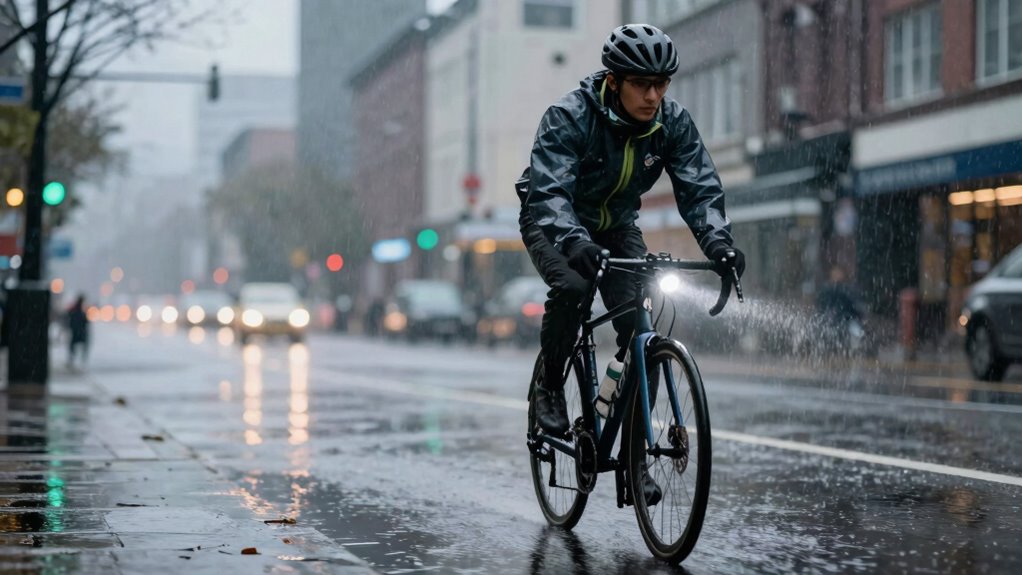
Ever wondered how to arrive at your destination feeling fresh and ready? When the weather forecast is a mess, your bike commute can quickly turn into a soggy, uncomfortable experience. But with the right preparation, you can stay functional and even enjoy your ride despite the rain. It all starts with good rain gear. Invest in a waterproof jacket, pants, and shoes, and don’t forget a reliable helmet cover to keep your head dry. Lightweight, breathable rain gear helps you stay comfortable without overheating, and quick-drying materials prevent discomfort once you reach your destination. Keep a small pack of microfiber towels in your bag to wipe off any moisture before you arrive, helping you stay fresh and avoid feeling damp all day.
Good rain gear keeps you dry and comfortable, making your bike commute in the rain more manageable and even enjoyable.
Route planning becomes even more essential when the weather looks dubious. Before you head out, check real-time weather updates and choose a route that minimizes exposure to heavy rain or puddles. Opt for streets with good drainage and less traffic, which tend to be safer and less waterlogged. If possible, plan a shortcut that keeps you close to sheltered areas or covered bike paths, protecting you from sudden downpours. Sometimes, it’s wise to avoid routes with lots of standing water, as they can cause your bike to slip or damage your gear. Remember to carry a map or use a navigation app that can reroute you if conditions worsen or if you need to detour around flooded streets. Additionally, selecting weather-appropriate gear can significantly improve your riding experience and safety during unexpected rain showers. Incorporating waterproofing techniques on your gear can also extend their effectiveness in heavy rain. Being aware of rain-resistant fabrics can help you choose gear that lasts longer in wet conditions. Planning your route with weather considerations in mind can make all the difference in staying dry and safe. Including knowledge about indoor alternative routes can be helpful when outdoor conditions become hazardous.
Preparation also means packing smart. Keep your essentials in waterproof bags or bike panniers, especially your phone, wallet, and any electronics. Carry an extra set of clothes in case you get drenched—changing into dry clothes upon arrival can make a huge difference in how you feel afterward. A small repair kit and tire pump are indispensable, as rain can make slick surfaces more prone to flats or mechanical issues. You’ll also want reflective gear or lights to boost visibility in poor weather conditions, making sure motorists see you clearly.
Ultimately, staying functional on a bike commute in bad weather comes down to anticipation and adaptability. With proper rain gear, strategic route planning, and smart packing, you can tackle the mess confidently. Embrace the challenge, and you’ll find that riding in the rain isn’t just bearable—it can be downright satisfying when you’re prepared.
As an affiliate, we earn on qualifying purchases.
Frequently Asked Questions
How Can I Prevent My Electronics From Getting Wet?
To prevent your electronics from getting wet, always use waterproof cases or electronic protectors designed for biking. Secure these cases tightly to avoid water seeping in during rain or splashes. Consider additional covers or zippers for extra protection, and keep your devices in protected compartments in your bag. These measures guarantee your electronics stay dry, functional, and safe, no matter how messy the weather gets during your ride.
What’s the Best Way to Stay Warm in Cold Rain?
Layered clothing and windproof jackets genuinely keep you warm in cold rain, and science supports this: layering traps heat and insulates effectively. Start with moisture-wicking base layers, add insulating layers like fleece, and top with a windproof jacket to block chilly gusts. This combination prevents heat loss, keeps rain off your skin, and guarantees you stay warm and dry, even when the weather turns nasty during your bike commute.
How Do I Handle Muddy or Slippery Roads Safely?
To handle muddy or slippery roads safely, focus on maintaining muddy traction by lowering your tire pressure slightly for better grip. Use tires with good tread designed for slippery conditions. Keep your speed moderate and avoid sudden turns or braking. Stay alert for patches of mud or slick spots, and shift your weight back slightly for better control. These steps help you navigate tricky terrain smoothly and reduce the risk of slipping.
What Gear Should I Carry for Unpredictable Weather?
You should carry rain gear like a waterproof jacket, pants, and gloves to stay dry and comfortable. Pack a lightweight, packable rain poncho for quick protection. Keep an eye on weather apps to track changing conditions and plan your route accordingly. Additionally, bring a spare set of clothes and a small towel in case you get soaked. Being prepared guarantees you stay functional and safe, no matter how unpredictable the weather gets.
How Do I Dry My Clothes Quickly After a Wet Ride?
Think of your clothes as sponges that need wringing out quickly. To dry them fast, use quick drying techniques like wringing and hanging them in a well-ventilated area or near a heat source. Moisture wicking fabrics help speed up the process by pulling sweat away from your skin. For faster results, layer your gear with lightweight, breathable pieces, and avoid heavy, non-breathable materials that trap moisture.
As an affiliate, we earn on qualifying purchases.
Conclusion
No matter how unpredictable the weather, your bike commute can remain a smooth ride if you’re prepared. Think of your gear as a trusty shield, ready to deflect the storm’s chaos. With the right clothing, flexible planning, and a positive attitude, you’ll glide through rain or shine, turning weather woes into just another part of your journey. Embrace the challenge, and let each ride be a proof of your resilience—because even a messy forecast can’t dampen your spirit.
As an affiliate, we earn on qualifying purchases.
As an affiliate, we earn on qualifying purchases.
Fall Picks
fall essentials
As an affiliate, we earn on qualifying purchases.