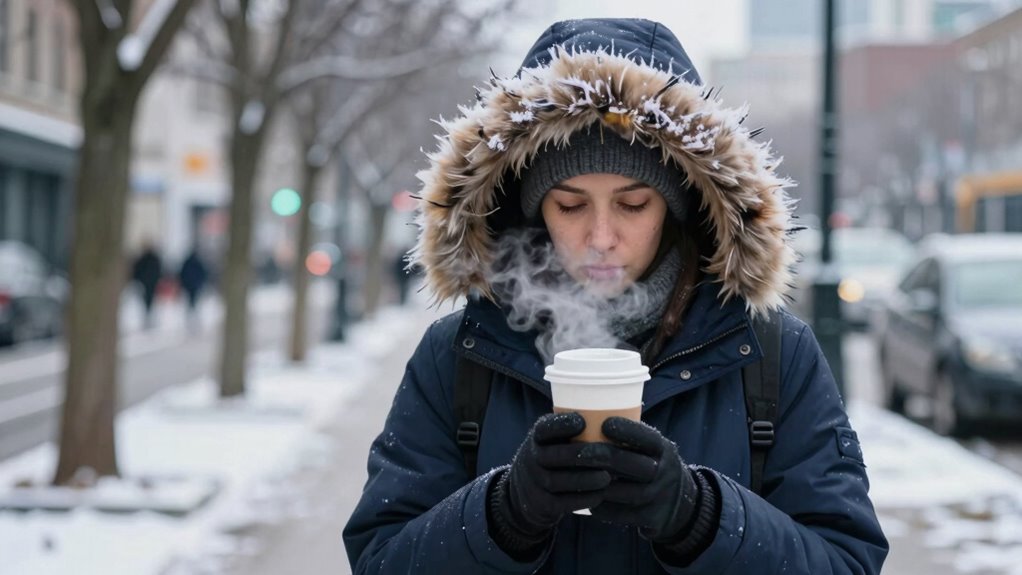

Even if the temperature stays above freezing, you can still develop hypothermia if you’re outside too long without proper clothing. Watch for warning signs like intense shivering, numb fingers or toes, and feeling sluggish or confused. As it worsens, shivering may stop, or you may feel uncoordinated and drowsy. Recognizing these early symptoms helps you act quickly and stay safe. Keep going to learn the full list of commuter warning signs.
Key Takeaways
- Hypothermia can occur even above freezing if exposed to cold weather for extended periods without proper clothing.
- Early warning signs include intense shivering, numbness, and feelings of sluggishness or confusion.
- As hypothermia worsens, shivering may stop, and physical and mental functions decline, risking unconsciousness.
- Promptly seek shelter, remove wet clothing, and warm the body gradually at the first signs of symptoms.
- Wearing layered, dry clothing and staying alert to physical changes are essential for cold weather safety during commutes.

Hypothermia occurs when your body loses heat faster than it can produce it, causing your core temperature to drop dangerously low. Even in temperatures above freezing, if you’re exposed to cold weather for too long without proper precautions, you risk hypothermia. That’s why understanding the warning signs and practicing cold weather safety is essential, especially if you’re commuting or spending extended periods outdoors. Recognizing early symptoms can help you take action before the condition worsens and becomes life-threatening.
One of the first signs of hypothermia is feeling unusually shivering. While shivering is your body’s natural response to cold, persistent or intense shivering indicates your body is working overtime to generate heat. As hypothermia progresses, shivering might slow down or stop altogether, which is an alarming sign that your core temperature is dropping further. You might also notice that you feel numb, especially in your fingers, toes, nose, or ears. This numbness is a result of your body diverting blood away from extremities to protect essential organs, making frostbite prevention critical in cold weather safety. Frostbite can develop quickly if you don’t keep your extremities covered or if you’re exposed to biting cold for too long.
You may start to feel sluggish, confused, or exhibit poor coordination. Simple tasks like buttoning your coat or walking steadily become difficult. Your speech might become slurred, and your face could appear pale or flushed. As hypothermia deepens, you might experience dulled consciousness or even become unconscious. Recognizing these mental and physical changes early can save your life, especially during winter commutes where quick assistance might not be immediately available.
If you notice these signs—persistent shivering, numbness, confusion, or difficulty moving—it’s essential to take immediate action. Seek shelter from the cold, remove wet clothing, and warm your body gradually with blankets or warm, dry clothing. Avoid using direct heat like hot water or heating pads, as rapid warming can cause shock or burns. Remember, cold weather safety isn’t just about preventing frostbite; it’s about protecting yourself from hypothermia as well. Dress in layers, wear insulated gloves and hats, and stay dry to maintain body heat. Always be aware of how your body feels and don’t ignore early warning signs. Acting quickly can make the difference between a minor cold-related discomfort and a serious, potentially deadly condition. Stay alert, stay warm, and prioritize your safety during every winter commute.
Frequently Asked Questions
Can Hypothermia Occur Indoors During Winter?
Yes, hypothermia can occur indoors during winter if your indoor heating isn’t sufficient or if you don’t use proper personal insulation. You might feel cold even inside, especially if windows are drafty or your clothing isn’t warm enough. It’s important to maintain a comfortable temperature, wear layered clothing, and make sure your heating system is working properly to prevent your body from losing too much heat.
How Quickly Can Hypothermia Develop Above Freezing?
In cold weather, hypothermia can develop surprisingly fast, sometimes within an hour, especially if you’re exposed to wet or windy conditions. Your body loses heat quickly when you’re inadequately dressed or if indoor heating fails. That’s why emergency preparedness is essential—you should have warm clothing and a plan for quick shelter. Stay alert to early signs like shivering or confusion to prevent severe hypothermia.
Are Children More Vulnerable to Hypothermia in Cold Weather?
Yes, children are more vulnerable to hypothermia in cold weather because their child vulnerability and temperature sensitivity are higher than adults. Their smaller bodies, less fat, and immature thermoregulation make it harder to stay warm. You should monitor children closely, dress them in layers, and limit exposure to cold. Recognizing early signs of hypothermia helps prevent serious health issues and keeps your child safe in chilly conditions.
What Are the Long-Term Effects of Mild Hypothermia?
Think of mild hypothermia as a silent thief stealing your health over time. Its long-term effects can include chronic health issues like persistent fatigue, joint pain, and cognitive difficulties. The metabolic impact disrupts your body’s energy balance, potentially leading to ongoing health problems. If left untreated, even mild episodes can chip away at your well-being, highlighting the importance of early recognition and care to prevent lasting damage.
Can Certain Clothing Prevent Hypothermia During Commutes?
Yes, certain clothing can prevent hypothermia during your commute. Use layering strategies with moisture-wicking fabrics to keep sweat away from your skin, helping you stay dry and warm. Add insulating layers like fleece or wool for extra warmth, and finish with a waterproof outer layer to shield against wind and rain. Proper clothing guarantees you maintain body heat and reduces the risk of hypothermia, even in chilly conditions.
Conclusion
Remember, hypothermia can strike even above freezing temperatures—so stay alert. Keep an eye out for warning signs like shivering, confusion, or fatigue, and don’t ignore them. Did you know that according to the CDC, about 600 people die from hypothermia each year in the U.S.? Staying aware and prepared can make all the difference. So, dress appropriately, limit exposure, and listen to your body to stay safe during cold commutes.