
To layer waterproof and protective gear practically, start with a moisture-wicking base layer to keep you dry. Add a breathable insulating layer like fleece or down, then top it with a waterproof shell with sealed seams and an adjustable hood for main protection. Adjust layers based on activity and weather, adding or removing as needed. Proper maintenance and repairs extend gear life, ensuring you stay comfortable and protected no matter the conditions—keep going to find out more tips.
Open a free Amazon Business account
Business pricing, bulk buying and tax-exempt orders.
As an affiliate, we earn on qualifying purchases.
Key Takeaways
- Start with a moisture-wicking base layer to keep skin dry and comfortable.
- Add an insulating layer for warmth, ensuring it’s breathable to prevent moisture buildup.
- Use a waterproof shell with sealed seams and adjustable features for primary protection.
- Layer additional waterproof gear or ponchos during heavy rain, removing them as conditions improve.
- Regularly inspect, clean, and reapply waterproof treatments to maintain gear performance.
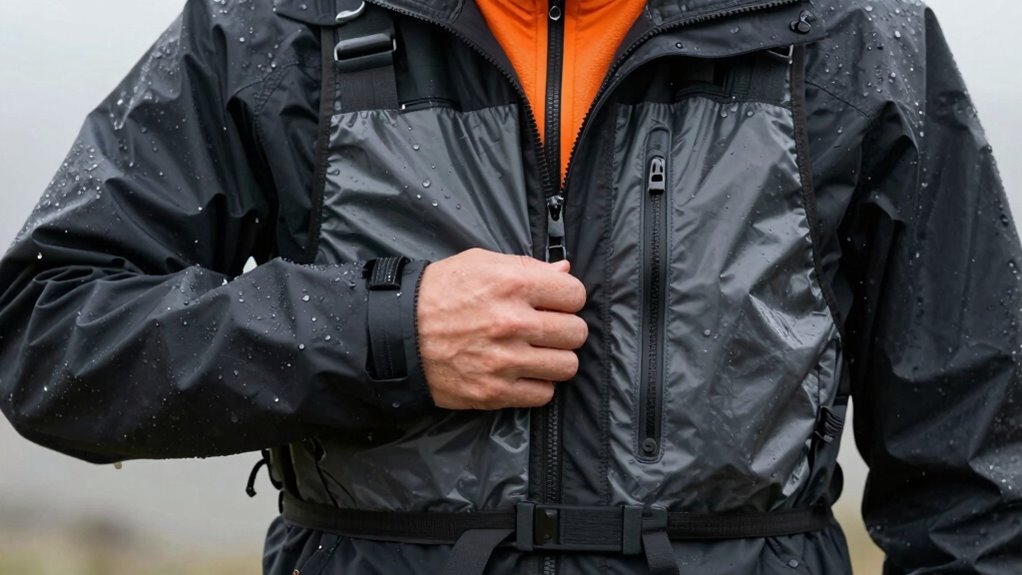
Ever wondered how to stay dry and protected in unpredictable weather? The key lies in understanding how to layer waterproof and protective gear effectively. It’s not just about throwing on a raincoat; it’s about creating a system that adapts to changing conditions. Proper gear maintenance plays a crucial role here, guaranteeing your gear performs when you need it most. Regularly inspecting your clothing for tears, worn-out seams, or compromised waterproof coatings keeps your gear reliable. Clean your waterproof garments according to the manufacturer’s instructions to maintain their water resistance, and store them properly when not in use to prevent damage. This routine boosts your weather preparedness, giving you confidence to face sudden downpours or chilly winds.
Layering smartly means starting with a good moisture-wicking base layer. This layer pulls sweat away from your skin, keeping you dry and comfortable, which is essential for both weather preparedness and overall comfort. Next, add an insulating layer if temperatures drop—think fleece or down, but make sure it’s breathable so moisture doesn’t get trapped inside. Over these, a waterproof shell or jacket provides the main defense against rain, snow, or wind. Look for gear with sealed seams and adjustable hoods for maximum protection. When choosing protective gear, focus on fit and functionality; tight gear can restrict movement, while loose clothing can trap moisture. Adjust your layers based on activity level and weather changes. If it starts raining harder, add an extra waterproof layer or consider a poncho, and if the sun comes out, you can peel off some layers without sacrificing protection. Additionally, considering biodiversity and sustainable living practices when selecting gear can help reduce environmental impact and promote eco-friendly choices. Practicing proper gear maintenance ensures your investment lasts longer and keeps functioning as intended. Regular gear maintenance ensures your investment lasts longer and keeps functioning as intended. This includes reapplying waterproof treatments when necessary and drying your gear properly after use to prevent mold or mildew. It’s also beneficial to know how to repair minor damages like tears or leaks, which can extend the life of your gear and maintain its effectiveness. Incorporating environmentally friendly materials in your gear selection can further support sustainability efforts. Being aware of the environmental impact of your gear choices can help you make more conscious decisions that align with eco-friendly values. Always pack spare layers and waterproof accessories when heading into uncertain weather; this proactive approach enhances your weather preparedness. Remember, layering is not just about protection but also about flexibility—adding or removing layers as conditions change keeps you comfortable and dry. When you pay attention to gear maintenance and adapt your layering strategy, you’ll find yourself better prepared for unpredictable weather, with gear that works seamlessly and keeps you dry, warm, and protected no matter what Mother Nature throws your way.
As an affiliate, we earn on qualifying purchases.
Frequently Asked Questions
Can I Wear Multiple Waterproof Layers in Hot Weather?
Yes, you can wear multiple waterproof layers in hot weather, but you’ll want to prioritize breathability concerns. Choose lightweight, breathable materials that allow moisture to escape and avoid trapping heat. Make sure your layers are compatible, so they don’t compromise each other’s waterproofing or comfort. Layering smartly can protect you from rain without overheating, but always monitor how your gear feels and adjust if you start to sweat excessively.
How Do I Prevent Sweating When Layering Waterproof Gear?
To address breathability concerns and manage sweat effectively, you should choose gear with breathable fabrics and venting options. Use moisture-wicking base layers to draw sweat away from your skin, and consider pit zips or adjustable vents to enhance airflow. Regularly adjusting your layers and staying in shaded areas also helps prevent overheating. These sweat management techniques keep you comfortable while maintaining waterproof protection, even during intense activities in hot weather.
Is It Necessary to Waterproof Each Layer Separately?
You don’t need to waterproof each layer separately. Instead, focus on effective layering techniques using waterproof material types like Gore-Tex or similar fabrics. These materials are designed to keep water out while allowing moisture to escape, so you stay dry and comfortable. Layering properly involves placing a waterproof outer layer over insulating layers, ensuring your gear remains protective without trapping sweat. This approach simplifies your gear management and enhances comfort.
How Often Should I Replace or Repair Waterproof Gear?
A stitch in time saves nine, and that applies to waterproof gear too. You should inspect your gear regularly for signs of wear and tear, repairing small issues promptly to prolong its lifespan. Replace waterproof gear when you notice significant damage or loss of water resistance. Keep up with maintenance tips like cleaning and reapplying waterproof treatments, which help maintain gear durability and guarantee you’re protected when it counts most.
Can Layering Waterproof Gear Improve Mobility?
Layering waterproof gear can indeed improve mobility if you use effective layering techniques. By choosing lightweight, breathable layers, you reduce breathability issues and stay comfortable while moving. Proper layering allows you to adjust your gear based on activity level and weather, preventing bulkiness that hinders mobility. Focus on fitting layers snugly without restricting movement, and use breathable fabrics to stay dry, flexible, and agile during outdoor activities.
As an affiliate, we earn on qualifying purchases.
Conclusion
So there you have it—your foolproof, fashion-forward guide to layering waterproof gear. Who knew staying dry could be so stylishly complicated? Just remember, if you end up looking like you’re auditioning for a waterproof cosplay, you’re doing it right. After all, who needs a clear head when you’ve got a perfectly layered, rainproof fortress? Stay dry, stay fabulous, and don’t forget to thank Mother Nature for the fashion disaster!
As an affiliate, we earn on qualifying purchases.
waterproof shell with sealed seams
As an affiliate, we earn on qualifying purchases.
As an affiliate, we earn on qualifying purchases.
Fall Picks
fall essentials
As an affiliate, we earn on qualifying purchases.