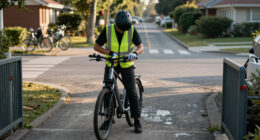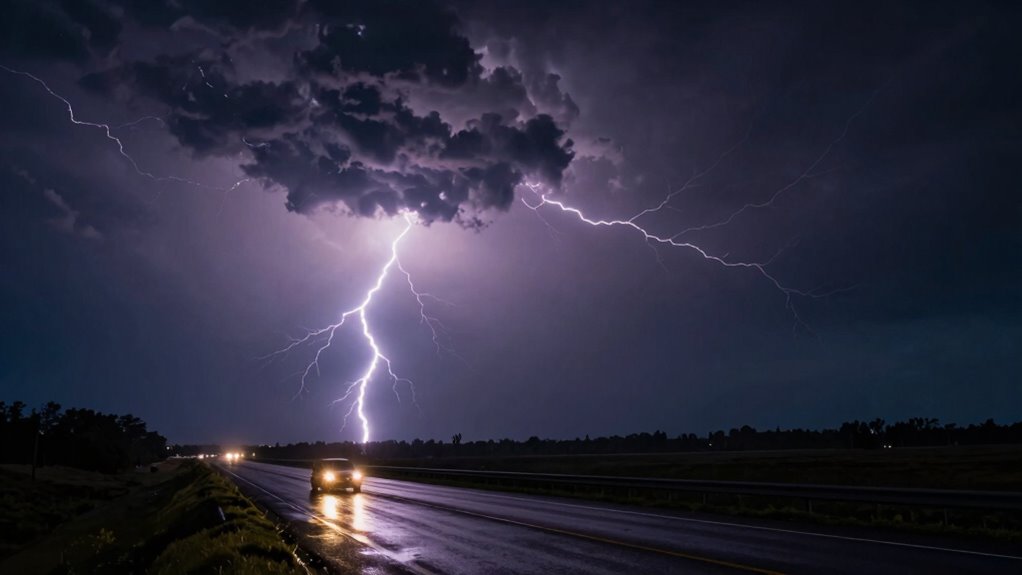

During your commute, remember the lightning distance rule: count the seconds from seeing lightning until hearing thunder. For every five seconds counted, the storm is approximately one mile away. If you count 30 seconds, the storm is about six miles away, meaning you should seek shelter immediately. Staying aware of this quick rule helps you judge storm proximity and stay safe. Keep going, and you’ll discover more tips to stay protected during storms.

Get bike and ride gear delivered free — and shop member deals
- Fast, free delivery on millions of items
- Access to Prime Big Deal Days deals on October 6–7
- Prime Video, Amazon Music and more included
Key Takeaways
- Count seconds from lightning to thunder; 5 seconds equals approximately 1 mile distance.
- When lightning is within 6 miles (about 30 seconds), seek shelter immediately.
- Use the timing as a quick, simple way to gauge storm proximity during commutes.
- Louder and more frequent thunder indicates the storm is approaching; fading thunder means it’s retreating.
- Practicing this rule enhances safety awareness and helps make timely decisions during storms.

Ever wondered how to estimate how close a lightning strike is? When you’re out during a thunderstorm, knowing this simple rule can make a big difference in your thunderstorm safety. The lightning distance rule is a handy tool that helps you gauge how near the storm is, so you can decide whether to seek shelter or keep your distance. Staying aware of weather conditions is essential, especially when you’re on the move, whether driving or walking. Being prepared means understanding the signs of an approaching storm and acting swiftly before it becomes dangerous.
Knowing how close lightning is helps you stay safe during thunderstorms.
The rule itself is straightforward: after you see a lightning flash, start counting the seconds until you hear the thunder. Every five seconds corresponds to roughly one mile distance from the lightning strike. For example, if you count 10 seconds, the lightning is about two miles away; if it’s 15 seconds, then roughly three miles away. This quick calculation gives you a real-time estimate of how close the storm is, enabling you to make smarter choices about your safety. If the storm is within six miles, or roughly 30 seconds, it’s a good idea to seek shelter immediately. The lightning distance rule is especially useful because it provides a tangible measure in an otherwise chaotic situation.
Being weather aware means not just reacting to the lightning and thunder but actively monitoring changes in the storm’s behavior. If you notice the thunder growing louder and the flashes becoming more frequent, the storm is likely approaching. Conversely, if the thunder starts to diminish and lightning becomes less frequent, you might have some extra time before the storm strengthens. This kind of weather awareness helps you stay safe by making informed decisions, such as pulling over if you’re driving or heading indoors if you’re walking outside. Remember, lightning can strike even when the sky appears clear, so always keep an eye on the weather and listen for thunder.
Practicing the lightning distance rule during a storm can also improve your overall thunderstorm safety. It’s a quick mental calculation that, combined with a vigilant attitude, keeps you alert and prepared. Understanding the role of contrast ratio in visual clarity can enhance your awareness of storm conditions, such as changes in cloud formations and lightning intensity. Always prioritize safety over convenience—if the storm seems close, don’t hesitate to find shelter immediately. This rule is not just for emergencies but also a crucial part of being proactive about weather awareness. It’s a simple, effective way to stay one step ahead of nature’s unpredictability, especially during your daily commutes or outdoor activities. Remember, the key to staying safe during thunderstorms is awareness, quick judgment, and knowing how to interpret the signs of an approaching storm.
As an affiliate, we earn on qualifying purchases.
Frequently Asked Questions
How Accurate Is the Lightning Distance Rule in Different Weather Conditions?
The lightning distance rule is generally accurate, but weather variability can impact its precision. Lightning detection systems help estimate how far away a storm is, but factors like rain, wind, or atmospheric conditions can cause discrepancies. You should always use the rule as a guideline, not an absolute fact. In changing weather, stay alert, watch for signs of lightning, and prioritize safety over relying solely on distance estimates.
Can the Lightning Distance Rule Be Applied During Thunderstorms at Night?
Yes, you can apply the lightning distance rule at night, but be cautious. Nighttime visibility makes lightning perception tricky, and you might not see distant strikes clearly. As thunder rumbles closer, you realize how urgent it is to act. Keep track of lightning and thunder, but don’t rely solely on sight—trust your hearing. Stay safe, and remember that darkness can distort what you think you see or hear.
Is the Lightning Distance Rule Reliable in Urban Versus Rural Areas?
Yes, the lightning distance rule is generally reliable in both urban environments and rural areas, but keep in mind that lightning frequency varies. In urban settings, lightning strikes are less frequent, so the rule may be less critical. In rural areas with more frequent storms, it’s a useful safety tool. Always prioritize seeking shelter if you see lightning, regardless of location, and remember the rule as a quick safety check.
How Does the Rule Account for Lightning Strikes That Are Not Directly Overhead?
You should know that the lightning distance rule accounts for strikes not directly overhead by considering thunder sound delay, which varies with lightning strike elevation. When you hear thunder, it’s not always directly above, so the delay helps estimate distance. Keep in mind, higher lightning strikes cause longer thunder delays, so always add a safety margin when judging how far lightning is, especially in hilly or urban areas with variable elevation.
Are There Any Safety Limitations or Risks When Using This Rule?
Think of the lightning distance rule as a safety net, but it’s not foolproof. While it helps you gauge electrical hazards, relying solely on it might give you a false sense of security. Weather conditions can change rapidly, and lightning can strike even when the rule suggests safety. Always stay updated on weather alerts and avoid exposed areas during storms, as the rule doesn’t account for all safety limitations or risks.
As an affiliate, we earn on qualifying purchases.
Conclusion
Remember the lightning distance rule like a modern-day Noah’s Ark—trust the one number to keep you safe. Just as Noah knew when the flood was coming, you can gauge the storm’s approach and seek shelter. Stay alert, keep that number in mind, and act swiftly. The next time thunder roars, you’ll be ready to navigate the storm safely, turning a simple rule into your personal lightning shield. Stay safe out there!
As an affiliate, we earn on qualifying purchases.
As an affiliate, we earn on qualifying purchases.
Fall Picks
fall essentials
As an affiliate, we earn on qualifying purchases.