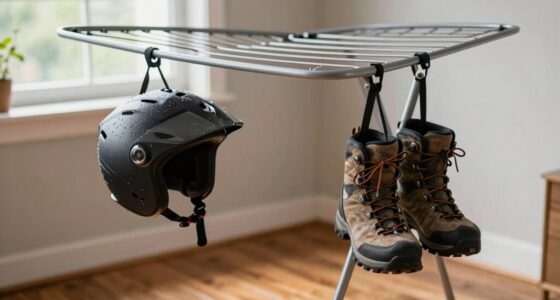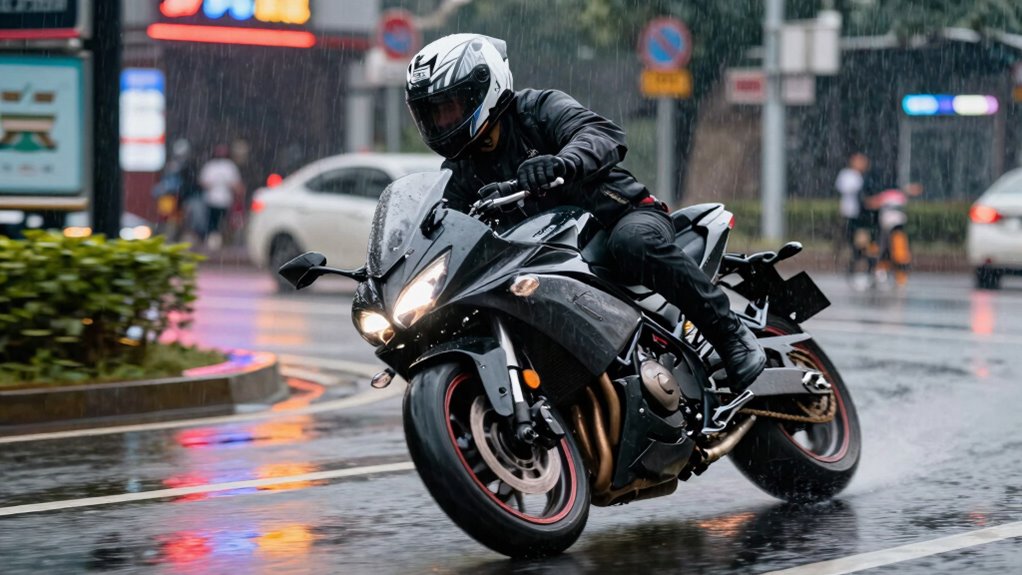

When riding in the rain, stay calm by using smooth, gradual braking and steering to maintain traction. Avoid sudden stops or sharp turns, as they can lead to skidding. Slow down early and keep a safe following distance, allowing more reaction time. Focus on gentle inputs, stay relaxed, and keep your speed moderate. Proper equipment maintenance and visibility help, too. Want to master these techniques? Keep exploring for more tips to ride confidently and safely in wet conditions.

Get bike and ride gear delivered free — and shop member deals
- Fast, free delivery on millions of items
- Access to Prime Big Deal Days deals on October 6–7
- Prime Video, Amazon Music and more included
Key Takeaways
- Brake gently and progressively to prevent skids and maintain control in wet conditions.
- Reduce speed early and steer smoothly to avoid hydroplaning and loss of traction.
- Keep a safe following distance for ample reaction time during rain.
- Maintain proper tire pressure and replace worn tires to improve water channeling.
- Use deliberate, smooth inputs on brakes, throttle, and steering to stay balanced and confident.
Understanding the Dynamics of Wet Road Conditions
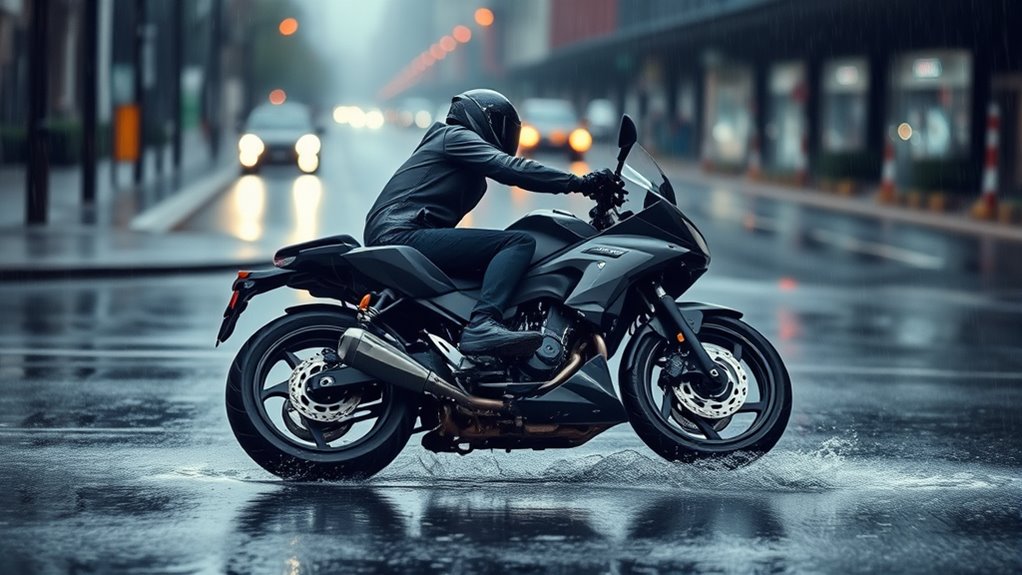
When roads become wet, their surface properties change significantly, affecting how vehicles handle and stop. You need to be aware of hydroplaning risks, where a layer of water causes your tires to lose contact with the road, increasing the chance of losing control. Tire grip considerations become vital in these conditions; worn or under-inflated tires can’t effectively channel water away, heightening the risk of slipping. As water accumulates, your vehicle’s traction decreases, making it harder to steer and brake safely. Recognizing how wet conditions alter road behavior keeps you safer and more confident behind the wheel during rainy weather. Being aware of hydroplaning risks can help you adjust your driving style to stay safer in wet conditions.
Proper Braking Techniques for Rainy Weather
When braking in rainy conditions, you need to be gentle and gradual to maintain control. Sudden stops can cause your tires to lock up or skid, increasing the risk of an accident. Focus on applying steady pressure to slow down smoothly and safely.
Gentle, Progressive Braking
In rainy weather, your braking needs to be smooth and controlled to prevent skidding or losing traction. Gentle, progressive braking helps maintain wet tire grip and puddle awareness. Here are four tips to master this technique:
- Start braking early and gradually increase pressure to avoid sudden stops.
- Use light, steady pressure on the brake lever, avoiding sudden squeezes.
- Keep your eyes on the road, spotting puddles that could cause hydroplaning.
- Release the brake slightly if you feel the bike beginning to slide, then reapply smoothly.
- Practice your braking in safe, low-traffic areas to build confidence and braking control. Additionally, understanding how hydroplaning occurs can help you anticipate and avoid dangerous situations. Recognizing the importance of proper traction management is key to safe riding in wet conditions. This approach minimizes the risk of skidding and helps you stay balanced. Proper braking techniques are essential for maintaining control and safety during rainy rides, especially when navigating slick surfaces. Remember, controlled braking is essential in rain, where even small mistakes can lead to a loss of control. Being aware of wet road conditions and adjusting your riding accordingly can further enhance your safety.
Avoid Sudden Stops
To stay safe on wet roads, you must avoid sudden stops that can cause your tires to lock up and your bike to slide. Instead, brake smoothly and gradually, maintaining control. Wearing proper rain gear helps you stay alert and comfortable, reducing panic during unexpected stops. Watch for road markings, which indicate safe braking zones and potential hazards. Use your front brake gently, followed by the rear, to prevent skidding. Remember, abrupt stops can lead to loss of traction, especially on slick surfaces. Staying aware of Traction control methods is essential for maintaining stability during rainy conditions. Here’s a quick guide:
| Step | Action | Tips |
|---|---|---|
| Prepare to stop | Ease off acceleration, grip brakes | Use light, steady pressure |
| Apply brakes | Front brake first, then rear | Avoid jerky movements |
| Monitor road | Watch for markings and hazards | Adjust speed accordingly |
| Final stop | Come to a complete, controlled halt | Keep your weight balanced |
Additionally, understanding and applying proper braking techniques is crucial for safe riding in rain. Applying smooth braking techniques can significantly reduce the risk of skidding and help you maintain control more effectively. Developing good braking habits can make a significant difference in rainy conditions.
How to Approach Turns Safely in Wet Conditions
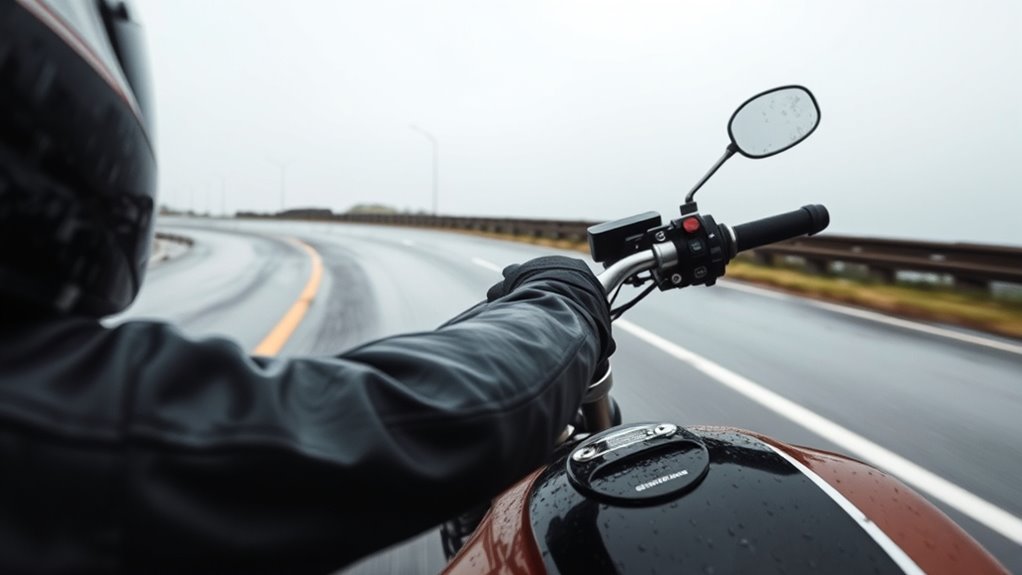
When approaching a turn in wet conditions, you should slow down early to give yourself more control. Choose smooth lines that avoid sudden movements, and apply gentle pressure on your brakes and handlebars. These simple steps help you stay balanced and confident, even on slippery roads. Incorporating visual and auditory cues can further enhance your awareness and response during turns in challenging weather conditions. Additionally, paying attention to your connected fitness technology can provide real-time feedback to improve your riding technique in adverse weather. Being familiar with seasonal maintenance checklists can also ensure your bike’s tires and brakes are optimized for wet conditions, reducing the risk of slips. Regularly performing preventative maintenance helps keep your equipment reliable when you need it most. Utilizing modern bike technology such as electronic braking systems can also improve safety in wet environments.
Slow Down Early
Because wet roads reduce traction, it’s essential to slow down early when approaching turns. This gives you more control and reduces the risk of slipping. Before you enter a turn, consider these tips:
- Reduce your speed gradually, especially if rain gear makes you feel less confident or rider visibility is compromised.
- Maintain a safe following distance to give yourself extra time to react.
- Avoid sudden throttle or brake inputs mid-turn to prevent skidding.
- Look through the turn instead of directly at the road; good visibility helps you plan your line.
- Be aware of your driving techniques, as proper maneuvering is crucial for safety in wet conditions.
- Remember that high-quality riding gear can improve your confidence and safety when riding in adverse weather.
- Staying alert and attentive helps you respond effectively to changing road conditions and enhances overall safety.
Choose Smooth Lines
Choosing smooth lines through turns is essential in wet conditions, as it helps maintain traction and control. When approaching a turn, look for a clean, predictable line that avoids abrupt shifts or sharp angles. Use your rain gear to stay dry and comfortable, which keeps your focus sharp. Good visibility tips include wearing bright or reflective clothing and ensuring your visor or goggles are clear, so you can see the road and other vehicles clearly. Planning your line early allows you to adjust smoothly, reducing the risk of slipping. Keep your movements deliberate and steady, avoiding sudden steering inputs. By selecting a smooth, predictable path, you’ll improve your grip and stay safer in the rain.
Maintain Gentle Pressure
In wet conditions, applying gentle, consistent pressure on your handlebars is essential for maintaining control during turns. This helps prevent sudden shifts that could cause slipping. To stay safe: 1. Keep your rain gear snug and visible, so you stay dry and alert. 2. Check your tire pressure; proper inflation increases grip on wet surfaces. 3. Avoid gripping the handlebars too tightly—relax your hands to enhance sensitivity. 4. Lean smoothly into turns, maintaining steady pressure, and resist sudden movements. Regularly monitoring your skincare routine can also help maintain your skin’s health against environmental stressors like rain.
Maintaining Traction and Preventing Slips
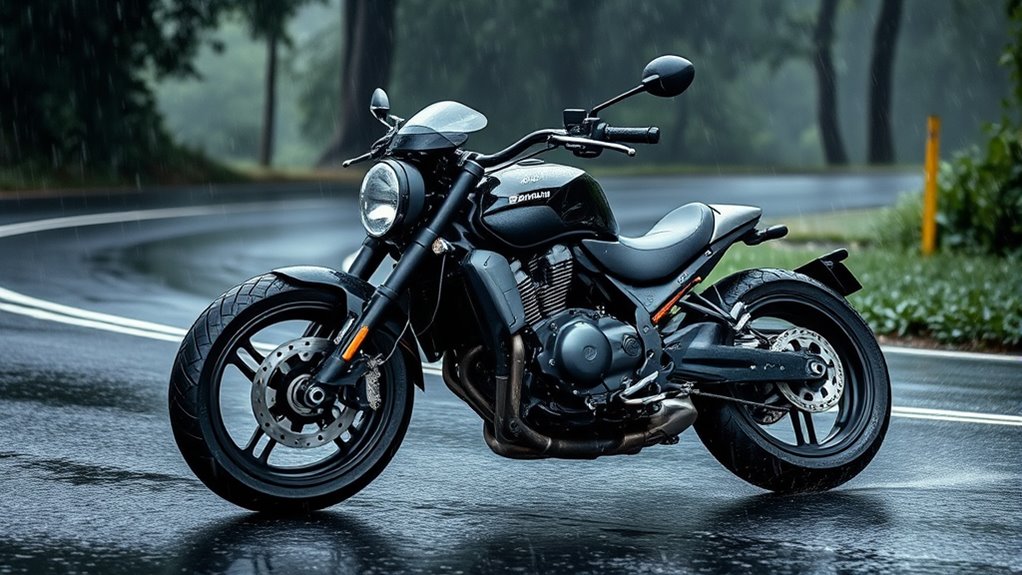
To maintain traction and prevent slips while riding in the rain, you need to be proactive and attentive to your riding techniques. The hydroplaning risk increases when water builds between your tires and the road, reducing tire grip markedly. To minimize this, avoid sudden acceleration or braking, which can cause your tires to lose contact with the surface. Keep your speed moderate, especially on wet roads, and steer smoothly to prevent skidding. Ensure your tires have sufficient tread depth, as worn tires drastically reduce grip. Maintain proper tire pressure for ideal contact with the road. Regularly inspecting your tires for wear and tear and replacing them when necessary can significantly improve safety. Additionally, practicing defensive riding can help you anticipate and react to changing road conditions more effectively. Being aware of tire specifications and ensuring your bike’s tires meet recommended standards can further enhance your safety in wet conditions. By staying alert and adjusting your riding habits, you enhance your control and reduce the chances of slipping, helping you ride confidently despite wet conditions.
Adjusting Your Riding Style for Rain

Riding in the rain requires you to modify your usual style to stay safe and maintain control. To improve tire grip and visibility enhancement, consider these adjustments:
Riding in the rain demands slower speeds, smooth inputs, and increased visibility for safety and control.
- Reduce your speed to allow more reaction time and prevent hydroplaning.
- Increase your following distance so you can brake gently and avoid sudden slips.
- Use smooth, gradual inputs on the throttle, brakes, and steering to prevent skidding.
- Wear high-visibility gear and keep your lights on to boost visibility for yourself and others.
The Importance of Smooth Inputs and Gentle Movements

Smooth, gentle movements are key to maintaining control on wet roads. When you trail brake, ease into the brake gradually instead of abrupt stops, helping you keep traction and balance. This controlled approach prevents sudden weight shifts that can lead to skidding. Throttle modulation is equally important; apply the throttle smoothly and progressively to avoid unsettling the bike’s grip. Sudden acceleration can cause loss of traction, especially on slick surfaces. Keep your inputs steady and deliberate, avoiding jerky motions. By focusing on gentle throttle and brake adjustments, you maintain better control and reduce the risk of slipping. Mastering smooth inputs allows you to respond calmly to changing conditions, keeping you safe and confident in rainy riding conditions.
Recognizing and Responding to Skidding Situations
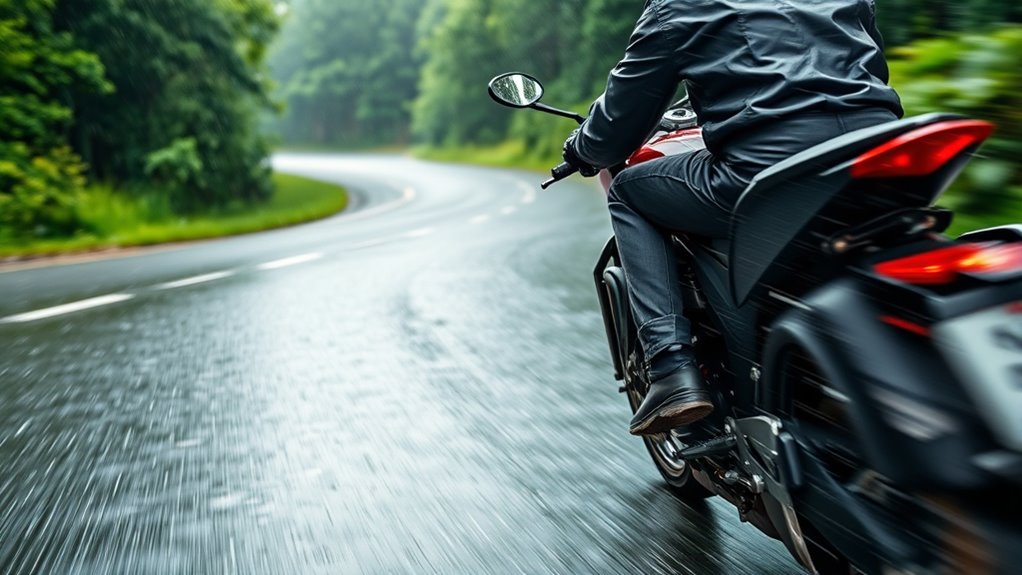
Recognizing a skid early is crucial for maintaining control on wet roads. When you feel your motorcycle starting to slide, quick awareness allows you to react effectively. To prevent a full skid, focus on maintaining smooth inputs and avoiding sudden movements. Here are four key tips:
Early skid recognition on wet roads keeps you in control—stay alert, react smoothly, and avoid sudden movements.
- Stay alert to changes in tire grip and listen for squealing sounds.
- Reduce throttle and avoid aggressive braking to maintain traction control.
- Steer gently into the skid, not against it, to help regain traction.
- Keep your body relaxed to better respond to slipping sensations.
Practicing these techniques enhances skid prevention and helps you stay calm. The goal is to recognize signs early and respond smoothly, preserving control and avoiding panic.
Preparing Your Motorcycle for Rainy Rides

To make certain your motorcycle handles safely in wet conditions, you need to prepare it specifically for rain. Start by wearing proper rain gear to stay dry and maintain focus. Check your tire pressure; properly inflated tires improve grip and reduce the risk of slipping on wet surfaces. Inspect your tires for wear and consider replacing them if the tread is worn down, as deeper treads help channel water away. Ensure your brakes are functioning smoothly, since stopping distances increase in the rain. Clear any debris from your motorcycle’s lights and signals to stay visible. Finally, verify that your windshield or visor is clean to prevent water droplets from impairing your vision. Proper preparation boosts your safety and confidence during rainy rides.
Frequently Asked Questions
How Can I Improve Visibility During Rain While Riding?
To improve visibility during rain while riding, you should wear proper rain gear like a waterproof jacket and helmet visor to stay dry and clear. Use visibility tips such as wearing bright or reflective clothing, and make sure your lights are on and functioning. Keep your visor clean and free of water droplets, and maintain a safe following distance so you can react promptly to road conditions. These steps help you see better and stay safer.
What Gear Is Best for Riding Safely in Wet Conditions?
For safe riding in wet conditions, you should wear proper rain gear and wet weather clothing. Invest in waterproof jackets, pants, and gloves to stay dry and maintain control. Use reflective gear to increase visibility, and choose footwear with good grip for slippery surfaces. Layer your clothing to stay comfortable, and make sure your helmet has a clear, anti-fog visor. Staying properly equipped helps you ride confidently and safely in rain.
How Do Tire Types Affect Wet Traction Performance?
You’ll notice that tire rubber and tread patterns considerably impact wet traction performance. Softer rubber compounds grip better in rain, providing more control, while harder rubber lasts longer but slips easier. Tread patterns with deep grooves and channels help displace water, reducing hydroplaning risks. Choosing tires with optimized tread designs and rubber compounds tailored for wet conditions guarantees safer riding, giving you better grip and confidence on rainy roads.
Are There Specific Signals or Signals to Use in Rain?
When riding in rain, remember to relay your intentions clearly with hand signals and honk when necessary. Use steady, deliberate signals to show turns or stops, ensuring others understand your moves. Horns can alert vehicles of your presence but avoid overusing them in wet weather. Combining hand signals with cautious horn use keeps you communicative, confident, and safe, preventing panic and promoting smooth, safe riding through rainy routes.
How Can I Anticipate Other Drivers’ Actions in Rainy Weather?
You can anticipate other drivers’ actions in rainy weather by practicing defensive riding and sharpening hazard awareness. Stay alert to brake lights, turn signals, and vehicle movements, especially in reduced visibility. Keep a safe distance and watch for sudden lane changes or stop-and-go traffic. By actively scanning your surroundings and predicting potential moves, you reduce the risk of surprises and stay safer on wet roads.
Conclusion
Riding in rain is like dancing on a slippery floor—you need to move with grace and awareness. By mastering smooth, deliberate actions, you stay in control and avoid falls. Think of your motorcycle as a partner that responds best when you communicate gently and confidently. With patience and practice, you’ll glide through wet conditions safely, turning challenge into harmony on the road. Embrace the rain, and let your skills lead the way.
Evergreen bestsellers Picks
bestsellers
As an affiliate, we earn on qualifying purchases.