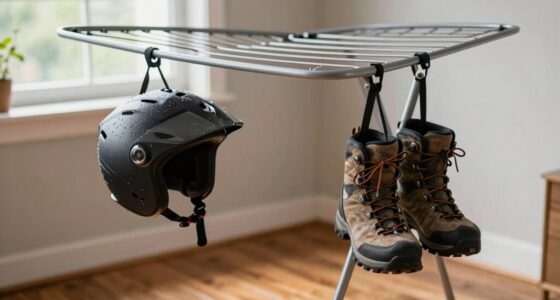
When biking in winter, the temperature that truly impacts your safety isn’t just the air temperature, but the wind chill factor. Wind chill combines the actual temperature with the wind’s cooling effect, making it feel much colder and potentially increasing risks like frostbite and hypothermia. Understanding this difference helps you prepare with proper gear and layering. Keep exploring to learn how to stay safer and more comfortable during your winter rides.
Key Takeaways
- Wind chill significantly lowers the perceived temperature, making it feel colder than the actual air temperature on bikes.
- Actual air temperature determines the baseline safety threshold, but wind chill impacts how quickly you lose body heat.
- Proper layering and windproof gear are essential to combat wind chill effects during winter cycling.
- Wind chill increases the risk of frostbite and hypothermia beyond what the thermometer indicates.
- Riders should focus on wind chill temperature rather than air temperature alone to ensure safety and comfort.
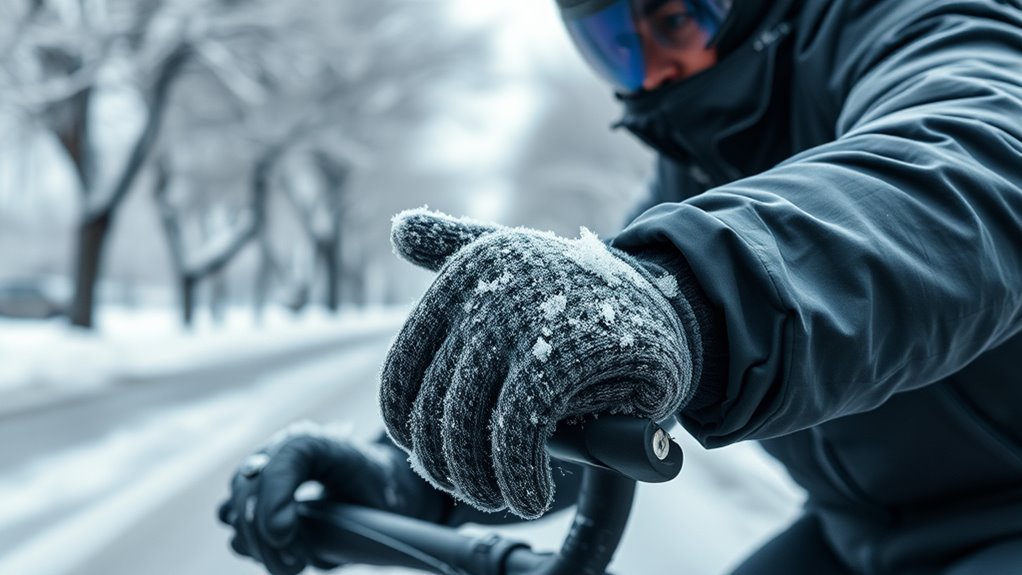
When the temperature drops, you might hear people talk about “wind chill” as if it’s a separate factor, but understanding the difference between cold and wind chill is essential for staying safe. Cold is simply the air temperature, but wind chill combines that temperature with the wind’s effect on your skin. When you’re cycling in winter, the wind makes it feel much colder than the thermometer suggests, increasing the risk of frostbite and hypothermia. To stay comfortable and protected, you need to adjust your clothing accordingly, and that’s where proper layering techniques and windproof gear come into play.
Layering is your first defense against harsh weather. It’s not just about throwing on a thick jacket; instead, you want to build a system of layers that trap heat while wicking moisture away from your skin. Start with a moisture-wicking base layer to keep sweat off your skin, because dampness accelerates heat loss. Add an insulating layer, like fleece or synthetic fibers, to retain warmth. Finally, top it off with a windproof outer layer. This outer shell should be designed to block wind, which is critical since wind chill can make the air feel noticeably colder. When the wind blows, it strips away the thin layer of warm air your body naturally creates around itself, so a windproof gear is crucial for maintaining your core temperature.
Using specialized wind-resistant fabrics can significantly improve your protection against the elements, making your ride safer and more comfortable. Accessories—wear a good thermal hat under your helmet, gloves that block the wind, and a neck gaiter or mask to cover exposed skin—are also essential. When you combine good layering techniques with windproof gear, you’re effectively shielding yourself from the brutal effects of wind chill, making your ride safer and more comfortable.
Frequently Asked Questions
How Does Humidity Affect Wind Chill?
Humidity effects how wind chill feels because higher humidity keeps your skin moist, making the cold seem even more intense. When humidity is low, your skin tends to dry out, so wind chill feels less harsh. As you ride, if humidity increases, the wind chill effect intensifies, making it feel colder than the actual temperature. Keep this in mind to dress appropriately and stay comfortable during your bike rides.
Can Wind Chill Cause Frostbite Faster Than Cold Temperature?
Yes, wind chill can cause frostbite faster than just cold temperatures. Wind chill factors lower the perceived temperature, increasing the frostbite risk on exposed skin. When wind speeds are high, your body loses heat more rapidly, making frostbite develop sooner. So, even if the actual temperature isn’t extremely cold, strong wind can markedly elevate your risk of frostbite, especially on exposed areas like fingers, ears, and the face.
What Are Safe Riding Temperatures Considering Wind Chill?
Imagine the thermometer as your ride’s guardian angel—when wind chill effects lower the real feel, it’s time to reconsider riding safety. Generally, stay above 20°F (-6°C) to avoid frostbite and hypothermia, since wind chill can make it feel much colder. Once wind chill drops below this, it’s best to postpone or gear up thoroughly. Always check the wind chill forecast before riding to keep yourself safe.
How Do Different Clothing Layers Impact Wind Chill Protection?
Layering strategies considerably impact your wind chill protection. You should wear insulating materials like thermal base layers that trap heat close to your skin, followed by a windproof outer layer to block cold air. Add an insulating mid-layer for extra warmth if needed. This combination creates a barrier, reducing the wind chill effect, keeping you warmer and more comfortable during rides in cold, windy conditions.
Does Wind Chill Affect Bike Performance or Equipment?
Wind chill does affect your bike performance and equipment more than many realize, despite common misconceptions. It accelerates heat loss, making riding feel colder and potentially impacting your gear’s insulation. You might notice decreased grip and control if your hands or gloves aren’t well-insulated. To stay safe and comfortable, confirm your equipment is designed for cold weather, and don’t underestimate the real impact wind chill has on your ride.
Conclusion
Remember, the actual temperature is like the sun’s steady glow—what truly matters. Wind chill, however, is the shadow it casts, distorting your view and hiding the reality. When you ride, don’t chase illusions; focus on the true number. That number is your map, guiding you safely through the cold. Embrace it as your compass—trusting the facts will keep you warm and protected, no matter how the wind tries to deceive.