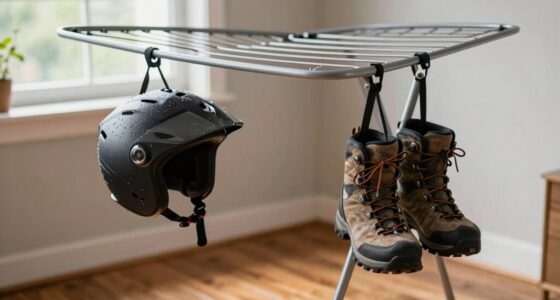
The night before your winter commute, check the weather forecast to plan your route and dress appropriately. Prepare your vehicle by inspecting tires, antifreeze, and wipers, and pack an emergency kit. Lay out warm clothing, including layers and waterproof boots, and charge your devices fully. Pack extra supplies like blankets and snacks, and plan your route to leave early, allowing extra time for snow or ice. Stay safe and stay ahead—more tips to help you prepare await you.
Key Takeaways
- Review weather forecasts, plan routes, and leave early with buffer time for safe winter driving.
- Inspect vehicle tires, antifreeze, wipers, and keep an emergency kit ready.
- Prepare layered, waterproof clothing and gear, including extra gloves and reflective elements.
- Fully charge phones and power banks, and check all charging devices for reliable connectivity.
- Organize all essentials, pack emergency supplies, and finalize route planning for a safe departure.
Check the Weather Forecast

Before heading out, you should check the weather forecast to stay prepared for winter conditions. Knowing the forecast helps you dress appropriately in winter clothing, ensuring you stay warm and comfortable. It also guides your decisions about starting your day, such as leaving early if snow or ice are expected. Additionally, understanding the weather helps you plan for potential delays and hazards. While checking the forecast, consider the temperature, wind chill, and any precipitation warnings. This information also reminds you to review your vehicle maintenance, like tire traction and antifreeze levels, to prevent surprises on icy roads. Staying informed about the weather guarantees you’re fully prepared, making your commute safer and less stressful. Weather awareness is essential for adapting your gear and route to winter challenges. Being aware of road conditions can help you choose safer routes and avoid dangerous areas during winter storms. Recognizing potential hazards in the forecast allows you to take proactive safety measures. Additionally, keeping an eye on the weather alerts can provide timely warnings about severe winter events. Furthermore, understanding home heating needs can help you ensure your residence stays warm and safe during cold snaps.
Prepare Your Vehicle

To guarantee your vehicle is ready for winter conditions, start by inspecting critical systems such as tires, antifreeze levels, and windshield wipers. Proper vehicle maintenance is essential to assure safe driving on icy or snowy roads. Begin with a tire inspection, checking for adequate tread and proper inflation to prevent slipping. Replace or rotate tires if needed. Next, verify your antifreeze levels to avoid freezing and engine damage. Ensure windshield wipers are in good condition and replace them if they streak or skip, providing clear visibility. Check your battery for corrosion and proper charge. Keep an emergency kit in your vehicle, including a scraper, blankets, and extra supplies. Regularly inspecting your vehicle’s oil and filter, and ensuring your cooling system is functioning correctly can further prevent breakdowns and keep you safe during winter commutes. Additionally, consider winter-specific vehicle accessories such as snow chains or additional lights to improve safety in severe weather conditions. Also, periodically reviewing your vehicle’s braking system ensures optimal stopping power in winter driving situations. Staying informed about road conditions and weather updates can help you plan your route and avoid hazardous areas. To enhance your preparedness, consider familiarizing yourself with narcissistic manipulation tactics to recognize potential stressors or conflicts that might arise during stressful winter travel.
Lay Out Your Clothing and Gear

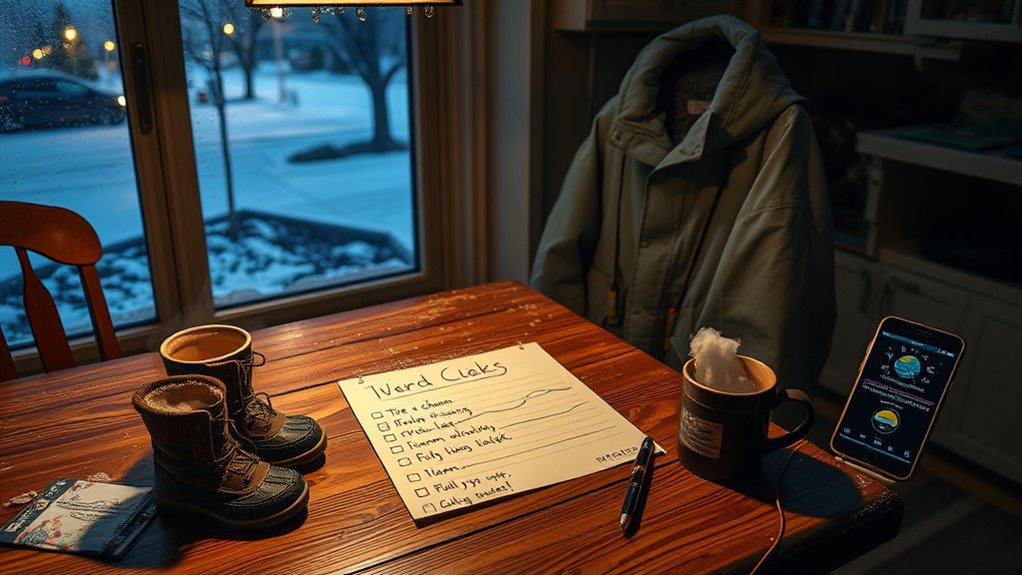
Once your vehicle is prepared for winter driving, it’s time to focus on what you’ll wear and carry. Use layering strategies to stay warm and adaptable; start with moisture-wicking base layers, add insulating middle layers, and top with waterproof outerwear. This approach keeps you comfortable and dry. Pay special attention to footwear selection—choose waterproof, insulated boots with good traction to prevent slips and keep your feet warm. Lay out your clothing the night before, ensuring everything is accessible and ready to put on quickly. Consider packing extra gloves, hats, and scarves in your gear bag. Proper layering and footwear are key to staying safe and comfortable during your winter commute. Additionally, understanding clothing insulation properties can help you choose the best materials for warmth and breathability. Recognizing the importance of proper fit in winter clothing can further enhance your comfort and safety. Being aware of layering techniques can help you adjust your outfit throughout the day if conditions change. Preparing these essentials in advance saves time and reduces stress on busy mornings. Moreover, selecting clothing made from moisture-wicking fabrics helps maintain dryness and warmth during unexpected weather changes. For optimal safety, consider visual cues like reflective elements that improve visibility in winter conditions.
Charge Your Devices

Make sure your phone is fully charged overnight so you’re ready for the day. Don’t forget to power up your power banks, just in case you need extra juice during your commute. Check your charging cables now to guarantee they’re working properly and won’t cause any delays. Additionally, consider outdoor safety features on your devices that can help you navigate or signal for help if needed. Familiarize yourself with your device’s emergency features to ensure quick access in case of an unexpected situation. Being aware of your device’s privacy settings can also help protect your personal information during your commute. Understanding your device’s safety features can further enhance your preparedness and security on the go. Being familiar with vetted safety apps can provide additional peace of mind during your winter commute.
Fully Charge Phones Overnight
Ensuring your phone is fully charged overnight is essential for a smooth winter commute. A well-charged device ensures you stay connected, navigate safely, and access emergency contacts if needed. To avoid surprises, check your charger compatibility—using the right charger preserves battery health and extends your device’s lifespan. Proper battery maintenance is key, especially in cold weather when batteries drain faster. Developing good charging habits can further help maintain optimal battery performance over time. Additionally, understanding passive voice detection can improve your writing clarity and effectiveness.
Power Up Power Banks
Having a fully charged power bank guarantees your devices stay powered throughout your winter commute, even if you’re away from an outlet for extended periods. Make certain your power banks or portable chargers are fully topped off the night before. This way, you won’t worry about your phone dying during unexpected delays or emergencies. Check the battery levels and recharge if needed, so they’re ready to go when you hit the road. Portable chargers are especially handy for long trips or if you rely on navigation apps, music, or emergency contacts. Keep your power banks in your bag or car, so they’re accessible when needed. Staying powered up ensures you remain connected and safe, no matter how challenging or cold your commute gets.
Check Charging Cables
Before hitting the road, make sure to check your charging cables to confirm they’re in good condition and compatible with your devices. Inspect each cable for frays, exposed wires, or damage, replacing any that look worn out. Proper cable organization is key to avoiding tangles and quick access during your commute. Consider setting up a designated charging station in your home or vehicle, where all cables are neatly stored and ready to use. This setup helps you quickly connect your devices without rummaging through clutter. Ensuring your cables are functional and well-organized prevents last-minute frustrations and keeps your devices powered up for the day ahead. Taking these steps now guarantees a smoother, more prepared winter commute.
Pack Emergency Supplies

Make sure you have an emergency kit with essentials like water, snacks, and a flashlight. Pack warm clothing and blankets to stay comfortable if you get stranded. Don’t forget a phone charger and batteries to keep your devices powered and ready to call for help if needed.
Emergency Kit Essentials
Are you prepared for unexpected winter roadside emergencies? Having an emergency kit is crucial for your winter safety and road preparedness. It ensures you’re ready to handle breakdowns or accidents in cold weather. Pack essential supplies that can keep you safe and comfortable until help arrives. Focus on items that address winter-specific challenges, like freezing temperatures and slippery roads.
Some must-haves include:
- A flashlight with extra batteries
- Non-perishable snacks and water
- A basic first aid kit
These essentials help you stay warm, alert, and well-fed during an emergency. Being proactive with your emergency kit means you’ll be better equipped to face winter surprises on the road, keeping safety your top priority.
Warm Clothing and Blankets
In winter emergencies, having warm clothing and blankets easily accessible can make all the difference in staying safe and comfortable. Pack layered clothing, including thermal underwear, sweaters, and waterproof outerwear, to adapt to changing conditions. These layers trap heat and keep you warm if you get stranded. Don’t forget cozy blankets—preferably thermal or fleece—that can be quickly wrapped around you for added insulation. Keep these items in your emergency kit or car, so they’re ready when you need them most. Staying warm helps prevent hypothermia and frostbite, especially if you’re stuck outside or in a stalled vehicle. Making these preparations ensures you’re protected against the cold, even in unexpected winter emergencies.
Phone Charger and Batteries
Have you guaranteed your phone charger and batteries are ready for emergencies? Proper battery management ensures your devices stay powered when you need them most. Bring a fully charged portable charger or power bank, especially if your car’s charging stations are limited. Keep spare batteries on hand for essential gadgets, like flashlights or emergency radios. It’s also wise to identify nearby charging stations along your route or at your destination to avoid unexpected power loss. Regularly check your phone’s battery level before heading out and recharge devices overnight. Having reliable power sources can make all the difference during winter emergencies, helping you communicate and stay informed. Remember, staying connected can be lifesaving, so prep your phone charger and batteries now to avoid surprises during your commute.
Plan Your Route and Leave Early
To guarantee a smooth winter commute, it’s essential to plan your route carefully and leave early enough to account for unexpected delays. Start with route planning by choosing the safest, most direct path, considering recent weather reports and road conditions. Check for any closures or detours that might slow you down. Adjust your departure timing accordingly, aiming to arrive at your destination with extra time to spare. Leaving early reduces stress and gives you a buffer if you encounter traffic or winter-related obstacles. Remember, winter weather can change quickly, so prioritize a well-planned route and an early start to avoid rushing. Staying proactive with your route planning and departure timing helps ensure a safer, less hectic commute.
Clear Your Path and Snow Removal

Before hitting the road, make sure your driveway and walkways are clear of snow and ice. Effective snow removal and driveway clearing prevent accidents and make your morning smoother. Start by shoveling snow promptly to avoid buildup that gets heavier overnight. Use salt or ice melt to melt any remaining ice and provide traction. Don’t forget to clear pathways to your vehicle, ensuring safe access. Keep snow removal tools handy in case conditions change overnight. Staying proactive saves you time and reduces stress during your commute.
- Shovel snow early to prevent it from compacting or freezing
- Apply salt or ice melt for better traction
- Clear a safe path from driveway to sidewalk and vehicle
Review and Adjust Your Morning Routine

Adjusting your morning routine is essential to guarantee a smooth start during winter months. Cold weather and early darkness demand different habits to stay safe and efficient. Review your current morning routine and make habit adjustments as needed. For example, wake up slightly earlier to account for extra time needed to clear snow or scrape ice. Prepare your clothing and gear the night before so you’re not searching for items in the cold. Consider adding a warm beverage to your routine for comfort and alertness. Here’s a quick visual:
| Habit Adjustment | Benefit |
|---|---|
| Wake up earlier | Extra time for snow removal |
| Prepare clothes | Save time in the morning |
| Warm drink | Boost alertness |
Small habit changes can make your winter mornings safer and less stressful.
Frequently Asked Questions
How Early Should I Start My Winter Commute Preparations?
You should start your winter commute preparations at least the night before, giving yourself plenty of time. Check your winter clothing to guarantee it’s warm and layered, and inspect your vehicle for winter maintenance needs like tire pressure and antifreeze levels. Preparing early helps you stay safe and comfortable, avoiding last-minute rushes. By planning ahead, you can tackle any issues and start your day confident, even in winter’s worst conditions.
What Safety Tips Are Essential for Winter Driving?
A stitch in time saves nine, so make sure your winter drive is safe. Keep your tires well-maintained for better grip, and always carry an emergency kit with essentials like blankets, food, and a flashlight. Drive slowly and increase following distance to avoid slips. Stay alert, avoid sudden movements, and check road conditions before heading out. These tips help you stay safe and prepared on icy or snowy roads.
How Can I Prevent My Vehicle From Freezing Overnight?
To prevent your vehicle from freezing overnight, check your antifreeze levels and top them off if needed, ensuring your engine stays protected in cold weather. Also, verify your tire pressure because low pressure can cause tires to freeze or become unsafe. Covering your windshield with a tarp or using a windshield cover can help prevent ice buildup. These steps keep your vehicle ready for winter mornings and safer to drive.
What Are the Best Materials for Ice and Snow Removal?
You should use materials like salt or ice melt for effective ice and snow removal, especially with salt application that lowers the freezing point. For larger snow piles, a snow blower is your best choice—select one with enough power and appropriate width for your driveway. Combine these tools with shovels and de-icing products for thorough clearing, making your morning commute safer and easier.
How Do I Stay Warm During Long Winter Commutes?
Imagine hitting the road, and just as the cold bites, you kick on heated seats—instant warmth. Combine that with winter tires for better grip, and you’ll stay safe and cozy. Layer up with thermal clothing, hats, and gloves to keep your body heat in. Keep a blanket handy for extra comfort. With these tips, you’ll conquer long winter commutes without shivering. Stay warm, stay safe!
Conclusion
So, there you have it—your foolproof plan to brave winter mornings without becoming a snowman. Follow these steps, and you’ll confidently face icy roads and frosty mornings, while others struggle in chaos. Remember, a little prep goes a long way—because who needs a smooth commute when you can channel your inner snow warrior? Stay warm, stay safe, and enjoy the winter wonderland… or at least don’t get stuck in it. Happy commuting!