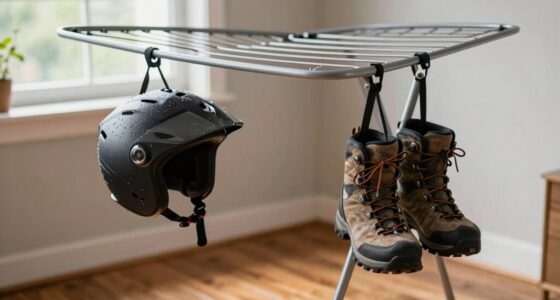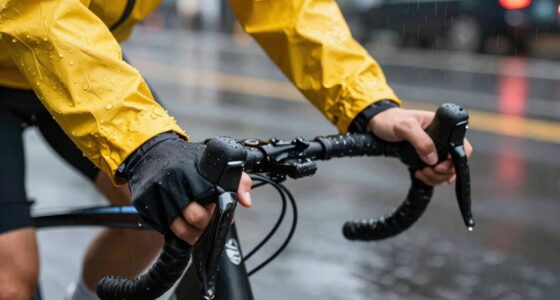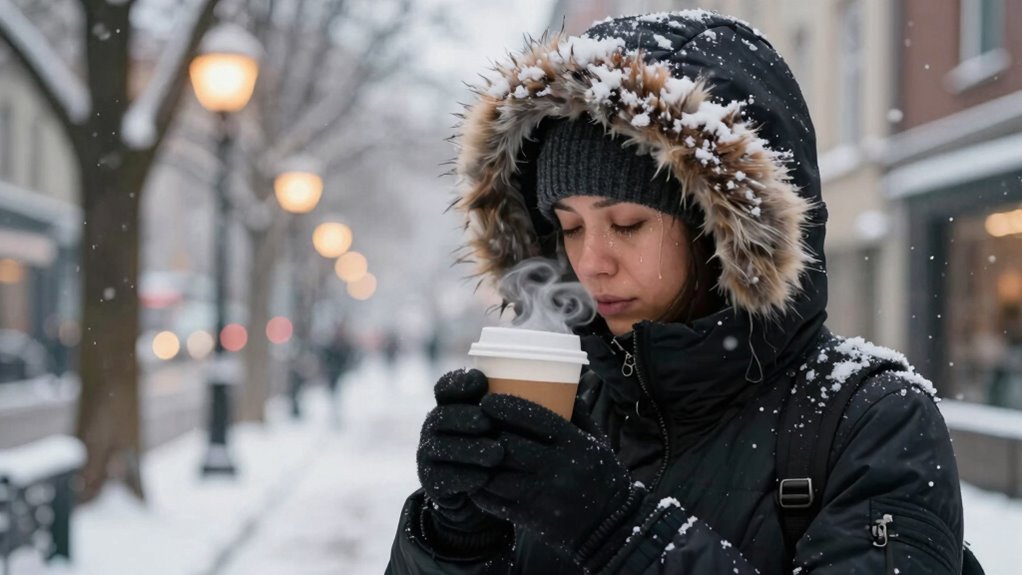

To avoid feeling chilled after winter outdoor activities, focus on proper layering with moisture-wicking fabrics that keep sweat away from your skin. Always start with a snug base layer, add insulation as needed, and finish with a waterproof outer layer. Adjust layers based on activity and weather changes, and carry an extra jacket for unexpected cold. Mastering these strategies helps you stay dry and warm—if you continue, you’ll discover even more tips to stay comfortable and safe.

Get bike and ride gear delivered free — and shop member deals
- Fast, free delivery on millions of items
- Access to Prime Big Deal Days deals on October 6–7
- Prime Video, Amazon Music and more included
Key Takeaways
- Wear moisture-wicking base layers to draw sweat away from your skin during activity.
- Add insulating layers to retain heat and prevent dampness from cooling your body.
- Use a waterproof or windproof outer layer to block elements and keep moisture out.
- Adjust layers frequently based on activity level to prevent overheating and excessive sweating.
- Change out of damp clothing promptly after activity to dry and prevent chills on the way home.
Layering is your best friend during winter. Start with a moisture-wicking base layer that fits snugly against your skin. These fabrics—like merino wool, polyester, or nylon—pull sweat away from your body, keeping you dry even when you’re working up a sweat. A good base layer is thin, breathable, and designed specifically for moisture management. Over this, add an insulating layer such as fleece or down, which traps heat and keeps you warm. Finally, top it off with a waterproof or windproof outer layer to shield you from snow, rain, and wind. This layering approach allows you to adjust your clothing as your activity level or the weather changes, so you don’t overheat or get chilled.
When you’re engaging in physical activities outdoors, pay attention to how your body responds. As you start to sweat, that moisture gets trapped if your layers aren’t designed to wick it away. That’s why moisture-wicking fabrics are *essential*—they’re engineered to move sweat outward from your skin, where it can evaporate quickly. This prevents you from feeling damp and cold, which can lead to a sudden chill once you stop moving or step into a warmer environment. It’s also wise to carry an extra layer or a packable jacket if you anticipate a change in weather or a break in activity, so you can shed or add layers as needed.
Another tip is to avoid cotton when layering for winter activities. Cotton absorbs moisture and retains it, which can leave you feeling damp and cold very quickly. Instead, stick with technical fabrics that are designed to keep you dry and warm. Proper layering with moisture-wicking fabrics not only improves your comfort but also reduces the risk of hypothermia or frostbite caused by damp clothing. It helps maintain your core temperature, so you’re less likely to feel that chilling effect once you’re back indoors or heading home.
moisture-wicking base layer shirt
As an affiliate, we earn on qualifying purchases.
As an affiliate, we earn on qualifying purchases.
Frequently Asked Questions
How Can I Prevent Sweat From Causing Chills During Winter Commutes?
To prevent sweat from causing chills during winter commutes, use layering techniques that trap warmth without excess moisture. Wear moisture-wicking socks to keep your feet dry, and add a breathable base layer under insulating outerwear. When you arrive, remove damp layers quickly to avoid chilling. Keeping your skin dry and adjusting layers as needed guarantees you stay warm and comfortable throughout your journey.
What Fabrics Are Best for Managing Sweat in Cold Weather?
Choose moisture-wicking fabrics like merino wool or synthetic blends, which pull sweat away from your skin. Pair these with thermal insulation layers to keep you warm without trapping moisture. These fabrics work together to manage sweat efficiently, preventing chills on your way home. Make sure your base layer actively wicks moisture, while your outer layers provide insulation, so you stay dry and cozy during winter commutes.
Should I Shower Immediately After Sweating Outdoors in Winter?
Yes, you should shower as soon as possible after sweating outdoors in winter. Sweating can trap moisture against your skin, leading to winter skin issues like dryness or irritation. Use warm water and gentle soap to cleanse, then dry thoroughly. Follow up with thermal layering and moisturizer to lock in warmth and prevent chills. This helps maintain your skin’s health and keeps you comfortable on the way home.
How Do I Balance Staying Warm and Managing Sweat During Winter Workouts?
Like a knight preparing for battle, you must balance warmth and sweat management. Use layering techniques to stay warm without overheating, adding or removing layers as needed. Wear moisture-wicking gear close to your skin to pull sweat away and keep dry. This way, you’ll stay comfortable during your workout and avoid that icy chill on your way home, ensuring you finish strong and warm.
Can Applying Antiperspirant Help Control Sweat in Winter?
Applying antiperspirant can help control sweat in winter, as its effectiveness reduces moisture and keeps you feeling dry longer. For winter sweat solutions, choose a strong, clinical-strength antiperspirant and apply it at night for best results. This way, you prevent excess sweating during your workouts and avoid the chill on the way home. Just remember to reapply in the morning if needed, especially after intense exercise.
As an affiliate, we earn on qualifying purchases.
Conclusion
Remember, managing sweat in winter keeps you comfortable and healthy. Did you know that about 60% of people experience discomfort from sweat during colder months? By wearing moisture-wicking layers and changing out of damp clothes quickly, you can prevent chills and colds on your way home. Stay proactive, stay dry, and enjoy winter without the chill — your body will thank you for it!
As an affiliate, we earn on qualifying purchases.
As an affiliate, we earn on qualifying purchases.
Evergreen bestsellers Picks
bestsellers
As an affiliate, we earn on qualifying purchases.