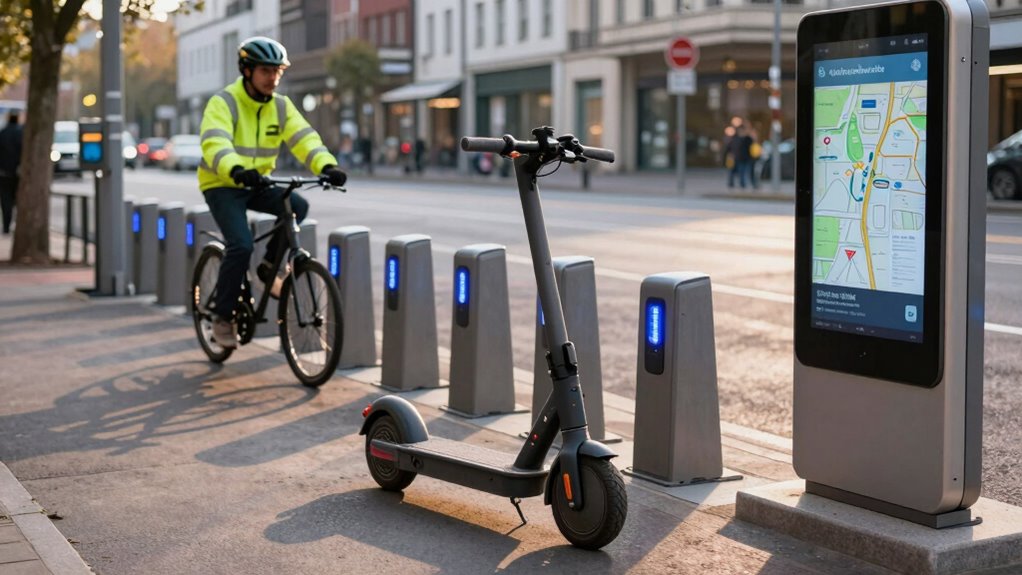

In your first 30 days of e-mobility commuting, focus on familiarizing yourself with nearby charging stations, including fast chargers and outlets, while learning how to access them efficiently. Follow safety protocols, keep ports clean and dry, and regularly monitor your vehicle’s health through apps or onboard systems. Practice proper charging habits, plan routes around charging points, and stock emergency kits. As you develop routines, you’ll become more confident—continue exploring to master every aspect of your EV journey.
Key Takeaways
- Familiarize yourself with local charging stations and plan routes accommodating charging needs.
- Practice safe charging procedures, including port inspection and weather considerations.
- Use apps and onboard systems to monitor energy consumption and charging status regularly.
- Stock emergency kits and learn safety protocols for handling high-voltage components.
- Develop consistent charging and driving habits to build confidence and optimize vehicle performance.
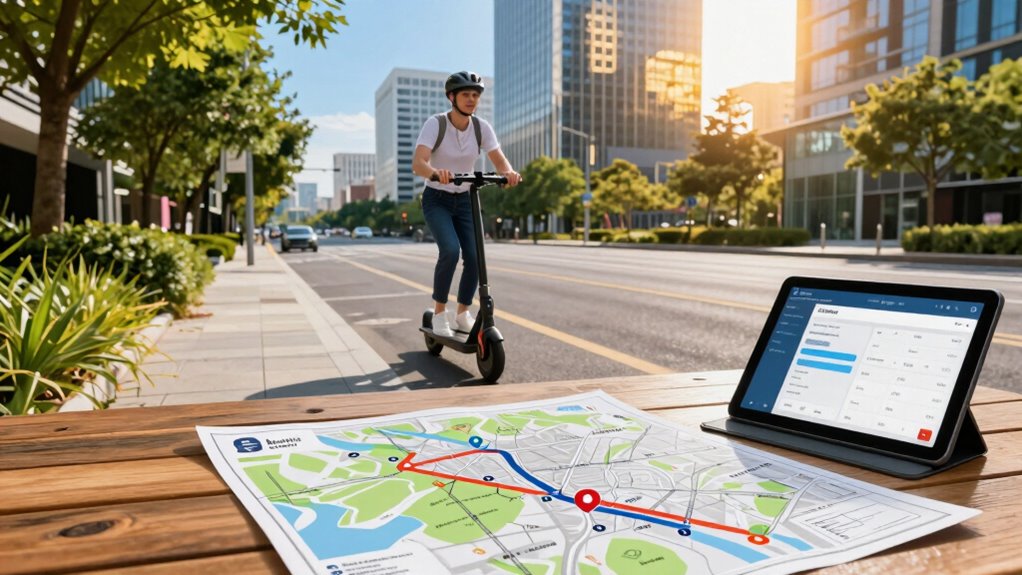
Starting your e-mobility commuting journey can feel like a fresh change, but the first 30 days are vital for adjusting to new routines and understanding your electric vehicle’s capabilities. During this initial period, you’ll focus on familiarizing yourself with the charging infrastructure available along your route and at your destination. Take time to locate the nearest charging stations, whether they’re fast chargers or standard outlets, and understand how to access them efficiently. This proactive approach ensures you won’t get caught off guard with low battery levels during your daily commute. It’s also wise to carry a portable charger or adapter, just in case you encounter unfamiliar charging points. As you learn the ins and outs of your vehicle, pay close attention to how much energy you consume during different driving conditions. This knowledge will help you plan your routes better, especially on days with longer distances or heavy traffic. Incorporating security strategies for your charging devices and vehicle can also prevent potential risks associated with EV charging. Safety protocols should be a priority from day one. Electric vehicles operate differently from traditional cars, so you need to understand the specific safety measures associated with charging and handling your EV. Always follow manufacturer instructions for charging, and never attempt to force a connection or use incompatible chargers. Make sure charging ports are clean and dry before plugging in, and avoid charging in extreme weather conditions that could compromise safety. During your drives, adhere to standard traffic safety rules, but also stay alert for potential hazards unique to EVs, like high-voltage components or sudden power loss. Keep your vehicle’s emergency kit stocked, including items like a first aid kit, reflective triangles, and a fire extinguisher suitable for electrical fires. In your first month, it’s also beneficial to monitor your vehicle’s battery health and charging habits. Many EVs come with apps or onboard systems that provide real-time data on your energy consumption and charging status. Use these tools to optimize your routines, ensuring you don’t over-rely on fast chargers, which can impact battery longevity over time. Regularly inspecting your charging cables and connectors for damage is equally important, as faulty equipment can pose safety risks. Additionally, understanding battery management and its impact on longevity can help you extend the life of your EV’s battery. It’s also helpful to familiarize yourself with electric vehicle safety protocols to handle emergency situations effectively. Practicing proper charging habits from the beginning can significantly enhance your vehicle’s overall performance. Being aware of the proper handling of high-voltage components can also further increase your safety during maintenance or emergencies. By staying attentive to both your vehicle’s performance and the charging infrastructure, you build confidence in your new commuting method. Over these initial 30 days, these habits will become second nature, making your e-mobility experience safer, more efficient, and enjoyable.

2026 Upgraded Level 1&2 Portable EV Charger, 8-16Amp Adjustable Current & Timer, 110V–240V, NEMA 5-15 & 6-20 Plug, 21Ft EV Charging Cable, J1772 Electric Car Charger for All PHEV/EV Charging Cord
[2026 INTELLIGENT CHARGING UPGRADE — PRECISION CONTROL MEETS SMART SCHEDULING] After surveying 100K+ U.S. EV owners, the Raylix…
As an affiliate, we earn on qualifying purchases.
As an affiliate, we earn on qualifying purchases.
Frequently Asked Questions
How Do I Choose the Right E-Mobility Vehicle for My Commute?
To choose the right e-mobility vehicle, consider your commute distance and terrain. Focus on battery longevity to guarantee it lasts through your trips without frequent charging, and check motor efficiency for smooth, energy-saving rides. Test different models, compare battery and motor specs, and see which vehicle fits your daily routine best. Prioritize reliability and cost-effectiveness, so your e-mobility choice enhances your commuting experience without hassle.
What Safety Gear Is Recommended for E-Mobility Commuting?
You should wear protective clothing like a helmet, gloves, and reflective gear to stay safe during your e-mobility commute. Always carry emergency accessories such as a first aid kit, a flashlight, and a portable phone charger. These items help protect you in case of accidents and make sure you’re prepared for unexpected situations. Prioritizing safety gear keeps you secure and confident as you navigate your daily commute.
How Do I Handle Charging Infrastructure in Urban Areas?
Finding your way through urban charging can feel like a dance with the city’s rhythm. You should look for charging station accessibility, ensuring they’re conveniently located along your route. Engage with local urban planning initiatives that promote integrated charging infrastructure, making your daily commute smoother. By staying connected with city updates and community networks, you’ll find reliable spots and help shape a more efficient, eco-friendly urban landscape — turning charging into a seamless part of your journey.
What Maintenance Is Required for E-Mobility Vehicles?
You should regularly check your e-mobility vehicle’s battery lifespan to guarantee peak performance and avoid unexpected failures. Keep an eye on tire maintenance by inspecting tire pressure and tread for safety and efficiency. Additionally, regularly clean and lubricate moving parts, and schedule professional check-ups to keep your vehicle in top shape. Proper maintenance extends battery life, improves safety, and ensures a smooth, reliable ride every time you commute.
Are There Legal Regulations Specific to E-Mobility Commuting?
You need to be aware of legal regulations specific to e-mobility commuting, including battery regulations and licensing requirements. Many regions have strict rules about battery safety, disposal, and charging standards. Licensing requirements might include registration, helmet laws, or rider permits. Check local laws to stay compliant, as regulations vary widely, and failing to follow them can lead to fines or penalties. Always stay informed to guarantee a smooth, legal e-mobility experience.

Commercial EV Charging Station – OCPP-Compliant, Revenue-Generating Charger with Driver Pay App – Powered by EV Range Software
Earn Revenue with Every Charge: Set custom pricing and idle fees. Monthly payouts and usage reports included.
As an affiliate, we earn on qualifying purchases.
As an affiliate, we earn on qualifying purchases.
Conclusion
As you accelerate into e-mobility’s exciting era, embrace the evolving experience with enthusiasm and ease. With each day, you’ll discover a smoother, smarter, and more sustainable commute, turning challenges into charming chapters of change. Stay steadfast, stay savvy, and savor the silent, sustainable shift. Your journey begins now—an exhilarating expedition filled with eco-friendly energy, empowering every mile with momentum and meaning. Welcome to your wondrous, world-widening wave of wise, wheel-powered wonder!

GOL-SIV Electrical Insulated Gloves – 5KV Tested Rubber Safety Work Gloves for Electrician, Hybrid EV Car Repair & HVAC – Class 0 Level Protection (Max Use 1000V), Red
[Industrial Grade Safety Protection]:Engineered with premium dielectric natural latex, these gloves have undergone rigorous testing with a 5KV…
As an affiliate, we earn on qualifying purchases.
As an affiliate, we earn on qualifying purchases.
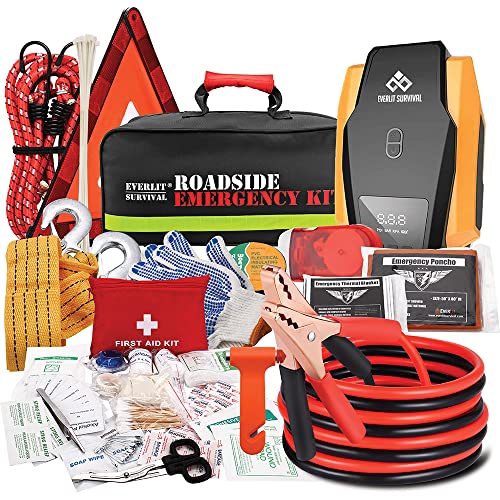
Everlit Survival Car Emergency Kit, Roadside Safety Tool Kit with Gloves,Digital Auto Air Compressor Tire Inflator, First Aid Kit, 12 Feet Jumper Cable, Tow Strap, Flashlight for Women, Men, Teenagers
The Road Guardian- The portable roadside assistance kit is designed and hand picked by a group of experienced…
As an affiliate, we earn on qualifying purchases.
As an affiliate, we earn on qualifying purchases.