

To ride shared paths responsibly, signal your intentions early with hand signals or head turns, and keep to the right unless overtaking. Maintain a moderate speed around pedestrians and stay predictable to prevent surprises. Respect others’ space by slowing down near groups and avoiding abrupt moves. Use a friendly bell or voice, and stay alert to surroundings. Following these simple tips guarantees everyone stays safe and happy—if you want to become a considerate rider, there’s more to learn below.
Listen free for 30 days with Audible
Thousands of audiobooks and originals — cancel anytime.
As an affiliate, we earn on qualifying purchases.
Key Takeaways
- Signal intentions early with hand signals and head turns to communicate with others.
- Maintain a steady, moderate speed to prevent causing discomfort or chaos.
- Give pedestrians ample space and slow down near groups or individuals.
- Use polite bells or verbal greetings instead of honking or shouting.
- Follow shared space rules, stay predictable, and avoid sudden stops or aggressive behavior.
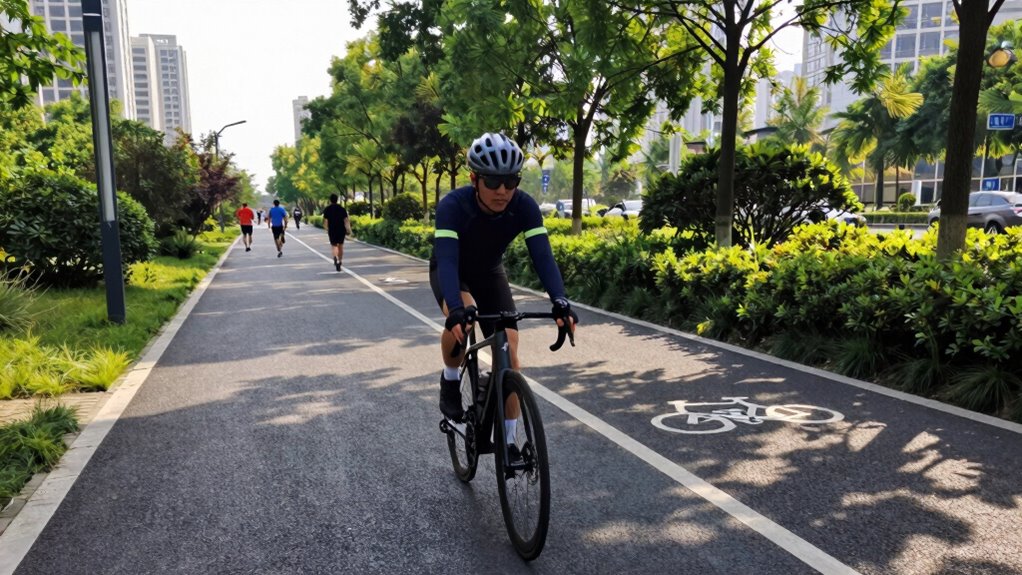
Sharing routes safely requires more than just awareness; it calls for smart riding strategies. When you’re steering shared spaces, being considerate isn’t just about safety—it’s about fostering a positive environment for everyone involved. Urban safety depends on how well you respect other users, whether they’re pedestrians, fellow cyclists, or even runners. Practicing good cyclist etiquette helps prevent conflicts and keeps the flow smooth, making your ride more enjoyable and less stressful.
Smart riding strategies and respect create safer, more enjoyable shared paths for everyone.
First, always be predictable. Signal your intentions early, whether you’re slowing down, turning, or overtaking. Using hand signals and head turns alerts others to your movements, reducing surprises that can lead to accidents or frustration. Keep to the right side of the path, unless passing, and avoid weaving between pedestrians or other cyclists. This consistency in your riding creates a safer environment for everyone, especially in busy urban areas where space is limited. Remember, your actions directly impact urban safety, so riding thoughtfully is vital. Being aware of shared space etiquette ensures you’re contributing positively to the shared environment.
Speed management is another key aspect of smart riding. Keep your pace moderate, especially in crowded sections. If you’re moving faster than others, politely signal your intention to pass and do so promptly. Don’t linger in the blind spots of pedestrians or other riders—being aware of your surroundings helps you avoid sudden stops or collisions. Maintaining a steady speed also minimizes the feeling of chaos, making shared paths more predictable and safer for all users. Being mindful of urban safety principles ensures your riding habits contribute positively to the environment. Incorporating these considerations can also help prevent conflicts and promote a more harmonious shared space. Remember, respectful riding includes understanding the importance of predictable behavior, which ensures everyone can enjoy the shared space safely. Additionally, adapting your riding to the environment fosters a more responsible cycling attitude that benefits everyone.
Respect cyclist etiquette by giving pedestrians plenty of space and slowing down when approaching groups or individuals. Never honk or shout at others; instead, use a friendly bell or verbal greeting if necessary. Keep your headset volume low so you can hear approaching pedestrians and other cyclists. If you need to pass, do so with patience and care, ensuring you don’t startle anyone. Remember, shared paths are public spaces meant for everyone’s enjoyment, so your considerate behavior encourages others to follow suit.
Ultimately, riding smart on shared paths means balancing your speed, maintaining predictable behavior, and respecting the space and safety of everyone around you. When you prioritize urban safety and cyclist etiquette, you contribute to a more harmonious environment. Your mindful riding not only protects you but also fosters a community where everyone feels comfortable sharing the space. By adopting these strategies, you’ll steer shared paths efficiently, reduce conflicts, and enjoy a smoother, more pleasant ride every time.

XBERSTAR Bike Tail Light Turn Signals 12V Turn Signals Light Electric Bicycle Tail Light Safety Warning Bike Lights for Bicycle E-bike Motorcycle
- Versatile Compatibility: Fits motorcycles, e-bikes, scooters, bicycles
- Enhanced Safety Alerts: Warns others during rides for added security
- Weatherproof Design: IP65 waterproof for rainy or foggy conditions
As an affiliate, we earn on qualifying purchases.
As an affiliate, we earn on qualifying purchases.
Frequently Asked Questions
How Should I Signal Turns on Shared Paths?
To signal turns on shared paths, you should use clear hand signals, extending your arm in the direction of your turn. Combine this with audible alerts like a friendly bell or horn to catch others’ attention. Make your intentions obvious well in advance, so pedestrians and fellow cyclists can react safely. Consistent signaling helps keep everyone aware, making your ride smoother and more enjoyable for all shared path users.
What’s the Best Way to Pass Slower Riders Safely?
Think of passing slower riders like a courteous dance; you lead with care and respect. To do this, signal your intentions clearly and wait for a safe gap. Maintain a steady speed, stay on your side, and gently pass without startling. Following rider etiquette and practicing path courtesy keeps everyone safe and happy. Remember, patience and clear communication are your best tools for a smooth, respectful pass.
Are There Specific Speed Limits for Shared Paths?
Shared paths usually don’t have strict speed limits, but following shared path etiquette and speed regulation guidelines is essential. You should ride at a safe, controlled speed that allows you to stop or yield when needed, especially around other users. Keep your speed moderate, be attentive, and adapt based on the flow of pedestrians and cyclists. Respecting these guidelines helps prevent accidents and ensures everyone enjoys the shared space safely.
How Do I Handle Encountering Pedestrians Unexpectedly?
When you encounter pedestrians unexpectedly, slow down and give them plenty of space. Follow group etiquette by signaling your presence early, perhaps with a friendly bell or horn if necessary, but avoid unnecessary horn usage to prevent startling others. Keep your speed controlled, stay alert, and pass with care, ensuring everyone feels safe. Respecting shared path rules helps maintain harmony and makes riding enjoyable for all.
What Equipment Safety Tips Are Recommended for Shared Path Riding?
You should prioritize helmet safety by always wearing a properly fitted helmet before riding on shared paths. Regular bike maintenance is vital—check tire pressure, brakes, and chain to guarantee smooth, safe riding. Keep your bike in top shape to prevent accidents. Additionally, use lights and reflectors if riding in low visibility conditions, and carry basic repair tools. This approach minimizes risk and helps you ride confidently around pedestrians.

Premium Bike Bell for Urban Commuting & Shared Paths, Loud & Polite, Easy Mount for Road/Commuter/MTB Bikes, Safety & Courtesy Alert for Cyclists and Pedestrians
- Clear & Polite Alert: Effective pedestrian alerts without shouting
- Loud & Courteous Sound: Ensures visibility while remaining polite
- Universal Mounting: Fits various handlebar types easily
As an affiliate, we earn on qualifying purchases.
As an affiliate, we earn on qualifying purchases.
Conclusion
By riding thoughtfully, you become a gentle breeze guiding everyone smoothly along the shared path. Your awareness and courtesy turn a busy trail into a harmonious dance, where each rider moves in sync rather than clash. Embrace the rhythm of respect, and you’ll not only avoid the storm of annoyance but also craft a journey that’s as pleasant as a peaceful walk in the park. Ride smart, and let kindness steer your way.

WITTKOP Bike mirror | Large HD field of vision | 360° rotatable & foldable | Mounting above & below | Break-proof & durable | ebike accessories, bike mirror handlebar mount, bicycle mirrors
- HD Field of Vision: Large crystal-clear convex glass mirror
- 360° Adjustable: Full rotation and tilting for customized view
- Durable Construction: Reinforced with over 20% stronger materials
As an affiliate, we earn on qualifying purchases.
As an affiliate, we earn on qualifying purchases.

Lumos Nyxel Smart Bike Helmet, Customizable Front and Back LED Lights with Turn Signals, 360° Visibility App Controlled Comfortable & Lightweight Skateboard Urban Helmet for Adults, Men Women
- 360° Visibility: Front and back LED lights for full visibility
- Turn Signal Control: Remote-controlled turn indicators for safety
- All-in-One Control: Sync helmet and bike lights seamlessly
As an affiliate, we earn on qualifying purchases.
As an affiliate, we earn on qualifying purchases.
Grilling season Picks
grills
As an affiliate, we earn on qualifying purchases.