
Taking the lane isn’t aggressive; it’s a safety tactic you need when riding in heavy traffic, narrow roads, or near parked cars. You should occupy the full lane when speeds are high, visibility is low, or obstacles like potholes or debris threaten control. Many believe lane taking is rude, but it actually prevents dangerous passing and keeps you visible. Understanding when and why to take the lane can keep you safer—keep going to learn more.

Get bike and ride gear delivered free — and shop member deals
- Fast, free delivery on millions of items
- Access to Prime Big Deal Days deals on October 6–7
- Prime Video, Amazon Music and more included
Key Takeaways
- Take the lane when riding in heavy traffic or at high speeds to prevent unsafe passing and enhance visibility.
- Occupy the full lane when approaching intersections, stop signs, or merging areas to ensure safe turns and lane changes.
- Use the lane to avoid hazards like potholes, debris, or parked cars, reducing the risk of accidents or dooring.
- Maintain a central position in the lane to be more visible and communicate your intentions clearly to drivers.
- Recognize that taking the lane is a safety strategy, not aggression, and helps protect you from dangerous passing behaviors.
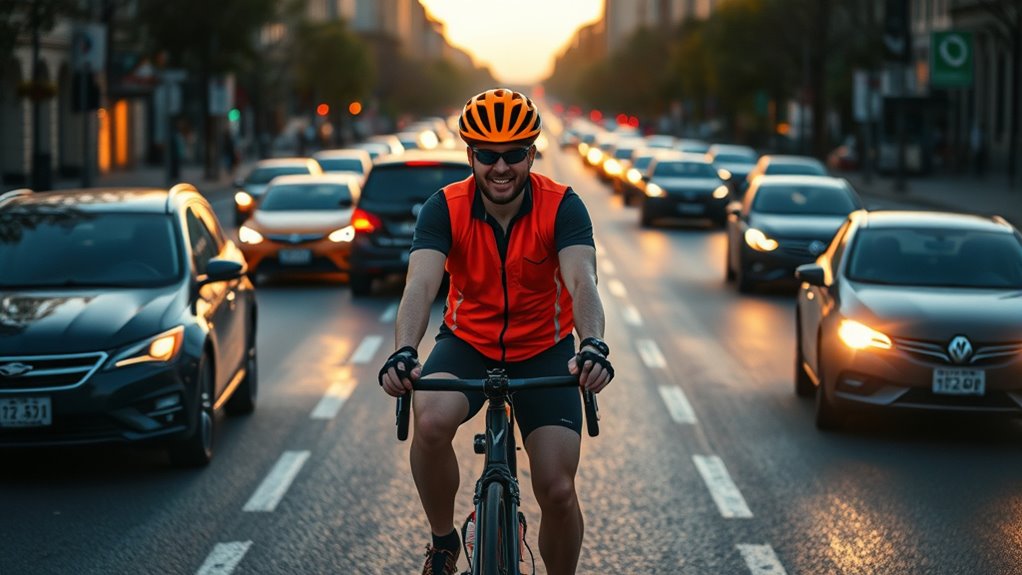
Knowing when to take the lane is essential for your safety and smooth travel on the road. As a cyclist, your road positioning can make all the difference in avoiding accidents and ensuring you’re seen by drivers. Many cyclists hesitate to take the lane, fearing they’ll irritate drivers or appear aggressive. However, understanding when to occupy the full lane is necessary for your safety, especially in situations where the road conditions or traffic patterns demand it. Proper road positioning allows you to assert your presence, preventing cars from trying to squeeze past dangerously or cutting in too close.
Taking the lane enhances safety and visibility in complex traffic and road conditions.
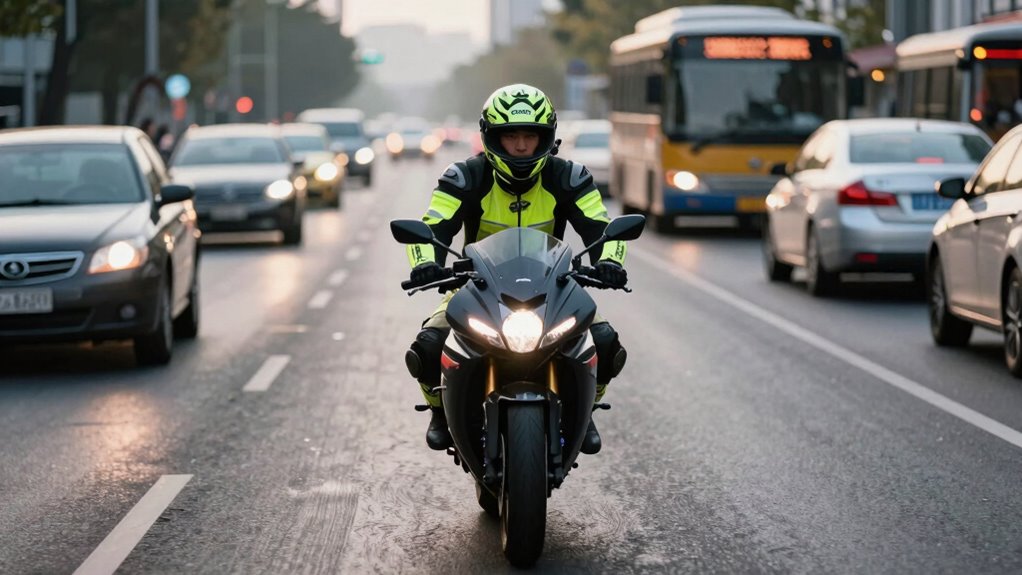
You should take the lane when you’re riding through areas with high vehicle speeds or heavy traffic, where overtaking might force drivers into unsafe passing maneuvers. If the lane is too narrow—less than 14 feet wide—taking the lane helps you avoid being squeezed into the curb or parked cars. It’s also required when approaching intersections, stop signs, or traffic lights, where vehicles turn or merge and may not see you in their blind spots. When riding on roads with parked cars, taking the lane can prevent “dooring” incidents, where a driver or passenger might open a door suddenly, causing you to swerve or fall. Additionally, when you encounter potholes, debris, or uneven pavement, occupying the full lane guarantees you avoid obstacles that could cause you to lose control or get injured.
Your road positioning plays a key role in cyclist safety because it communicates your intentions clearly to drivers. Riding too close to the curb might seem like a safer choice, but it often puts you in a blind spot or in the path of opening car doors. Conversely, staying too far in the center of the lane can frustrate drivers, but it’s a necessary safety tactic when conditions demand it. You should also consider your visibility—taking the lane makes you more prominent and less likely to be overlooked, particularly at night or in poor weather conditions. Studies also show that proper lane positioning can influence the contrast ratio of your visibility, making it easier for drivers to see you in various lighting conditions.
Ultimately, taking the lane isn’t about being aggressive; it’s about making smart decisions based on your environment. Recognize when your road positioning needs to shift to prioritize cyclist safety. By doing so, you reduce the risk of accidents and create a safer space for yourself and those around you. Remember, understanding when to take the lane empowers you to ride confidently, confidently asserting your right to the road while protecting your well-being.
Frequently Asked Questions
How Do Cyclists Determine the Safest Lane Position in Heavy Traffic?
You determine the safest lane position by evaluating traffic flow and maintaining clear lane positioning for visibility. Stay slightly to the right but avoid hugging the curb, and position yourself where drivers can see you easily. Use visibility strategies like making eye contact and signaling your intentions clearly. Adjust your position if traffic slows or becomes unpredictable, ensuring you’re visible and predictable to others on the road.
Are There Legal Consequences for Improper Lane Positioning?
If you don’t follow traffic laws, you could face legal liability if an accident happens, and your insurance might not cover damages. Think of improper lane positioning as sailing uncharted waters—you risk hitting hidden rocks. Legal consequences can include fines or even lawsuits, depending on the severity. Staying within the law protects you from costly insurance implications and keeps you safe on the road, like a ship sailing smoothly through calm seas.
How Do Weather Conditions Affect Lane Choices for Cyclists?
Weather conditions greatly influence your lane choices as a cyclist. During rainy hazards, you should stay alert and avoid puddles that could hide hazards or cause slips. Wind impact can push you off course, so position yourself accordingly—lean into the wind and stay steady. Adjust your lane to maintain control, increase visibility, and guarantee safety, especially in adverse weather. Always prioritize caution when conditions are less than ideal.
What Are the Best Practices for Signaling Lane Changes?
Did you know that using proper hand signals can reduce cycling accidents by up to 50%? When changing lanes, always signal early with clear hand signals, making your intentions visible to drivers. Be aware of blind spots—both yours and drivers’. Before moving, check behind and to the sides, then signal and move smoothly. This guarantees safety and helps others anticipate your actions, reducing the risk of collisions.
How Can Drivers and Cyclists Improve Mutual Understanding on the Road?
You can improve mutual understanding by practicing shared road etiquette, like making eye contact and signaling clearly. Respect cyclists’ space and avoid aggressive moves. Use cyclist visibility strategies, such as wearing bright clothing and using lights, to guarantee you’re seen. When both drivers and cyclists communicate openly and follow these guidelines, it creates a safer, more respectful environment for everyone on the road.
Conclusion
Remember, riding right and riding safe starts with knowing when to take the lane. Take control by confidently claiming your space, avoiding accidents, and advocating for awareness. Stay smart, stay safe, and steer clear of surprises on your commute. By boldly bridging the gap between myth and method, you protect yourself and inspire others to follow suit. Keep courage in your corner, and let clarity and caution carve your safe cycling course.
Halloween Picks
halloween
As an affiliate, we earn on qualifying purchases.