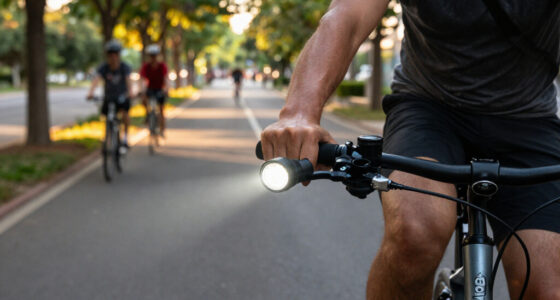
One common mistake that causes you to be overlooked at night is not properly using visibility equipment. If you rely only on bike lights without wearing reflective or bright clothing, drivers might not notice you early enough. Staying close to the curb and choosing well-lit areas also helps, but without ample visibility gear, you’re at greater risk. To stay safe, consider how you position and gear up for night rides. Keep going to learn more about safer night riding tips.

Get bike and ride gear delivered free with Prime
- Fast, free delivery on millions of items
- Prime Video, Amazon Music and more included
- Member-only deals all year
Key Takeaways
- Failing to properly check and maintain bike lights before each ride, leading to inadequate visibility.
- Overlooking the importance of reflective gear and accessories beyond just bike lights.
- Positioning lights incorrectly, such as pointing them away from the road or mounting them too low.
- Relying solely on bike lights without wearing bright or reflective clothing for visibility.
- Neglecting to adapt riding behavior to lighting conditions, increasing the risk of being overlooked.
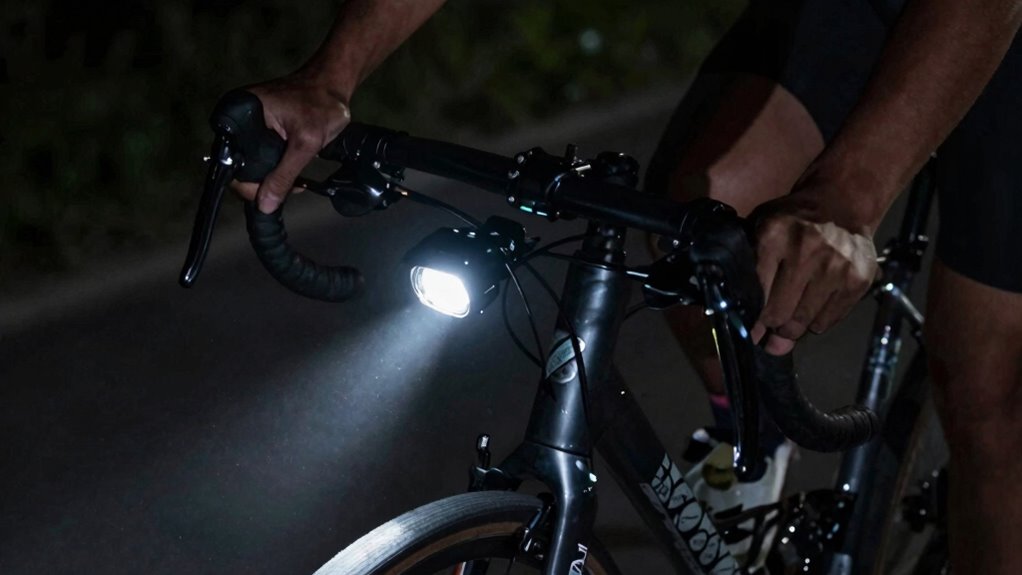
Many riders make the mistake of relying solely on their bike lights without considering their own presence on the road. You should position yourself in a way that maximizes your visibility, such as riding in well-lit areas when possible or staying close to the curb to avoid blind spots. Additionally, avoid wearing dark clothing or gear that blends into the night; instead, opt for bright or reflective apparel. Proper rider visibility isn’t just about being able to see; it’s about making sure others can see you clearly from a distance, giving them enough time to react. Paying attention to your bicycle lighting setup and ensuring it’s optimized can make a significant difference in night riding safety. Ensuring your riding skills include proper use of lights and reflective gear can further reduce risks. Moreover, regularly checking your bike maintenance ensures all lights and reflectors are functioning correctly, which is crucial for safe night riding. In addition, understanding how regional culture influences safety practices can help you adapt your riding strategies to different environments. Being aware of lighting conditions and adjusting your approach accordingly can prevent many common hazards encountered at night. In the end, overlooking bike maintenance and rider visibility can turn a night ride into a hazardous venture. Take the time to prepare your bike and yourself properly. Doing so not only enhances your safety but also transforms your night riding experience into a more enjoyable and worry-free adventure. Being proactive about these aspects *guarantees* you’re visible, reliable, and ready to tackle the darkness confidently.
Popular right now

Bose QuietComfort Wireless Noise Cancelling Headphones – Petal Pink Limited Edition

Ninja Specialty Coffee Maker with 10-Cup Carafe and Fold-Away Frother, CM401

Dyson V9 Motorbar Cordless Vacuum
As an affiliate, we earn on qualifying purchases.
Frequently Asked Questions
How Can I Tell if My Bike Lights Are Properly Aligned?
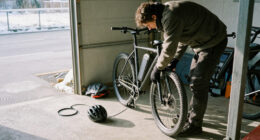
To verify if your bike lights are properly aligned, turn them on and place a wall or garage door about 10 feet away. Observe the beam pattern; it should be level and focused without glaring into your eyes or blinding others. Regular bike maintenance and understanding lighting technology help guarantee maximum visibility. Adjust the lights accordingly so the beam hits the road where you want, improving safety during night rides.
What Are the Best Clothing Colors for Night Visibility?
You should wear bright clothing and reflective gear for night visibility. Imagine Sarah riding home after sunset; she wears a neon jacket and reflective strips on her backpack. These choices make her highly visible to drivers, reducing accident risk. Bright clothing catches headlights, while reflective gear bounces back light, ensuring you’re seen from a distance. Prioritize high-visibility colors like neon yellow, orange, or green for safer night riding.
How Often Should I Check My Night Riding Setup?
You should check your night riding setup before every ride to guarantee peak safety. Regularly inspect your bike maintenance, like tire pressure and brakes, and verify your safety gear, including lights and reflective clothing, are working properly. This quick check helps prevent accidents caused by equipment failure or visibility issues. Making it a habit keeps you confident and safe, so don’t overlook these essential checks before hitting the road in low-light conditions.
Are Reflective Accessories Necessary if My Bike Has Good Lights?
Reflective gear isn’t just a nice addition—it’s your secret weapon for staying visible in the dark. Even with good lights, relying solely on them can be a gamble. Visibility tips tell you that reflective accessories boost your safety exponentially by catching headlights from miles away. Don’t overlook these simple, effective tools; they make a huge difference in alerting drivers and keeping you safe during every night ride.
What Should I Do if My Lights Fail During a Ride?
If your lights fail during a ride, stay calm and slow down. Put on your bike helmet for safety, and use your bike’s built-in reflectors or reflective gear to stay visible. Check your tire pressure to guarantee control, and if possible, switch to a backup light or use a small flashlight. Signal your intentions early and find a safe spot to stop and fix or replace your lights before continuing.
Conclusion
If you overlook your night riding setup, you’re like a lighthouse lost in a fog—your path becomes murky, and others can’t see you clearly. A simple mistake can turn your ride into a shadowy dance with danger. But with the right lights and setup, you’ll shine like a beacon, guiding yourself safely through the darkness. Don’t let a missed detail cast a long shadow—gear up right, and ride with confidence into the night.