
To fix brake rub as a daily rider, start by ensuring your brake pads sit evenly against the rim; loosen caliper bolts and realign them if needed. Check for wheel wobbles and true your wheel using a spoke wrench, tightening or loosening spokes until the rim is straight. Regularly inspect and replace worn pads and keep spokes properly tensioned. For simple yet effective solutions, learn these adjustments—more tips ahead to keep your brakes running smoothly.

Get bike and ride gear delivered free with Prime
- Fast, free delivery on millions of items
- Prime Video, Amazon Music and more included
- Member-only deals all year
Key Takeaways
- Regularly check and realign brake pads to ensure even contact with the rim.
- True your wheels to eliminate warps causing uneven pad contact and rubbing.
- Adjust brake calipers by loosening bolts and centering pads over the rim.
- Inspect and replace worn brake pads for smooth, squeal-free braking.
- Maintain proper spoke tension to keep wheels true and prevent rim misalignment.
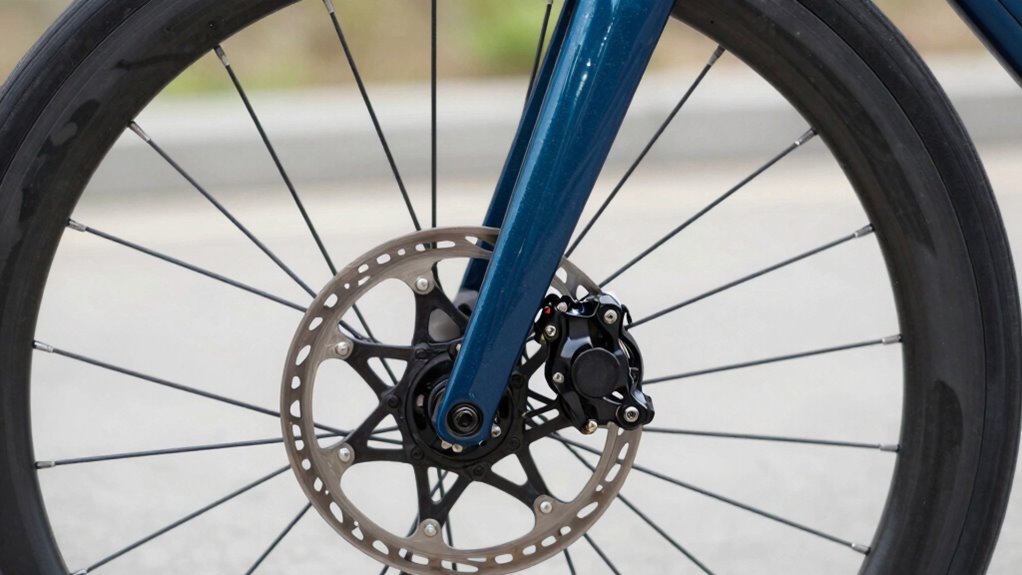
Ever experienced that annoying squeal or rubbing sensation when braking? It’s a common frustration for daily riders, and it often points to issues with brake pad alignment or the wheel itself. Fortunately, many fixes are straightforward and effective if you know what to look for and how to approach the problem. One of the first steps is to check the brake pads—they need to be aligned properly. Brake pad alignment involves adjusting the pads so they sit evenly against the rim when you squeeze the brake lever. If they’re too close on one side or unevenly spaced, you’ll notice rubbing or squealing. To fix this, you can loosen the brake caliper bolts, gently reposition the pads so they’re centered over the rim, and then tighten everything back up. This simple adjustment often resolves rubbing issues caused by misaligned pads.
However, if the problem persists, it might be due to the wheel itself. Over time, rims can become slightly bent or warped, leading to uneven contact with the brake pads. Here, rim truing techniques come into play. Using a spoke wrench, you can make small adjustments to the tension of individual spokes to straighten out a wobbling rim. You’ll want to spin the wheel and observe where it rubs or wobbles. Then, gently tighten or loosen spokes on either side of the wobble to bring the rim back into true alignment. This process can take some patience, but it’s highly effective at eliminating rubbing caused by wheel misalignment. Additionally, understanding the importance of brake system maintenance can help prevent future issues. Regular wheel truing checks are also a key part of maintaining smooth operation and avoiding future rubbing problems. Maintaining proper brake pad adjustment and inspecting the brake components regularly can further reduce the likelihood of persistent issues. Also, keeping the spokes properly tensioned ensures the rim stays true over time, which is essential for consistent braking performance.
While working on rim truing, it’s also a good idea to inspect the brake pads themselves. Worn or uneven pads can cause rubbing even if the rim is perfectly true. Replacing worn pads or sanding down any unevenly worn areas can restore smooth braking. Ensuring that your brake components are in good condition can also contribute to consistent performance. After making adjustments, spin the wheel again to verify that the rim no longer contacts the pads prematurely. If it still does, double-check your rim truing and brake pad alignment to make sure everything’s properly set.
In many cases, addressing brake pad alignment and using rim truing techniques can fix most rubbing issues for daily riders. These are skills you can learn with a little practice, and they save you trips to the bike shop. Regular maintenance and quick adjustments keep your bike running smoothly, ensuring you don’t get caught with squealing brakes or unwanted rubbing during your commute. When these basic fixes are applied correctly, you’ll enjoy quieter, more reliable braking every time you hit the road.
bicycle brake caliper alignment tool
As an affiliate, we earn on qualifying purchases.
As an affiliate, we earn on qualifying purchases.
Frequently Asked Questions
Can Brake Rub Damage My Bike’s Rims Long-Term?
Yes, brake rub can damage your bike’s rims over time. Constant friction from misaligned rim or worn brake pads causes excessive wear, weakening the rim’s structure. If you notice brake rub, check your rim alignment and brake pad condition regularly. Properly aligned rims and fresh brake pads reduce long-term damage, ensuring your rims stay strong and intact for many rides. Regular maintenance prevents costly repairs later.
How Often Should I Check for Brake Rub Issues?
Think of your bike as a delicate balance, like a tightrope walker. You should check for brake rub issues weekly, especially if you ride often or on rough terrain. Regularly inspect brake pad alignment and use rim truing techniques to keep everything centered. This keeps your ride smooth and prevents long-term damage. Staying vigilant guarantees your bike remains a steady, reliable partner on every journey.
Are There Specific Tools Needed to Fix Brake Rub?
To fix brake rub, you’ll need basic tools like an Allen wrench or screwdriver to adjust the brake pad alignment. Start by checking the rim alignment, making sure it’s straight. Loosen the brake pad bolts, reposition the pads so they don’t contact the rim unevenly, then tighten them back up. Fine-tune your rim alignment if needed, and test ride to guarantee the brake pads clear the rim smoothly.
Does Brake Rub Affect Braking Performance Significantly?
Yes, brake rub can considerably affect braking performance by causing uneven contact, leading to brake noise and reduced stopping power. It can also cause rim warping over time, which worsens the issue. When your brakes rub against the rim, you might notice less control and increased wear on brake pads. Addressing brake rub promptly helps maintain ideal braking performance and prevents further damage to your wheel and rim.
Can Brake Rub Be Caused by Riding Style or Terrain?
Brake rub can definitely be caused by your riding style or terrain variations. If you ride aggressively or frequently brake hard, your bike’s components might shift, causing the pads to touch the rim or rotor. Similarly, rough or uneven terrain can shake things loose or misalign your brakes. Pay attention to your riding technique and how your bike handles different terrains—small adjustments can prevent brake rub and keep your rides smooth as butter.
As an affiliate, we earn on qualifying purchases.
Conclusion
Think of your bike’s brake rub as a stubborn knot in a rope; it’s frustrating, but with patience and the right tools, you can untangle it. Just like a sailor carefully works out a tangle to keep sailing smoothly, you can apply these fixes to keep your ride silent and efficient. Every adjustment is a step toward harmony on your journey, reminding you that small efforts lead to smoother rides and fewer obstacles along the way.
As an affiliate, we earn on qualifying purchases.
As an affiliate, we earn on qualifying purchases.
Halloween Picks
halloween
As an affiliate, we earn on qualifying purchases.