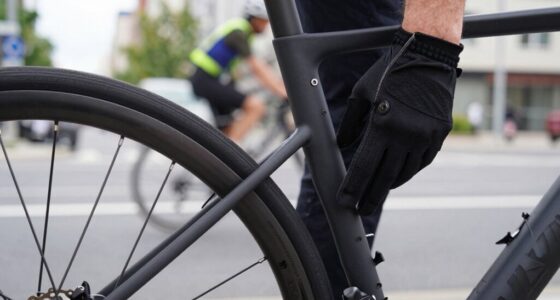
To fix disc brake rub, start by ensuring your caliper is properly centered over the rotor. Loosen the caliper bolts, gently realign the caliper so it sits evenly, then tighten the bolts securely. Sometimes, warped rotors can cause rubbing, so you may need to true or replace the rotor. Correctly aligning your caliper is a simple step often overlooked that can eliminate noise and uneven wear—continue to explore how to perfect your brake setup.

Get bike and ride gear delivered free — and shop member deals
- Fast, free delivery on millions of items
- Access to Prime Big Deal Days deals on October 6–7
- Prime Video, Amazon Music and more included
Key Takeaways
- Ensure caliper bolts are properly tightened to prevent shifting that causes rubbing.
- Loosen and realign the caliper to sit evenly over the rotor before tightening.
- Check for rotor warping and true it by sanding or filing high spots.
- Confirm the wheel is properly mounted and spins freely without contact.
- Regularly inspect and maintain caliper and rotor alignment to prevent recurring rub.

Disc brake rub occurs when the brake rotor makes contact with the brake pad or caliper while the wheel is spinning, causing a squealing or grinding noise. This issue can be frustrating, especially when you’re trying to enjoy a smooth ride. Often, the cause isn’t as complex as you might think. In many cases, a simple adjustment can fix the problem, and you don’t need to replace parts or overhaul your entire braking system. The key is understanding the importance of caliper adjustment and rotor truing.
When your brake caliper isn’t properly aligned, it can cause uneven contact with the rotor. This misalignment leads to the rotor rubbing against the brake pad or caliper, creating that irritating noise. The solution starts with caliper adjustment. You want to ensure that the caliper is centered over the rotor. Check if the caliper bolts are tight, and if they’re loose, tighten them securely. Sometimes, the caliper may shift slightly out of position due to vibrations or regular wear. Loosen the bolts, realign the caliper so it sits evenly over the rotor, and then tighten the bolts back up. If the caliper is still misaligned after adjustment, you might need to check the mounting hardware or replace worn-out components.
Rotor truing is another critical step in fixing brake rub. Over time, the rotor can become warped or slightly bent, especially if it’s been exposed to heavy braking or impacts. You can true the rotor by carefully sanding or filing down high spots, or by using a rotor truing tool. This process involves gently reshaping the rotor to ensure it spins evenly without contact issues. Before truing, make sure the wheel is properly mounted and that the rotor is free of dirt or debris. After truing, spin the wheel to see if the noise persists. Often, truing the rotor and adjusting the caliper together will eliminate the rub completely. Regular caliper alignment checks and rotor truing can help prevent this issue from recurring.
It’s worth noting that regular maintenance helps prevent this issue. Checking caliper alignment and truing rotors periodically can save you from annoying noises and uneven wear. Remember, a slight misalignment or warped rotor can be corrected easily with some basic tools and patience. You don’t always need professional help for simple adjustments like these. With a little effort, you’ll restore smooth, quiet braking and improve your overall riding experience. The next time you hear that squeal or grind, consider these simple fixes before jumping to more complicated solutions. Sometimes, the simplest fix is just a matter of centering that caliper and trueing the rotor.
bike disc brake caliper alignment tool
As an affiliate, we earn on qualifying purchases.
As an affiliate, we earn on qualifying purchases.
Frequently Asked Questions
Can Disc Brake Rub Cause Long-Term Damage?
Yes, disc brake rub can cause long-term damage if overlooked. Constant rubbing leads to uneven brake pad wear, reducing braking efficiency, and can also cause rotor warping over time. This not only shortens the lifespan of your brake components but can make stopping less effective and unsafe. Addressing the issue early by properly centering your brake calipers helps prevent these costly damages and ensures your brakes perform safely and smoothly.
How Often Should I Check My Brake Centering?
You should check your brake centering every 6,000 to 8,000 miles or during regular brake pad inspections. This helps guarantee proper alignment and prevents uneven wear. If you notice any rubbing or noise, consider rotor resurfacing or realigning the calipers. Regular checks catch issues early, saving you from costly repairs later. Keep an eye on your brakes to maintain peak performance and safety on the road.
Is It Safe to Drive With Brake Rub?
Driving with brake rub isn’t safe because it can cause excessive wear on your brake pad and rotor alignment issues. You might notice increased heat, noise, or reduced braking efficiency. It’s best to address the problem promptly by checking and realigning the rotor and brake pad. Ignoring it could lead to costly repairs or brake failure. Always get a professional inspection if you’re unsure about the condition of your brakes.
Do Different Brake Types Require Different Fixes?
Different brake types often need specific fixes, but generally, you’ll want to focus on brake pad adjustment and rotor alignment. For disc brakes, check if the caliper needs repositioning or if the rotor is warped. For drum brakes, adjust the brake shoes. Always inspect the components carefully, and if you’re unsure, consult your vehicle’s manual or a professional. Proper alignment guarantees smooth braking and prevents future rubbing issues.
Can Wheel Alignment Affect Brake Rub Issues?
Think of your bike’s wheels as dancers in perfect harmony. Yes, wheel alignment can cause brake rub issues because misaligned wheels lead to uneven tire wear and strained brake components. When your suspension isn’t aligned, it’s like a crooked dance partner, causing the brake calipers to rub against the rotor. Proper suspension alignment guarantees smooth motion, preventing brake rub and prolonging your bike’s life.
As an affiliate, we earn on qualifying purchases.
Conclusion
Next time your bike whispers with a faint rubbing, remember that a simple centering adjustment can restore its quiet glide. Picture the rotor gently aligning itself, like a dancer finding perfect balance on stage. With a firm but careful touch, you’ll bring harmony back to your ride—no need for complex fixes. Just a moment of focus, a slight tweak, and you’ll feel the smooth, seamless spin once more—your bike’s silent symphony restored.
mountain bike disc brake rotor truing
As an affiliate, we earn on qualifying purchases.
As an affiliate, we earn on qualifying purchases.
bicycle brake caliper adjustment
As an affiliate, we earn on qualifying purchases.
As an affiliate, we earn on qualifying purchases.
Fall Picks
fall essentials
As an affiliate, we earn on qualifying purchases.