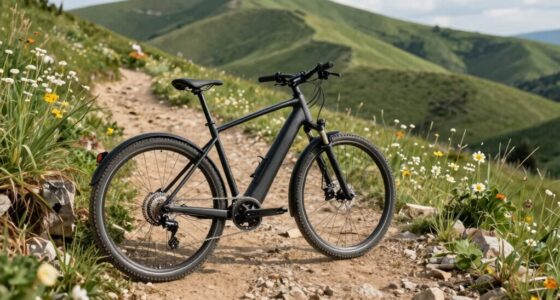
To determine if an e-scooter can handle your daily routes, consider your typical distance, terrain, and weather conditions. Look for a scooter with enough battery capacity to cover longer or hilly trips, and pick one with motor power suited to challenging terrain. Weather resilience is also key, especially in rain or cold. Balancing these factors helps you choose a reliable ride—stick around to uncover ways to fine-tune your selection.

Get bike and ride gear delivered free — and shop member deals
- Fast, free delivery on millions of items
- Access to Prime Big Deal Days deals on October 6–7
- Prime Video, Amazon Music and more included
Key Takeaways
- Assess your route’s terrain complexity, elevation changes, and distance to determine appropriate battery capacity and motor power.
- Consider weather conditions and climate to ensure the scooter’s battery and components are weather-resistant.
- Match the scooter’s range with your daily distance, accounting for real-world factors like terrain and riding style.
- Balance power and portability to ensure the scooter can handle challenging routes without becoming too heavy or costly.
- Evaluate if the scooter’s battery and motor specs align with route demands for consistent, reliable performance.

Choosing the right e-scooter for your daily commute requires understanding how it will handle your specific route conditions. One of the first things to consider is the scooter’s battery life. If your route involves long stretches without easy access to charging stations, you’ll want a model that offers a high battery capacity. A longer-lasting battery ensures you won’t have to worry about running out of power mid-ride, which can be both frustrating and inconvenient. Pay attention to the estimated range provided by the manufacturer, but also consider real-world factors like weather, terrain, and your riding style, as these can impact battery performance. For instance, hilly routes tend to drain the battery faster, so if your daily commute includes significant elevation changes, opting for a scooter with a larger battery is wise. Incorporating sustainable transportation options like e-scooters can significantly reduce your carbon footprint while commuting. Additionally, think about how the motor power and battery life work together. A scooter with a high-capacity battery paired with a robust motor can handle challenging routes more effectively but might come at a higher price and weight. If portability is a concern, you may need to find a compromise, selecting a model that offers enough power for your terrain while maintaining manageable weight and size for transport or storage. Ultimately, matching your route conditions with the right balance of battery life and motor power ensures a smoother, more dependable commute. By carefully evaluating these two aspects, you avoid ending up stranded or underpowered, and you maximize your riding experience. When shopping for your e-scooter, always consider your daily distance, terrain, and the power requirements of your route. This way, you’ll choose a model that seamlessly fits your needs, making your daily ride safe, comfortable, and efficient. Understanding route-specific requirements can help you make more informed decisions, especially regarding terrain challenges and how they influence e-scooter performance. Additionally, considering battery performance in different weather conditions can further ensure reliability in various climates.
As an affiliate, we earn on qualifying purchases.
Frequently Asked Questions
Can E-Scooters Withstand Extreme Weather Conditions?
E-scooters generally struggle with extreme weather conditions, especially if they lack proper weather resistance. If you ride in rain or snow, choose models with good weather resistance features to protect the electrical components. Keep in mind, harsh weather can reduce battery longevity, so it’s crucial to pick a scooter designed for such conditions. Proper maintenance and selecting the right model help ensure your e-scooter withstands tough weather and performs reliably.
How Long Do E-Scooter Batteries Typically Last?
E-scooter batteries typically last between 2 to 4 years, depending on usage and maintenance. Battery lifespan varies based on charging frequency; frequent partial charges can extend battery life, while overcharging may shorten it. To maximize your e-scooter’s battery lifespan, avoid frequent deep discharges and keep the battery at a suitable charge level. Regularly maintaining and monitoring your battery ensures reliable performance for your daily rides.
Are E-Scooters Suitable for Steep Inclines?
You might be surprised, but many e-scooters handle steep inclines quite well. If hill climbing and incline challenges are part of your daily route, look for models with powerful motors and good torque. Dual motors can also boost performance on steep terrain. Test your chosen scooter on inclines first to make certain it maintains speed and stability, so you’re prepared for any challenging hill you encounter.
What Maintenance Is Required for Daily Use?
To keep your e-scooter running smoothly daily, you should regularly inspect the tires for wear and tear, ensuring they’re properly inflated for safety and efficiency. Additionally, check brake adjustments frequently, making sure they respond promptly and aren’t too loose or tight. By performing these simple maintenance tasks, you’ll extend your scooter’s lifespan, improve safety, and enjoy a hassle-free ride every day.
Do E-Scooters Comply With Local Traffic Laws?
Yes, e-scooters generally comply with local traffic laws, but you should always check specific regulations in your area. Urban safety is vital, so guarantee your scooter has proper lights and signals. Also, verify if your insurance covers e-scooter accidents to protect yourself. Staying informed about local rules helps you ride responsibly, avoid fines, and contribute to safer streets for everyone.
weather-resistant electric scooter
As an affiliate, we earn on qualifying purchases.
As an affiliate, we earn on qualifying purchases.
Conclusion
Now that you know what to look for, you can confidently choose an e-scooter that suits your daily route. Remember, it’s all about matching the scooter’s features to your terrain and distance needs. Don’t settle for less—after all, isn’t your daily commute worth the right ride? With the right e-scooter, you’ll enjoy smoother, safer travels every day. So, are you ready to find the perfect scooter for your journey?
As an affiliate, we earn on qualifying purchases.
off-road electric scooter with high motor power
As an affiliate, we earn on qualifying purchases.
As an affiliate, we earn on qualifying purchases.
Fall Picks
fall essentials
As an affiliate, we earn on qualifying purchases.