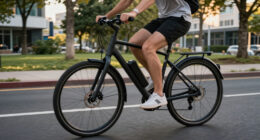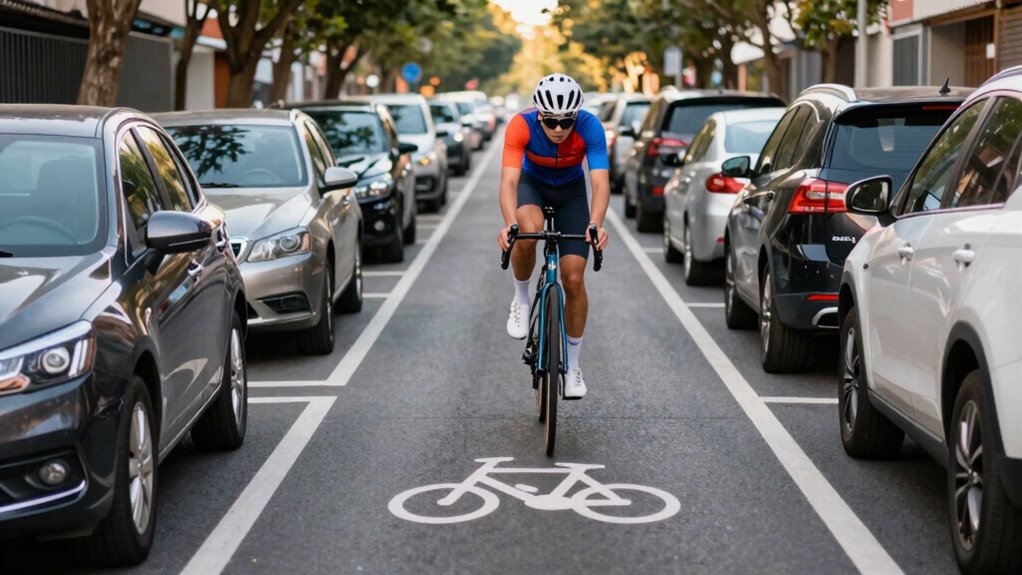
To pass parked cars safely, stay alert and keep your eyes moving to anticipate door openings. Position slightly to the left of parked vehicles and avoid lingering too close in wide lanes. Adjust your speed—slowing down when near drivers or passengers—and signal early to alert others of your intentions. Maintain a safe distance and use quick shoulder checks to assess your surroundings. Keep these habits in mind, and you’ll be better prepared to navigate safely—there’s more to learn that can help you stay even safer.

Get bike and ride gear delivered free — and shop member deals
- Fast, free delivery on millions of items
- Access to Prime Big Deal Days deals on October 6–7
- Prime Video, Amazon Music and more included
Key Takeaways
- Position slightly left of parked cars to stay clear of opening doors.
- Adjust your speed to pass at a moderate pace, maintaining control and awareness.
- Use eye contact and early signals to anticipate driver or passenger door openings.
- Keep a safe distance from parked vehicles, especially in wide lanes or shoulders.
- Stay alert, scan surroundings, and avoid distractions to quickly react to unexpected door swings.
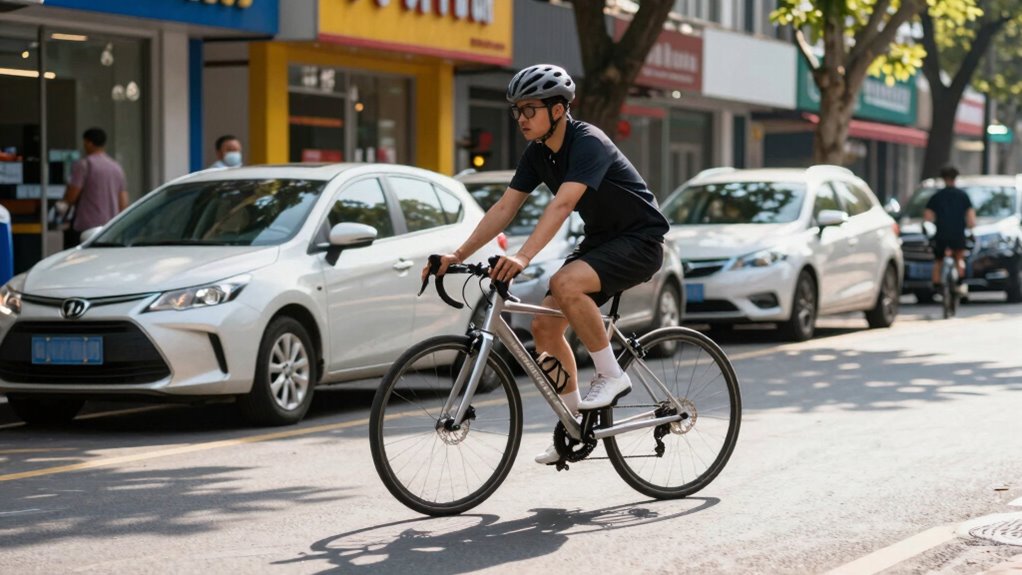
When passing parked cars, it’s essential to avoid the door zone—where drivers and passengers might suddenly open doors into your path. Staying out of this zone is crucial for parking lane safety. You need to remain alert and anticipate potential hazards, especially since a door opening unexpectedly can cause a serious accident. The key is to keep your eyes moving and be prepared to react quickly, giving yourself enough space to maneuver if a door swings open.
Avoid the door zone by staying alert, keeping your eyes moving, and giving yourself space to react quickly when passing parked cars.
One of the most effective ways to do this is to position yourself slightly to the left of the parked cars when riding in a lane that allows it. If you’re in a bike lane or on a street with a wide enough shoulder, try to stay several feet away from parked vehicles. This not only keeps you out of the door zone but also improves your overall visibility of your surroundings. Driver awareness plays a significant role here; drivers are less likely to open doors abruptly if they see you approaching, especially if you’re riding at a consistent, predictable speed. Make eye contact with drivers when possible, and signal early if you’re planning to pass or change lanes.
Adjust your speed accordingly, so you can react swiftly if a door starts to open. It’s best to pass parked cars at a moderate pace, not so fast that you can’t stop if something unexpected happens, but quick enough to avoid lingering in the door zone. When you see a driver or passenger near a vehicle, slow down and consider whether they might open the door suddenly. Sometimes, a quick glance over your shoulder can give you insight into whether a door might open soon.
If you’re riding in traffic with many parked cars, stay vigilant. Use your peripheral vision to scan for movement, and avoid distractions like your phone. Remember, driver awareness goes both ways: your presence and predictable behavior can influence how cautious others are. Be courteous by giving parked cars plenty of space and avoiding sudden movements that could surprise someone opening a door. Additionally, understanding parking lane safety can help you navigate more confidently and prevent accidents. Being familiar with urban traffic patterns can also enhance your ability to anticipate driver actions and improve your overall safety.
Ultimately, the best way to pass parked cars without living in the door zone is to stay alert, maintain a safe distance, and anticipate the unexpected. By keeping safety at the forefront of your riding or driving habits, you minimize the risk of accidents and ensure your journey remains smooth and secure. Proper parking lane safety and driver awareness are both essential components of navigating busy streets confidently and responsibly.
As an affiliate, we earn on qualifying purchases.
Frequently Asked Questions
How Do Weather Conditions Affect Passing Parked Cars Safely?
Weather conditions considerably impact how safely you pass parked cars. Weather hazards like rain, snow, or fog reduce visibility and make the road surface slippery, increasing your risk of losing control. You should slow down, stay alert, and give yourself extra space when passing parked cars. Always check your mirrors and proceed cautiously, especially on wet or icy roads, to avoid accidents caused by reduced traction or limited sightlines.
What Should I Do if a Parked Car Suddenly Opens Its Door?
If a parked car suddenly opens its door, you must react immediately to avoid disaster. Slam on your brakes, steer sharply away from the door zone, and stay alert for passengers who might hop out unexpectedly. Keep your hazard awareness high, and don’t swerve into traffic. Staying calm and quick guarantees you avoid the hazard and keep yourself safe from a potentially catastrophic collision.
Are There Legal Penalties for Unsafe Passing Near Parked Cars?
Yes, there are legal repercussions if you pass parked cars unsafely. Parking regulations often prohibit unsafe passing, and law enforcement can issue fines or citations for violations. You could face penalties like points on your license or increased insurance rates. Always stay alert, maintain a safe distance, and follow posted signs and rules to avoid legal consequences and guarantee safety when passing parked vehicles.
How Does Bike Lane Design Influence Passing Strategies?
Bike lane design influences your passing strategies considerably. Well-designed bike lanes include elements like buffers, clear markings, and adequate width, which help you pass parked cars safely. Design considerations prioritize separation from traffic and parked vehicles, reducing door zone risks. When bike lanes incorporate these elements, you can pass parked cars confidently, maintaining safety and flow. Always stay alert to lane changes or obstructions caused by design features, adjusting your approach accordingly.
What Are the Best Signals to Communicate With Drivers When Passing?
You should use clear hand signals to indicate your intention to pass, such as extending your arm straight out to signal a left or right turn. Making eye contact with drivers helps confirm they see you and understand your actions. Combining these signals guarantees effective communication, reducing confusion and increasing safety. Always stay alert and move smoothly, so drivers can anticipate your actions and give you space to pass safely.
As an affiliate, we earn on qualifying purchases.
Conclusion
So, next time you see a line of parked cars, don’t just blindly squeeze past the door zone—unless you’re auditioning for a stunt show. Instead, take that extra moment to give a wide berth, keep your wits about you, and maybe even thank the universe for those precious seconds. After all, risking a door ding or a face plant isn’t exactly the kind of adventure most of us signed up for. Stay safe, stay smart.
cycling gloves with reflective strips
As an affiliate, we earn on qualifying purchases.
As an affiliate, we earn on qualifying purchases.
As an affiliate, we earn on qualifying purchases.
Fall Picks
fall essentials
As an affiliate, we earn on qualifying purchases.