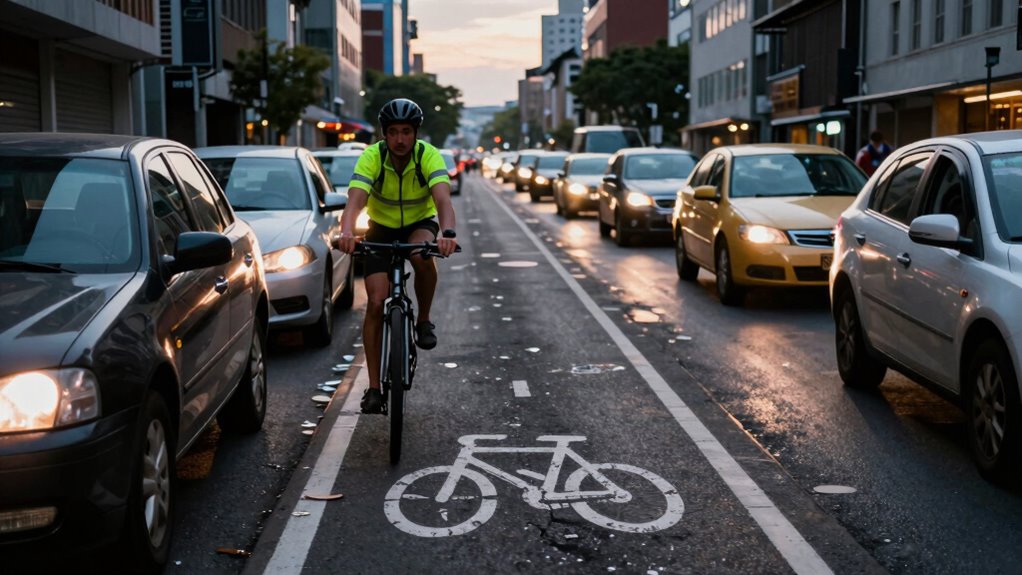

Bike lanes become more dangerous than the road when parked cars block or encroach on them, forcing you into traffic, or when poor maintenance causes potholes, debris, and faded markings that increase the risk of falls and collisions. Unregulated parking and neglected surface repairs also turn these lanes into hazards. Staying alert, avoiding parked cars, and reporting hazards can help, but understanding these dangers further can keep you safer whenever you ride.

Get bike and ride gear delivered free — and shop member deals
- Fast, free delivery on millions of items
- Access to Prime Big Deal Days deals on October 6–7
- Prime Video, Amazon Music and more included
Key Takeaways
- Poorly maintained bike lanes with debris, potholes, or faded markings increase risk beyond that of the main road.
- Encroaching parked cars or unregulated parking can turn bike lanes into hazards, making them more dangerous than the street.
- Low visibility and unclear lane markings cause confusion, leading cyclists into traffic or unsafe areas.
- Sudden door openings or parking violations create unpredictable hazards that may surpass the danger of riding on the road.
- Always stay alert, maintain safe distances from parked cars, and report hazards to improve bike lane safety.
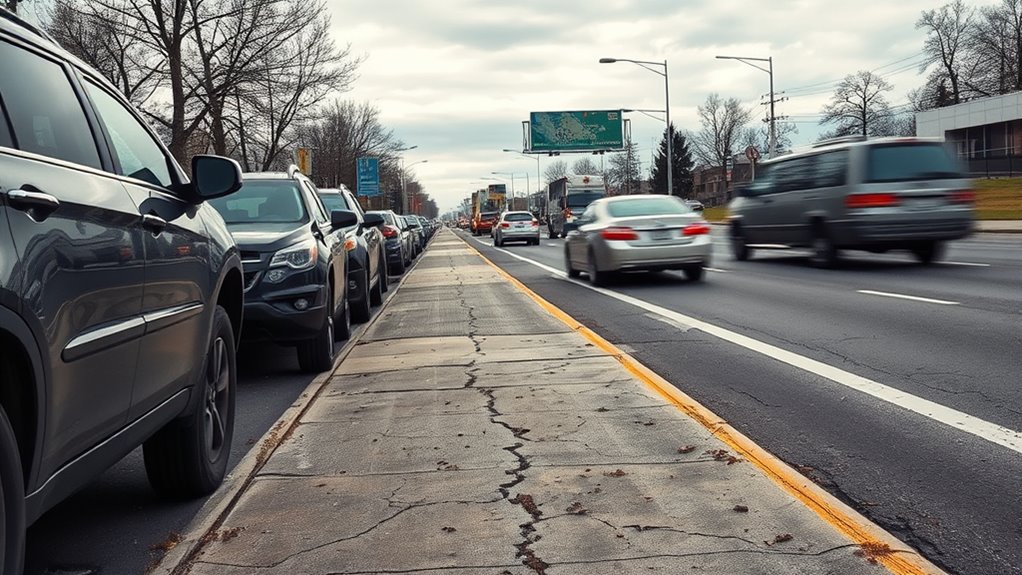
Bike lanes are designed to keep cyclists safe, but they can become dangerous under certain conditions. One of the main hazards you might encounter is parking-related issues. When cars park improperly or in the wrong areas, they can block your path or open doors unexpectedly, creating a serious risk of collisions. If a parked vehicle’s door swings open without warning, you could find yourself swerving suddenly to avoid it, which might lead to falls or crashes. Additionally, when drivers ignore parking regulations and use bike lanes as overflow parking spots, it forces you into the main traffic lane, increasing your exposure to moving vehicles. This is especially dangerous in busy areas where parked cars are frequent and unpredictable. You need to stay alert for these hazards and avoid riding too close to parked vehicles, as door openings are often sudden and hard to anticipate. Proper lane maintenance can help prevent some of these hazards by ensuring the surface is smooth and free of debris. Improper maintenance of bike lanes can also turn them into hazardous zones. When bike lanes aren’t well-maintained, they can develop potholes, cracks, or debris that can cause you to lose control. Potholes and uneven pavement are common issues that often go unnoticed until it’s too late, leading to falls or tire damage. Debris like glass, trash, or gravel can puncture your tires or make the surface slippery, increasing the likelihood of accidents. Poorly maintained lane markings are another problem; faded or missing lines can confuse you about where the bike lane ends and the road begins, especially during low visibility conditions. This confusion might cause you to drift into traffic or make sudden maneuvers that are risky. Regular maintenance is essential to keep bike lanes safe, yet many cities neglect this responsibility, turning what should be a safe space into a hazard. The key to staying safe is to remain vigilant, especially when you spot parking hazards or poorly maintained areas. Always check your surroundings carefully, anticipate sudden door openings, and give parked cars plenty of space. When the surface looks uneven or debris is present, slow down and proceed cautiously. Reporting hazards to local authorities can help improve safety for everyone. Remember, even the best-designed bike lanes can become dangerous if they aren’t properly maintained or if parking regulations aren’t followed. Your awareness and proactive approach can make a significant difference, helping you avoid accidents and ride confidently.
Frequently Asked Questions
How Can Cyclists Identify Unsafe Bike Lanes Before Riding?
You can identify unsafe bike lanes by looking for visual cues like faded paint, debris, or uneven pavement. Check for maintenance issues such as potholes, standing water, or obstructions that could cause accidents. Always observe how the lane connects with intersections and driveways. If it appears poorly maintained or cluttered, consider alternative routes or stay alert for potential hazards before you ride.
What Legal Rights Do Cyclists Have in Dangerous Bike Lane Situations?
Think of your legal rights as a shield in a storm. You have legal protections that can hold drivers accountable if they cause injuries, even in dangerous bike lanes. If you’re injured, liability issues come into play, and you can seek compensation through legal channels. Knowing your rights empowers you to stand firm, ensuring that your safety isn’t overlooked and that those responsible are held accountable.
Are There Specific Cities With More Hazardous Bike Lanes?
Some cities stand out for their hazardous bike lanes due to poor bike lane design and urban cycling challenges. Places like Los Angeles, New York City, and parts of San Francisco often have inconsistent or poorly maintained infrastructure, increasing risks for cyclists. When you ride in these cities, it’s essential to stay alert, advocate for better bike lane design, and always prioritize safety to avoid accidents in urban cycling environments.
How Can Urban Planners Improve Bike Lane Safety Effectively?
You can turn the tide by prioritizing bike lane maintenance and updating urban planning policies. Regularly inspecting and fixing potholes, debris, and worn paint keeps cyclists safe, preventing accidents. Implement smarter urban planning policies that separate bike lanes from vehicle traffic and install clear signage. By taking these steps, you’ll help create a safer, more inviting environment—proving that a stitch in time saves nine and boosts cyclist confidence.
What Equipment Can Cyclists Use to Stay Safe in Risky Bike Lanes?
You can stay safe in risky bike lanes by wearing protective gear like a helmet, gloves, and knee pads. Use visibility accessories such as bright clothing, reflective vests, and bike lights to make sure you’re seen, especially in low-light conditions. Consider adding a mirror to your handlebars for better awareness of your surroundings. These safety measures help you stay alert and protected, reducing your risk of accidents in dangerous bike lanes.
Conclusion
Sometimes, bike lanes can feel like optical illusions—promising safety but hiding lurking hazards beneath their painted surface. When they become more dangerous than the road itself, it’s like orienting a maze with invisible traps. Stay alert, trust your instincts, and remember that your safety isn’t guaranteed by paint alone. By knowing when to take control and when to step back, you craft your own path through the urban jungle—where awareness is your most powerful shield.
Fall Picks
fall essentials
As an affiliate, we earn on qualifying purchases.