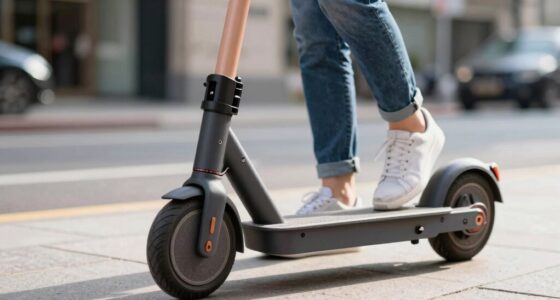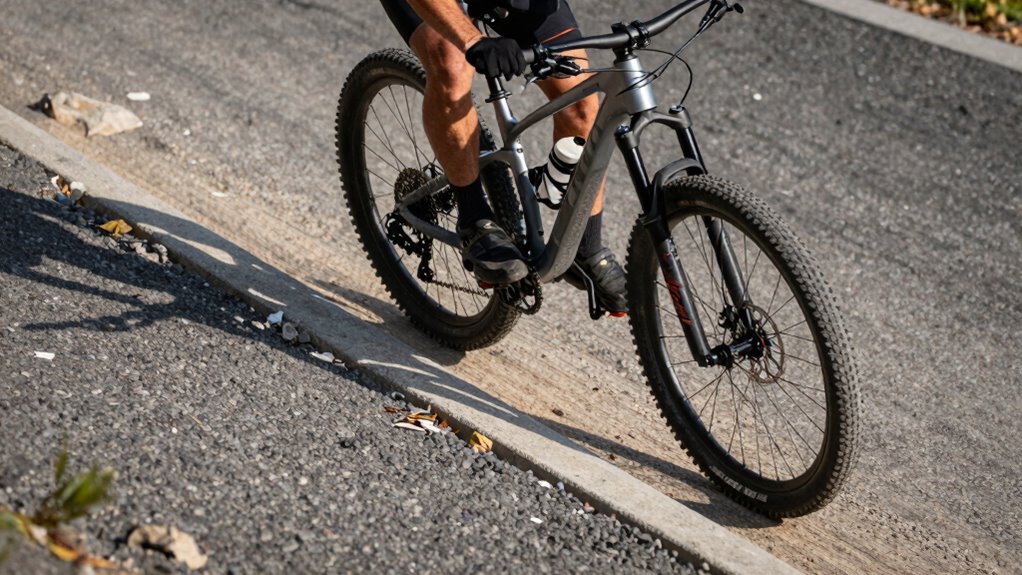
To ride over curbs and lip edges without pinching your tire, approach with a controlled, moderate speed and focus on body positioning. Keep your weight centered, gently lift the front wheel by shifting forward, then smoothly roll over the lip while absorbing shocks with your arms and legs. After clearance, shift your weight back to lift the rear wheel. Consistent technique and gradual practice help prevent tire pinches—discover more tips to master the technique seamlessly.

Get bike and ride gear delivered free — and shop member deals
- Fast, free delivery on millions of items
- Access to Prime Big Deal Days deals on October 6–7
- Prime Video, Amazon Music and more included
Key Takeaways
- Approach the curb with moderate speed, keeping focus ahead to maintain control and proper body positioning.
- Shift body weight slightly forward to lift the front wheel smoothly over the lip.
- Use controlled, gentle throttle and suspension or shock absorption techniques to prevent tire pinching.
- Maintain steady momentum and balanced posture during descent to avoid sudden impacts.
- Practice in safe environments to build confidence and refine technique for curb crossings.
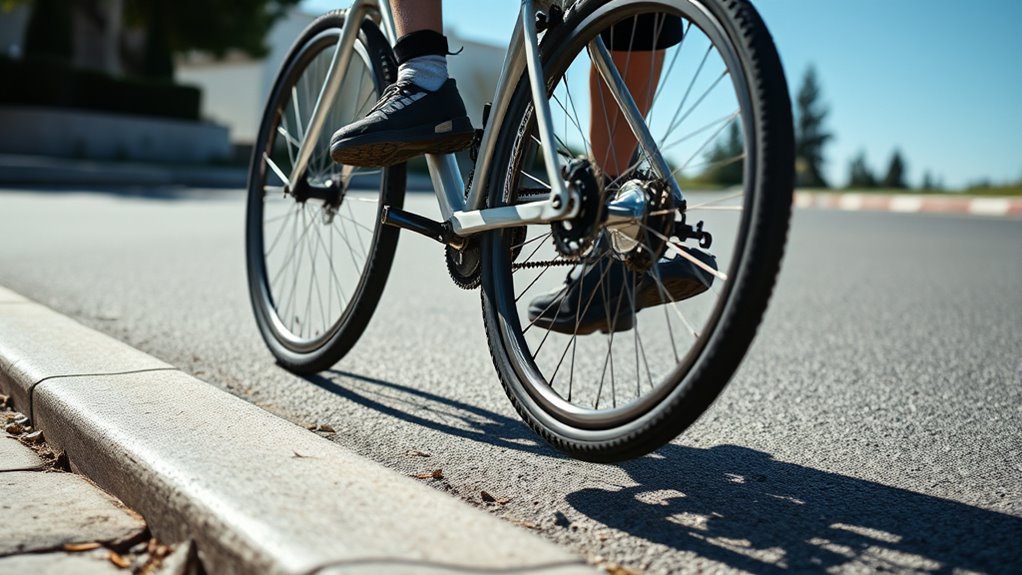
Riding over curbs can be tricky, but with the right technique, you can do it smoothly and safely. Whether you’re maneuvering urban streets or trail edges, understanding proper bike safety and riding techniques is essential to avoid pinch flats and damage to your tires. The key is to approach the curb with confidence, controlled speed, and the correct body positioning.
First, assess the height and angle of the curb. Keep your speed moderate—too slow, and you risk getting stuck; too fast, and control becomes difficult. As you approach, stay relaxed and keep your eyes focused ahead, not just on the curb but on your line. This mental preparation helps you maintain balance and react quickly if needed. Engage your core and keep your arms slightly bent to absorb shocks, maintaining stability through your riding techniques.
Position your body slightly forward, with your weight centered over the bike. As you near the curb, lift your front wheel by shifting your weight forward and slightly upward, smoothly rolling over the lip. This technique minimizes the impact on your front tire and helps prevent pinch flats. Once the front wheel clears the edge, gently lift the rear wheel by shifting your weight back slightly, guiding it over the curb without sudden jerkiness. This coordinated movement requires practice but becomes second nature once you develop the skill.
Remember, bike safety isn’t just about equipment; it’s about your riding technique. Keep your hands firm but relaxed on the handlebars so you can easily control your bike’s movements. If your bike has suspension, utilize it to absorb shocks as you roll over the curb. If not, your body acts as the shock absorber, so keep your knees and elbows slightly bent. Additionally, understanding the role of proper technique can significantly improve your curb-crossing skills.
When descending on the other side, maintain your momentum and keep your body balanced. Avoid braking abruptly as you go down to prevent losing control. Instead, use gentle throttle control and body positioning to stay smooth and steady. Practicing these riding techniques in controlled environments will boost your confidence and help you master curb crossings safely.
Incorporating these tips into your riding routine not only improves your ability to maneuver curbs but also enhances your overall bike safety. With proper riding techniques, you minimize the risk of tire pinch flats and other mishaps, keeping your rides safer and more enjoyable. Remember, every curb is a small challenge—approach it with focus, control, and the right technique, and you’ll handle it like a pro.
As an affiliate, we earn on qualifying purchases.
Frequently Asked Questions
What Bike Types Are Best for Curb Riding?
You should choose mountain bikes or BMX bikes for curb riding, as their sturdy frames and wide tires handle impacts better. These bikes require regular bike maintenance to keep them in top shape, especially when tackling curbs. Your rider skill is vital; practice controlled techniques to avoid pinching tires or damaging rims. Opt for bikes with strong suspension and durable tires to improve performance and safety on curb jumps.
How Does Tire Pressure Affect Curb Riding?
Think of your tire pressure like a trampoline’s bounce—too low, and it absorbs curb impact poorly, risking pinch flats; too high, and it’s stiff, making it harder to roll smoothly over edges. Maintaining the right tire pressure guarantees your tire flexes just enough to absorb curb impact without pinching. Proper pressure helps you smoothly ride over curbs, reducing the risk of damage while keeping control and comfort.
Are There Specific Techniques for Descending Curbs?
When descending curbs, you should use technique variations based on curb height. For small curbs, roll over slowly with a steady throttle and keep your weight centered. For taller curbs, approach at a moderate speed, shift your weight back slightly, and preload the suspension. Keep your eyes ahead, maintain a smooth throttle, and stay relaxed. Practicing these techniques will improve your control and reduce the risk of pinching a tire.
Can Curb Riding Damage My Bike’s Suspension?
Sure, curb riding can actually cause suspension wear and frame stress, but it’s usually exaggerated. If you hop smoothly and avoid harsh impacts, your bike stays pretty safe. Ironically, avoiding curbs altogether might lead to more damage from reckless drops or crashes. Just keep your technique controlled, and your suspension and frame will thank you, lasting longer and performing better over time.
What Safety Gear Should I Wear for Curb Riding?
When curb riding, you should wear protective gloves to safeguard your hands from scrapes and falls, and reflective gear to stay visible to others, especially in low-light conditions. These safety items help prevent injuries and improve your safety awareness. Always check your gear before riding, ensuring it’s secure and comfortable. Wearing the right safety equipment lets you focus on your ride and handle curb challenges confidently.
As an affiliate, we earn on qualifying purchases.
Conclusion
Now that you know how to smoothly ride over curbs and lip edges, you’re better equipped to handle tricky terrain without risking a flat. Just remember, practice makes perfect, and patience pays off. Approach each curb with confidence, stay focused, and keep your momentum steady. With these skills under your belt, you can tackle new challenges head-on. After all, the road isn’t always smooth, but with the right technique, you’ll come out on top every time.
As an affiliate, we earn on qualifying purchases.
As an affiliate, we earn on qualifying purchases.
Halloween Picks
halloween
As an affiliate, we earn on qualifying purchases.