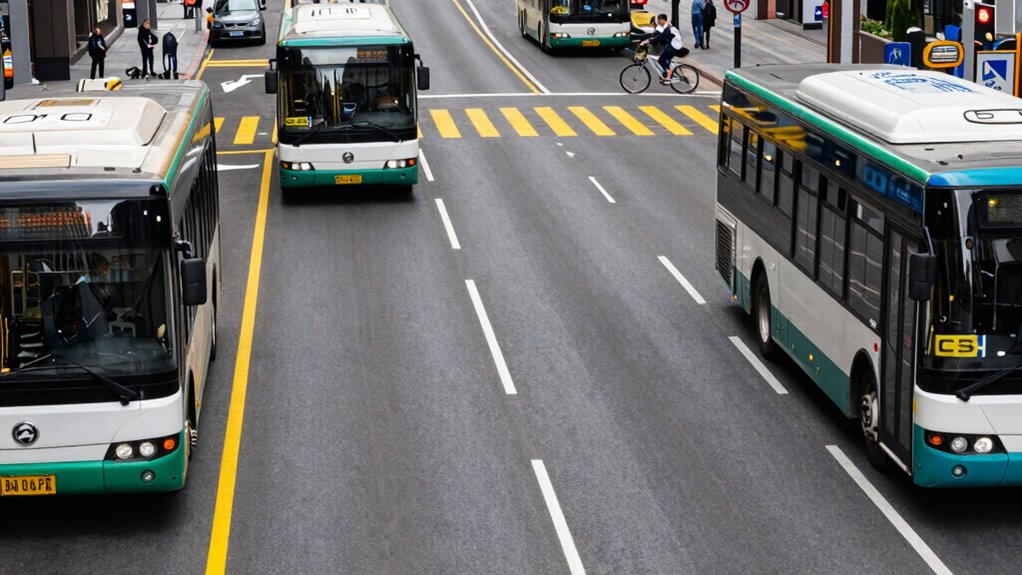

When sharing the road with buses in bus lanes, it’s vital to avoid their blind spots, especially on the sides and rear. Stay clear of these zones to prevent accidents and guarantee safety. Always check your mirrors and be alert when buses change lanes or turn. Respect bus lane restrictions and give buses plenty of room. To stay safe and avoid dangerous blind spots, continue exploring how to navigate bus lanes properly.

Get bike and ride gear delivered free — and shop member deals
- Fast, free delivery on millions of items
- Access to Prime Big Deal Days deals on October 6–7
- Prime Video, Amazon Music and more included
Key Takeaways
- Always maintain a safe distance from buses, especially during lane changes, to avoid blind spot zones.
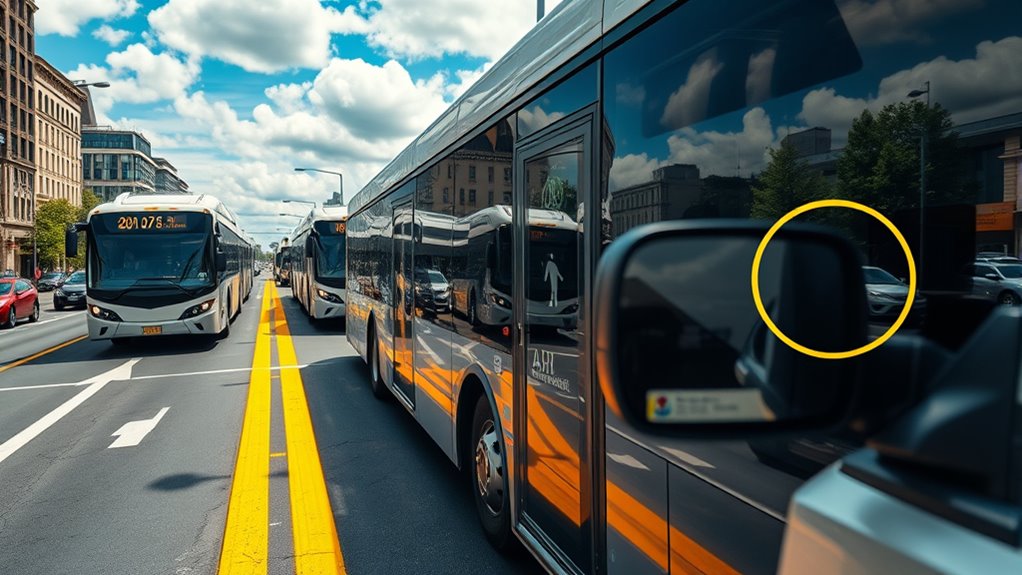
- Be aware that buses have large blind spots on their sides and rear where drivers cannot see vehicles.
- Avoid overtaking buses on the right or in their blind spot areas to prevent accidents.
- Respect bus lane restrictions and avoid illegal maneuvers that could place your vehicle in blind spots.
- Recognize that bus drivers are trained to minimize blind spots, but safety depends on your vigilance and proper vehicle positioning.
Bus lanes are dedicated roadways designed to give buses priority over other traffic, helping them move more efficiently through congested areas. These lanes are vital in reducing travel time for public transit and improving overall traffic flow. However, understanding how bus lane enforcement works and how bus driver training impacts safety is essential for everyone on the road. When you see a bus lane, it’s tempting to think of it as just another lane, but it’s specifically reserved for buses during certain hours or times. Violating these restrictions can result in fines or penalties, which is why bus lane enforcement is strictly monitored in many cities. Cameras and patrol officers often oversee these lanes to catch violators, ensuring that buses can operate smoothly without interference. If you’re caught driving in a bus lane illegally, you could face hefty fines or points on your license, so always pay attention to signage and time restrictions.
For bus drivers, training plays a significant role in steering these lanes safely and efficiently. Proper bus driver training ensures that drivers understand the importance of bus lanes and the rules governing their use. Well-trained bus drivers know how to position their vehicle within the lane, avoid blind spots, and recognize other road users’ behaviors. This training also emphasizes safety around blind spot zones, where other vehicles or pedestrians might be hard to see. As a driver, you’re responsible for maintaining awareness of these zones, especially when entering or exiting bus lanes. Proper training helps drivers anticipate potential hazards and react accordingly, reducing accidents and improving overall safety for everyone. Additionally, using effective filtration and pump protection measures on buses can help prevent mechanical issues that could compromise safety.
As a driver, it’s essential to respect bus lane restrictions and be aware of enforcement measures. Avoid making sudden or illegal maneuvers into bus lanes, especially during peak hours when buses rely heavily on these lanes for timely travel. Recognize the signs indicating bus lane operating hours and follow the rules diligently. Remember that police or traffic cameras are always watching, and enforcement agencies are committed to keeping bus lanes clear for transit vehicles. Additionally, understanding how bus driver training impacts safety can make you more cautious around buses and their blind spots. If you’re sharing the road with buses, give them plenty of space and avoid lingering in their blind spot zones, particularly when they’re preparing to change lanes or turn.
As an affiliate, we earn on qualifying purchases.
Frequently Asked Questions
How Do Blind Spot Zones Differ for Various Bus Models?
Different bus model variations have unique blind spot zones, especially around bus mirror blindspots. Taller or longer buses tend to have larger blind spots, making it harder for you to see pedestrians or vehicles close to the front or sides. Always stay aware of these differences, and avoid lingering in blind spot zones. Use your mirrors actively, and give buses plenty of space, regardless of their model.
Are There Specific Times When Bus Lanes Are Less Monitored?
You might think bus lane enforcement is constant, but it often isn’t. During off-peak hours, such as early mornings or late nights, monitoring schedules tend to be less strict. This can make it easier for drivers to misuse bus lanes without immediate penalties. Being aware of these times helps you stay vigilant and avoid blind spot zones, ensuring safety and compliance when watching for buses and other vehicles in these less monitored periods.
What Are the Penalties for Violating Bus Lane Regulations?
If you violate bus lane regulations, you face ticket fines that can be costly, often ranging from $100 to $300 depending on your location. Beyond fines, you might encounter legal consequences like points on your driving record or even license suspension for repeated offenses. To avoid these penalties, always respect bus lane rules and stay aware of signage and time restrictions.
How Can Pedestrians Stay Safe Around Bus Lanes and Buses?
To stay safe around bus lanes and buses, always use pedestrian crosswalks and wait for the signal before crossing. Be especially cautious at side street crossings, where buses may have limited visibility. Avoid rushing or crossing suddenly, and stay alert for buses turning or merging. Keep a safe distance from the bus lane, and make eye contact with drivers when possible to make sure they see you before crossing.
Do Bus Lane Laws Vary by City or Region?
You’ll find that bus lane laws do vary by city or region, much like local accents or cuisine. While some places strictly enforce rules, others have more leniency, reflecting regional variations and enforcement differences. This means you must stay alert and check local signage or regulations when driving or walking near bus lanes. Ignoring these differences can lead to fines or dangerous situations, so always stay informed and cautious.
As an affiliate, we earn on qualifying purchases.
Conclusion
Remember, bus lanes are meant to keep public transit moving smoothly, but they’re often overlooked blind spots. Nearly 60% of accidents involving buses happen when drivers fail to notice these zones. Stay alert and avoid these blind spots to keep everyone safe. If you pay close attention and respect bus lanes, you help prevent accidents and keep traffic flowing. So, stay vigilant—your awareness can make a big difference in avoiding these hidden dangers.
As an affiliate, we earn on qualifying purchases.
As an affiliate, we earn on qualifying purchases.
Fall Picks
fall essentials
As an affiliate, we earn on qualifying purchases.