
When you add a front rack, it shifts weight forward, making steering more sensitive and responsive, especially with heavy loads, which can feel twitchy on technical trails or tight turns. Rear racks move weight to the back, improving stability and keeping the front lighter, so steering stays more precise. Both influence handling differently based on load size and placement, and understanding these effects helps you control your bike better—there’s more to discover about optimizing your ride.
Key Takeaways
- Front racks increase steering sensitivity and make the bike more responsive due to added weight at the front.
- Rear racks improve stability and maintain better handling by keeping the front light and centered.
- Front racks can cause twitchy steering on technical terrain, while rear racks have less impact on maneuverability.
- Heavier front loads shift the center of gravity forward, reducing responsiveness and making steering more difficult.
- Rear racks contribute to overall stability, especially when carrying heavier loads, by balancing the bike’s weight distribution.
Have you ever wondered how efficient storage and handling systems can transform your operations? When it comes to cycling, the type of racks you choose—front or rear—can profoundly affect how your bike handles, whether you’re steering city streets or tackling rugged trails. Understanding these differences is key to optimizing your ride, especially if you’re into mountain biking or urban commuting.
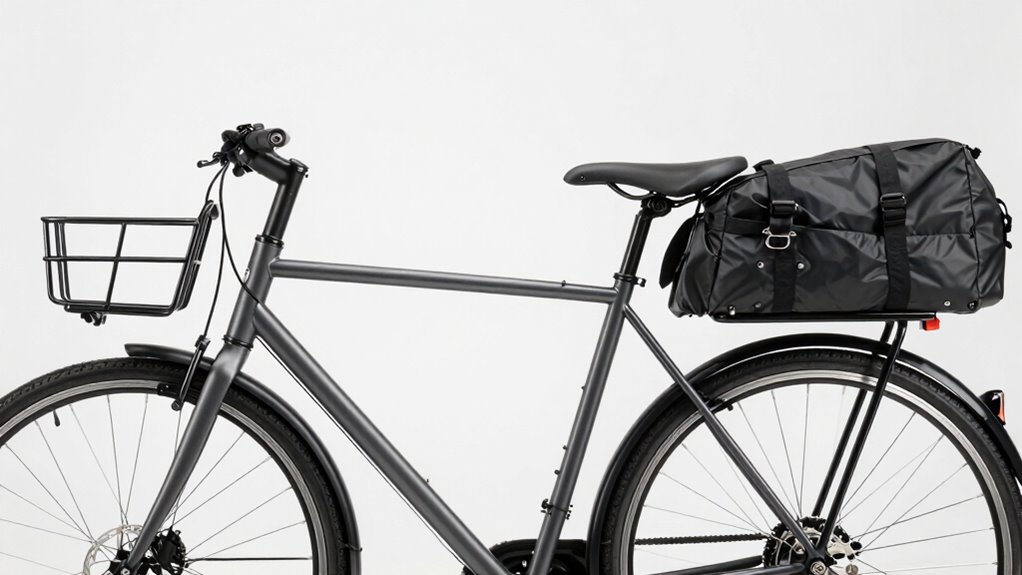
Front racks, mounted on the fork, shift some weight toward the front of your bike. This placement impacts steering, making it more responsive but potentially more sensitive to heavy loads. If you’re riding in urban environments, front racks help you keep your center of gravity balanced, giving you better control when weaving through traffic or steering crowded sidewalks. They’re great for quick errands, allowing you to carry smaller loads like groceries or a backpack, and they don’t interfere with your bike’s rear suspension, which is crucial for mountain biking. When mountain biking, a front rack can be handy for carrying essential gear, but too much weight upfront might make steering feel twitchy on technical trails.
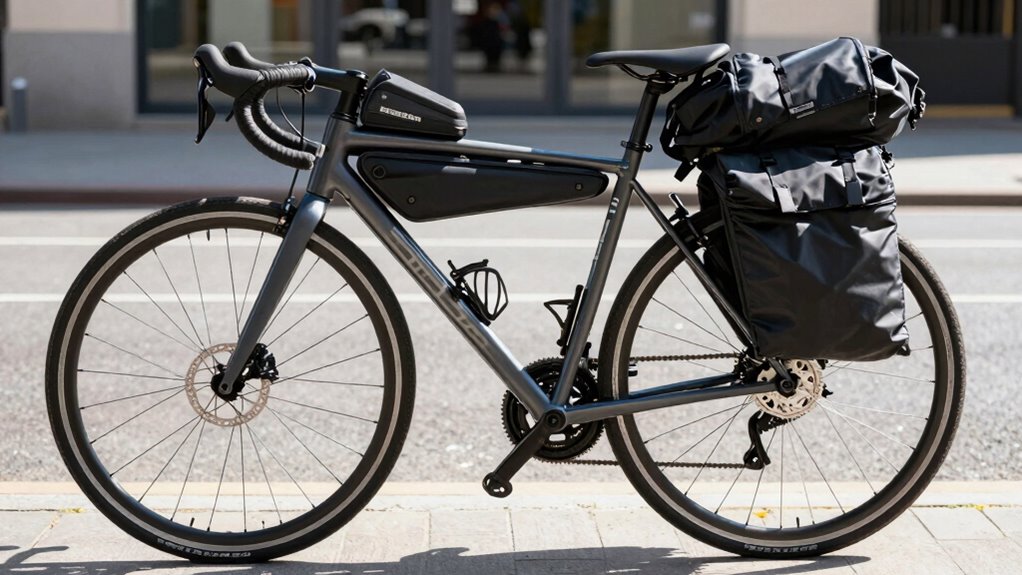
Rear racks, mounted over the rear wheel, add weight toward the back of your bike. This shifts your center of gravity, often resulting in more stable handling when carrying heavier loads. For urban commuters, rear racks are ideal for carrying larger items—like panniers filled with work essentials or shopping bags—without affecting your ability to accelerate or brake smoothly. They also keep the front end lighter, which helps with steering precision and maneuverability in tight city situations. In mountain biking, rear racks are less common but can still be useful for long-distance rides or bikepacking, where you need to carry extra gear without compromising balance. However, adding weight to the rear can sometimes make the bike feel less responsive on sharp turns or technical descents, especially if the load isn’t evenly distributed. Additionally, exploring rack materials can help you find a lightweight yet durable option tailored to your riding style.
Ultimately, the choice between front and rear racks influences handling in different ways. Front racks give you quick access and balance, ideal for lighter loads and urban commuting. Rear racks provide stability and capacity, better suited for heavier loads and longer trips. If you’re into mountain biking, you’ll need to weigh how much gear you carry and how it affects your bike’s responsiveness. In city riding, smooth handling and quick maneuverability are paramount, so selecting the right rack type can make all the difference. Considering rack weight distribution and how it impacts handling can help you optimize your setup for comfort and performance. When choosing your racks, paying attention to rack installation can ensure they’re securely mounted for safe riding. By understanding these handling nuances and considering airless paint sprayers for your painting projects, you can choose the perfect setup to enhance your riding experience, whether you’re commuting through busy streets or exploring rugged trails.

Bike Front Rack – Front Bicycle Cargo Rack with Struts – Front Mount Aluminium Pizza Rack Bike Rack for Mountain, Gravel,Touring Bikes
【BIKE FRONT RACK】- This Front Rack is the perfect addition to your bike for a classic and stylish…
As an affiliate, we earn on qualifying purchases.
As an affiliate, we earn on qualifying purchases.
Frequently Asked Questions
Do Front and Rear Racks Affect Bike Aerodynamics Differently?
Yes, front and rear racks affect your bike’s aerodynamics differently. A front rack can increase aerodynamic drag by catching wind and disrupting airflow around your handlebars and fork, making you work harder against wind resistance. Meanwhile, a rear rack tends to have less impact on aerodynamics but can still add to wind resistance. Overall, rear racks usually cause less drag, helping you ride more efficiently, especially at higher speeds.
How Do Racks Influence Bike Weight Distribution?
Racks greatly influence your bike’s weight distribution, with rear racks adding about 60% of the total load to the back wheel. This shift affects load balance and handling, especially during turns or braking. The added weight at the front or rear causes weight shift, impacting stability. You’ll notice that a well-balanced load ensures better control, reducing sway and making rides smoother, especially over uneven terrain.
Can Racks Impact Braking Performance?
Yes, racks can impact your braking performance. When you carry cargo weight on a rack, it shifts your bike’s balance and increases braking distance, especially if the added weight is unevenly distributed. Front racks can make steering less responsive, while rear racks can cause the bike to slow down more gradually. Always be mindful of how cargo affects your bike’s handling, especially during braking, to stay safe.
Are Certain Rack Types Better for Specific Riding Styles?
Think of your bike as an extension of yourself—certain racks suit your riding style like a glove. For city commuting, a lightweight aluminum front rack offers agility and easy handling, while a sturdy steel rear rack provides cargo capacity for longer trips. Choose based on rack material and your needs; a well-suited rack keeps your ride smooth and balanced, making every journey feel like a breeze.
Do Racks Affect the Bike’s Overall Stability on Rough Terrain?
Racks can impact your bike’s stability on rough terrain, especially if they have high cargo capacity. Front racks may make steering feel a bit more sluggish, while rear racks can affect balance if overloaded. Proper mounting stability is key; secure racks prevent wobbling or shifting. Keeping your cargo balanced and within weight limits helps maintain handling, ensuring your ride stays steady and safe even on bumpy trails.

RBRL Rear Bike Cargo Rack, 165 lb Heavy Duty Aluminum Bicycle Rear Rack, Fits 27.5" / 700C / 29" MTB, City & Touring Bikes, Durable Rust-Resistant Rear Pannier Rack for Commuting & Travel
Sturdy Durable Construction: The RBRL bike cargo rack is made of high-strength aluminum alloy with stainless steel anti-loosening…
As an affiliate, we earn on qualifying purchases.
As an affiliate, we earn on qualifying purchases.
Conclusion
So, next time you choose between a front or rear rack, remember—they do more than just carry your gear. The way each affects your bike’s handling can surprise you, adding a whole new layer to your ride. Will you embrace the challenge of balancing more weight upfront or behind? The choice isn’t just about storage; it’s about transforming every twist and turn. Ready to see how your ride changes? The answer awaits just beyond the next road.

CXWXC Rear Bike Rack with Basket – Bike Cargo Rack for Disc Brake/Non-Disc Brake Mount – Bicycle Pannier Rack, Touring Carrier Rack fit 26”-29” and 700c (Bike Rack)
【Make Sure it fits Your Bike Before Order】: Make sure if your bicycle have eyelets next to the…
As an affiliate, we earn on qualifying purchases.
As an affiliate, we earn on qualifying purchases.

YONTUO Rear Bike Rack,310 LB Capacity Solid Bearings Bike Cargo Rack w/Fender & Large Size Reflective,Quick Release Mountain Road Bicycle Rear Racks,Universal Bike Luggage Touring Carrier Rack,BCR06
【High Quality Materials and load 310lb】The bike rear rack is made of high quality hard Aluminum Alloy. Also,durable…
As an affiliate, we earn on qualifying purchases.
As an affiliate, we earn on qualifying purchases.