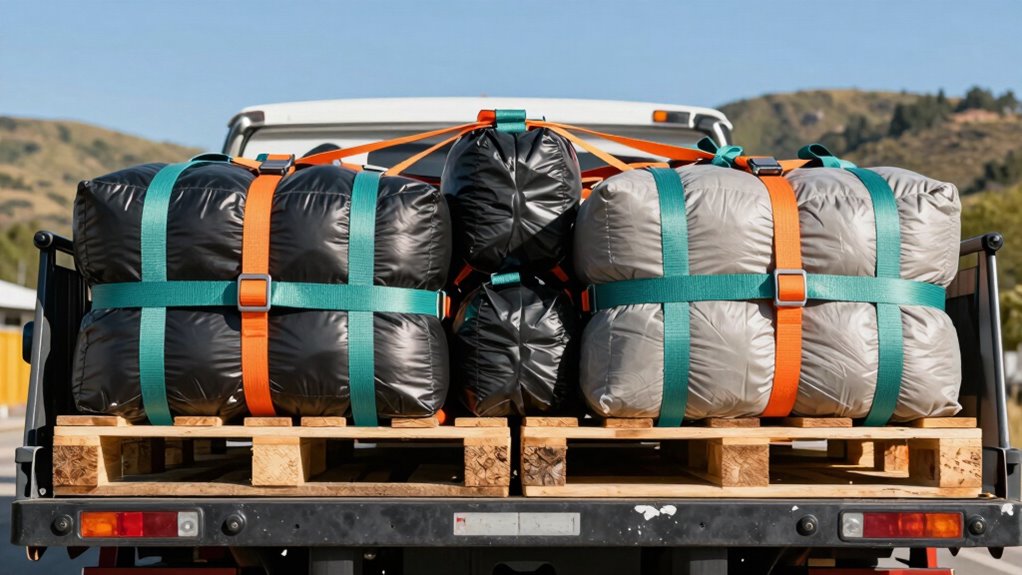

To make your cargo feel less sketchy, focus on proper weight distribution. Keep the heavier items close to the center of your vehicle and lower your load to improve stability. Spread lighter items evenly around the heavy ones and secure everything tightly using tie-downs or barriers. Avoid piling weight on one side or at the back. Consistently applying these principles will help keep your cargo stable and your journey smooth. Keep going to discover more tips for safer cargo management.
Open a free Amazon Business account
Business pricing, bulk buying and tax-exempt orders.
As an affiliate, we earn on qualifying purchases.
Key Takeaways
- Distribute heavier items near the vehicle’s center to lower the center of gravity and enhance stability.
- Keep load evenly spread side to side and front to back to prevent tipping.
- Secure cargo tightly with tie-downs to prevent shifting during transit.
- Avoid piling cargo at the back or on one side to maintain balanced weight.
- Regularly check and adjust load distribution to ensure safety throughout the journey.
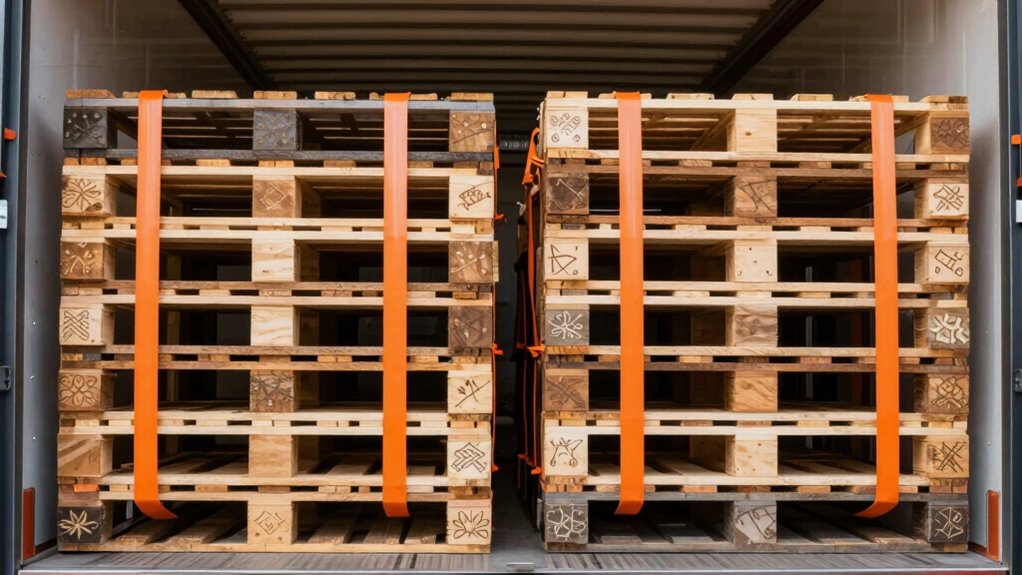
Have you ever wondered how weight is distributed across a vehicle or structure? Understanding this is vital to making your cargo feel less sketchy and more secure. At the core of this is the concept of the center of gravity—imagine it as the point where all the weight seems to balance perfectly. When you load a vehicle unevenly, you shift the center of gravity, which can make driving or moving the structure unstable. By paying attention to load balancing, you guarantee that weight is spread out evenly, keeping the center of gravity low and centralized. This not only improves stability but also reduces the risk of tipping over or losing control.
Balancing weight lowers the center of gravity, boosting stability and safety during transport and structural support.
When you load cargo, think of it as a puzzle: the goal is to distribute weight so that no one area bears too much burden. If you pile everything at the back of a truck or concentrate weight on one side, you’ll throw off the load balancing. This imbalance causes the center of gravity to shift upward or sideways, making handling unpredictable. Proper load balancing involves placing heavier items closer to the vehicle’s center and evenly distributing lighter ones around them. Doing this helps keep the center of gravity low and centered, which maximizes stability. It’s like stacking books on a shelf—distribute the weight evenly to prevent the shelf from toppling. Additionally, understanding load distribution is essential for compliance with safety regulations and to prevent legal issues during transportation. Recognizing how weight distribution affects vehicle dynamics can also help in planning your cargo setup more effectively. In vehicles, especially trailers and trucks, load balancing is essential for safe operation. If your cargo is unevenly distributed, you might notice steering becomes more difficult, braking takes longer, or even that the vehicle feels “squirrely.” To avoid this, always check how your load is arranged before hitting the road. Use tie-downs and barriers to secure items, preventing shifts during transit. Remember, a well-balanced load not only makes your cargo feel less sketchy but also improves fuel efficiency and prolongs vehicle lifespan. Proper weight management can also help reduce wear and tear on your vehicle’s components and improve overall safety.
In structures like bridges or buildings, engineers focus heavily on weight distribution because a poorly balanced load can cause structural stress or failure. They analyze how the weight is spread to keep the center of gravity within safe limits. Proper load management is also crucial for maintaining stability over time and avoiding structural fatigue caused by uneven weight. Proper load management also plays a crucial role in preventing potential accidents caused by unexpected shifts in weight. This principle applies equally to you when packing a moving truck or stacking equipment. By understanding the importance of center of gravity and load balancing, you can make smarter decisions that keep your cargo safe and your journey smooth. Essentially, mastering these basics helps you avoid chaos, reduce accidents, and enjoy peace of mind knowing your load is secure.

Cartman 1" x 12 ft Lashing Straps, 6 Pack, 600 lb Break Strength, Black
- Product Size: 12-foot length, 1-inch width
- Pack Quantity: 6 straps included
- Usage Type: Cargo tie-down without hooks
As an affiliate, we earn on qualifying purchases.
As an affiliate, we earn on qualifying purchases.
Frequently Asked Questions
How Do I Know if My Load Is Properly Balanced?
You’ll know your load is properly balanced when you check for cargo security and guarantee even weight distribution across your vehicle. Use a scale to verify weight placement and keep heavy items low and centered for better road safety. Secure all cargo tightly to prevent shifting during transit. Properly balanced loads reduce the risk of accidents, improve handling, and make your journey safer for everyone on the road.
What Tools Help Measure Weight Distribution Accurately?
You can use cargo sensors and weight scales to measure weight distribution accurately. Cargo sensors are installed directly on your load or trailer, providing real-time data on how weight is spread. Weight scales, like portable or fixed truck scales, help you weigh your entire load or individual sections. Both tools give you precise measurements, ensuring your cargo is balanced properly, which improves safety and handling during transport.
Can Uneven Weight Distribution Damage My Vehicle?
Yes, uneven weight distribution can damage your vehicle. It affects cargo stability, making your load more prone to shifting, which can cause accidents. Plus, it puts extra strain on suspension, tires, and drivetrain, leading to uneven vehicle wear over time. Proper weight distribution helps maintain balance, guaranteeing your vehicle stays in good shape and your cargo remains secure during transit. Always check your load to prevent damage and ensure safety.
How Often Should I Check My Cargo’s Weight Balance?
They say, “Better safe than sorry,” and that’s true for cargo security and road safety. You should check your cargo’s weight balance before each trip, especially if you load or unload frequently. Regular checks guarantee even weight distribution, reducing the risk of shifting loads and accidents. Keep in mind, consistent inspections help maintain vehicle stability, protect your cargo, and keep everyone safe on the road.
Are There Legal Limits for Cargo Weight Distribution?
Yes, there are legal restrictions and weight regulations governing cargo weight distribution. You must comply with federal and state laws that specify maximum gross vehicle weight, axle weight limits, and proper load balancing. Ignoring these rules can lead to fines, unsafe driving conditions, or mechanical issues. Always check your vehicle’s specific weight regulations and verify your cargo is distributed correctly to stay within legal limits and ensure safety on the road.

CURT 17063 Round Bar Weight Distribution Hitch with Sway Control, 14,000 lb
- Level Towing for Better Control: Distributes weight for smoother ride
- Integrated Lubrication System: Easy access grease zerks for maintenance
- Heavy-Duty Towing Capacity: Rated for 10,000-14,000 lb GTW
As an affiliate, we earn on qualifying purchases.
As an affiliate, we earn on qualifying purchases.
Conclusion
Now that you understand the basics of weight distribution, think of your cargo as a well-balanced orchestra. When each instrument—your load—finds its proper place, the symphony of your vehicle’s performance runs smoothly. Proper weight distribution keeps everything steady and predictable, like a ship balanced on calm waters. When you respect these principles, your cargo feels less sketchy, and your journey becomes a confident voyage—smooth sailing ahead, no matter the road.

VEVOR Cargo Bar, Cargo Bar Adjustable from 89" to 104", Heavy-Duty Steel Cargo Stabilizer Bar with 309 lbs Capacity, Truck Bed Load Bar for Truck Bed, Trailer, Semi Trailer (4 pcs)
- Wide Adjustable Range: Our ratchet cargo bar provides…
- Quick Ratchet Adjustment: Adjusting the length of the…
- Strong Non-skid Design: Equipped with 4×2.4-inch rubber pads…
As an affiliate, we earn on qualifying purchases.
As an affiliate, we earn on qualifying purchases.

4 Pack 2 Inch Ratchet Straps Heavy Duty 20ft Tie Down Straps Ratchet with Double J Hook, 10000 LBS Break Strength, Cargo Ratchet Straps for Moving, Truck, Trailers, Motorcycles, Kayaks, Car Roof
- Strap Dimensions: 2 inch wide, 20 foot long
- Load Capacity: Working load limit 8800 lbs
- Break Strength: 10000 lbs break strength
As an affiliate, we earn on qualifying purchases.
As an affiliate, we earn on qualifying purchases.
Baby shower & registry season Picks
baby registry must-haves
As an affiliate, we earn on qualifying purchases.