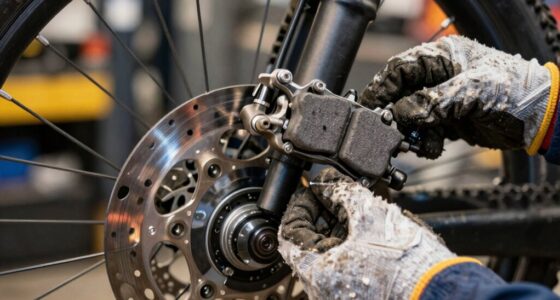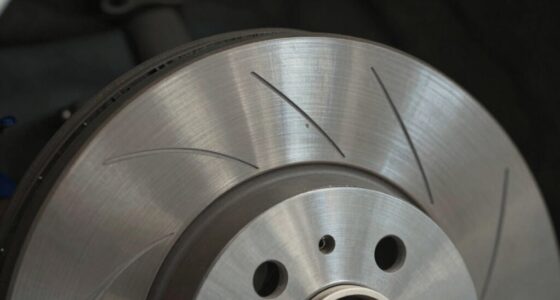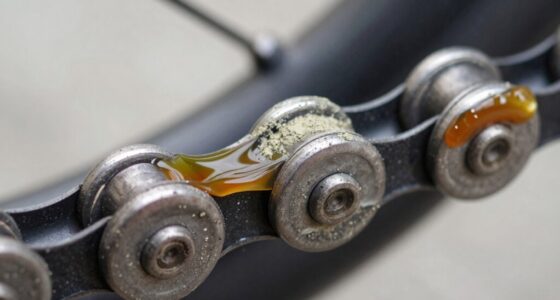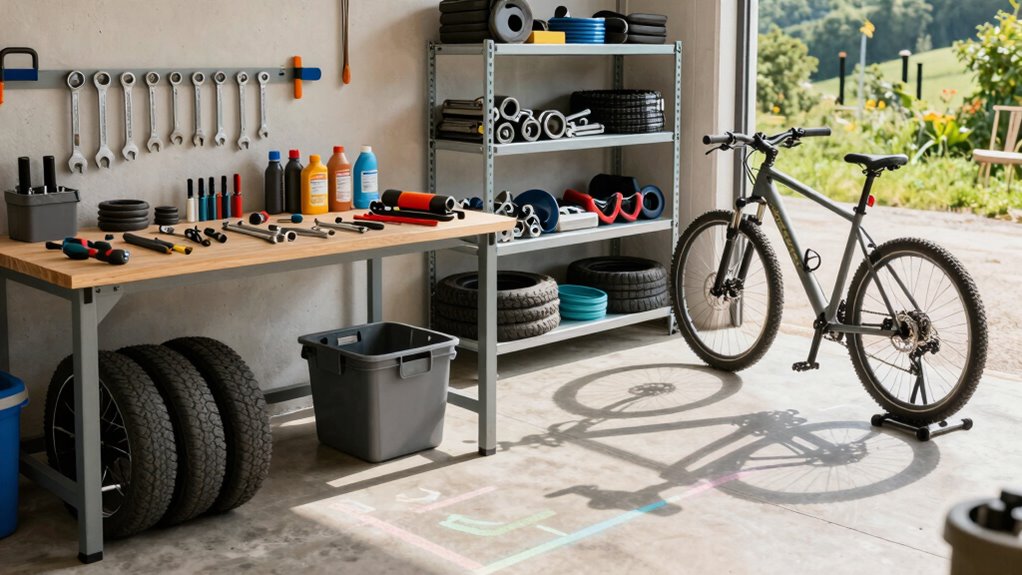
To build a maintenance zone that supports regular riding, organize your tools on pegboards, labeled bins, and shelves for quick access. Keep hazardous materials secure and always follow safety protocols, including PPE and clear pathways. Regularly review and update safety measures, maintain cleanliness, and schedule routine equipment checks. Keep the space adaptable by relocating frequently used tools and performing repairs promptly. Continue exploring ways to optimize your workspace for a smoother, safer riding experience.
Key Takeaways
- Designate a specific, organized area with labeled storage for easy access to frequently used bike tools and parts.
- Ensure proper lighting, ventilation, and safety equipment are in place to promote safe maintenance routines.
- Incorporate adjustable workbenches and versatile storage solutions to adapt to different bike maintenance tasks.
- Maintain a clean, clutter-free workspace with regular safety checks and tool maintenance to ensure efficiency.
- Promote safety protocols and training to encourage consistent, safe bike maintenance practices supporting regular riding.
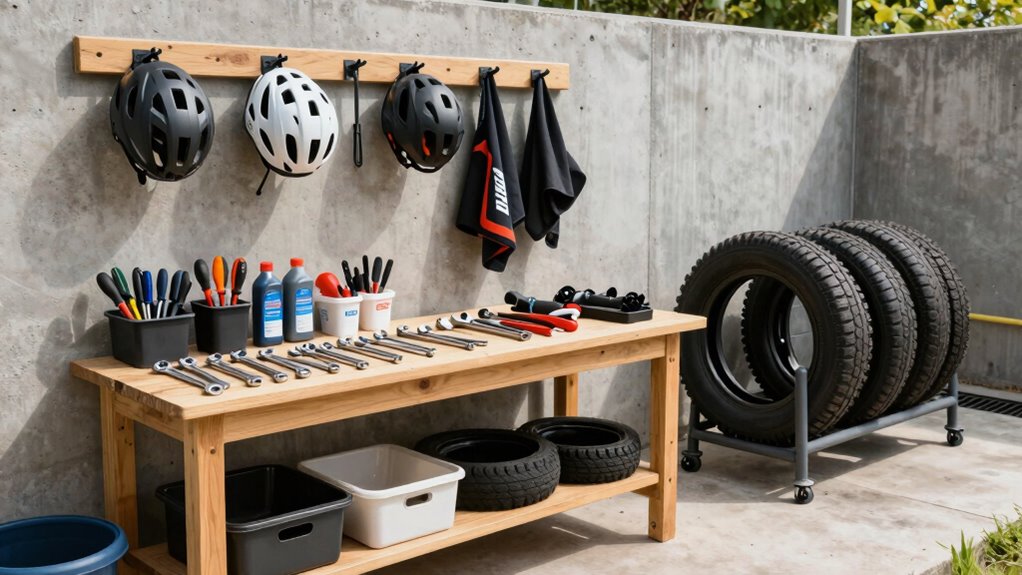
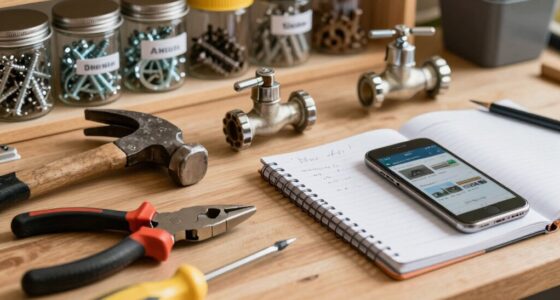
Have you ever wondered how to create an efficient space dedicated to maintenance tasks? Setting up a well-organized maintenance zone isn’t just about having the right tools; it’s about creating a system that promotes safety, efficiency, and easy access. First, focus on tool organization. You want every tool to have its designated place, so you spend less time searching and more time fixing. Use sturdy pegboards, labeled bins, and shelves to keep everything visible and within reach. Hang frequently used tools like screwdrivers, pliers, and wrenches on hooks so they’re quick to grab. Store less frequently used items in labeled containers or drawers. This approach minimizes clutter and streamlines your workflow, which is key when you’re pressed for time or tackling multiple tasks.
Next, prioritize safety protocols. Your maintenance zone should be safe for anyone working there, so make sure to keep hazardous materials, like lubricants or cleaning chemicals, stored in secure, clearly labeled containers away from your main workspace. Install proper lighting to illuminate the area, reducing the risk of accidents. Keep a fire extinguisher nearby and ensure it’s accessible, and don’t forget to use safety gear such as gloves, goggles, and masks when handling potentially dangerous substances or performing repairs. Establish clear pathways free of tools or debris to prevent trips and falls, and always remind yourself to follow safety guidelines rigorously. It’s also wise to have a first aid kit within easy reach, so you’re prepared for minor injuries. Regularly reviewing your safety measures and keeping safety equipment in good condition helps maintain a secure environment. Additionally, maintaining awareness of safety protocols can help prevent accidents and ensure everyone’s well-being. Incorporating safety training for all users of the space can further reinforce good practices and awareness. Remember, a well-maintained workspace encourages consistent safety practices and keeps hazards at bay.
Furthermore, your maintenance zone should be adaptable. As your riding routine evolves, so will your needs. Regularly review your organization system and safety measures, making adjustments as necessary. For example, if you find yourself consistently searching for a particular tool, consider relocating it to a more prominent spot. Keep your workspace clean—clutter can lead to accidents and slow you down. Maintain a schedule for routine checks on safety equipment and tools, replacing or repairing anything that’s worn out or broken. A well-maintained, organized space will encourage you to perform regular maintenance on your bike, ultimately supporting your riding goals. Remember, a thoughtfully arranged maintenance zone isn’t just about convenience; it’s about creating a safe environment that keeps your bike in top shape and riding smooth for miles to come.
As an affiliate, we earn on qualifying purchases.
Frequently Asked Questions
What Tools Are Essential for a Maintenance Zone?
You need essential tools like wrenches, screwdrivers, and tire pumps for your maintenance zone. Make sure bike storage is organized so tools are easy to access and your bike stays protected. Proper tool organization helps you quickly find what you need, making routine maintenance smoother. Keep your workspace tidy, with designated spots for each tool, and consider adding a workbench to make repairs more comfortable. This setup keeps you ready for regular riding.
How Much Space Is Needed for an Effective Maintenance Area?
You’ll need at least 50 to 100 square feet for an effective maintenance area, giving you enough room to work comfortably. A well-organized space with smart storage solutions and good lighting arrangements boosts efficiency. About 10% of your garage should be dedicated to this zone, ensuring you have enough room for tools, repairs, and maintenance tasks without feeling cramped. This setup keeps your riding gear in top shape and ready to go.
What Safety Precautions Should I Take?
You should prioritize safety by installing clear safety signage to warn of potential hazards and guarantee everyone knows the rules. Keep your bike storage organized to prevent clutter that could cause accidents. Regularly inspect the area for spills or debris, and wear appropriate safety gear when working on bikes. Adequate lighting and ventilation also help maintain a safe environment, making your maintenance zone both functional and secure for regular riding.
How Often Should I Perform Maintenance Tasks?
You should perform routine checks weekly or biweekly, depending on how often you ride, and address any issues immediately. Regular maintenance helps prevent emergency repairs, saving you time and money. Keep an eye on tire pressure, brakes, and chain condition, and perform necessary adjustments or replacements promptly. Establishing a consistent schedule guarantees your bike stays in top shape, ready for regular riding and unexpected repairs.
Can I Customize the Zone for Different Bike Types?
You can definitely customize your zone for different bike types. Think of it as hitting two birds with one stone—organized bike storage and tailored maintenance areas. Use zone organization to allocate specific spaces for mountain bikes, road bikes, or hybrids, making maintenance easier. Adjust tools and storage accordingly, so each bike gets the care it needs. This way, your maintenance zone becomes a versatile hub, ready for any type of ride.
adjustable workbench for bike repairs
As an affiliate, we earn on qualifying purchases.
As an affiliate, we earn on qualifying purchases.
Conclusion
Just like Da Vinci’s masterpiece, your maintenance zone becomes a work of art with thoughtful planning and care. By dedicating a space for upkeep, you guarantee your bike remains a trusted steed on every ride. Remember, a well-maintained bike isn’t just about performance; it’s about the joy of the journey. With your own maintenance zone, you’re composing a symphony of smooth rides—an ongoing masterpiece in motion. Keep your tools close, and your adventures will never miss a beat.
As an affiliate, we earn on qualifying purchases.
As an affiliate, we earn on qualifying purchases.