
TL;DR
Tesla’s Cybercab prototype has been revealed without a steering wheel and brake lines, marking a significant departure from traditional vehicle design. The development raises questions about its safety and operational capabilities, with official details still unavailable.
Tesla’s new Cybercab prototype has been publicly shown without a steering wheel and, notably, without brake lines. This departure from conventional vehicle design has sparked widespread attention among industry observers and consumers, as it suggests a fundamentally different approach to autonomous vehicle safety. The absence of these critical components raises questions about how the vehicle is controlled and how safety is maintained, with Tesla yet to provide detailed explanations or official confirmation about its design and safety features.
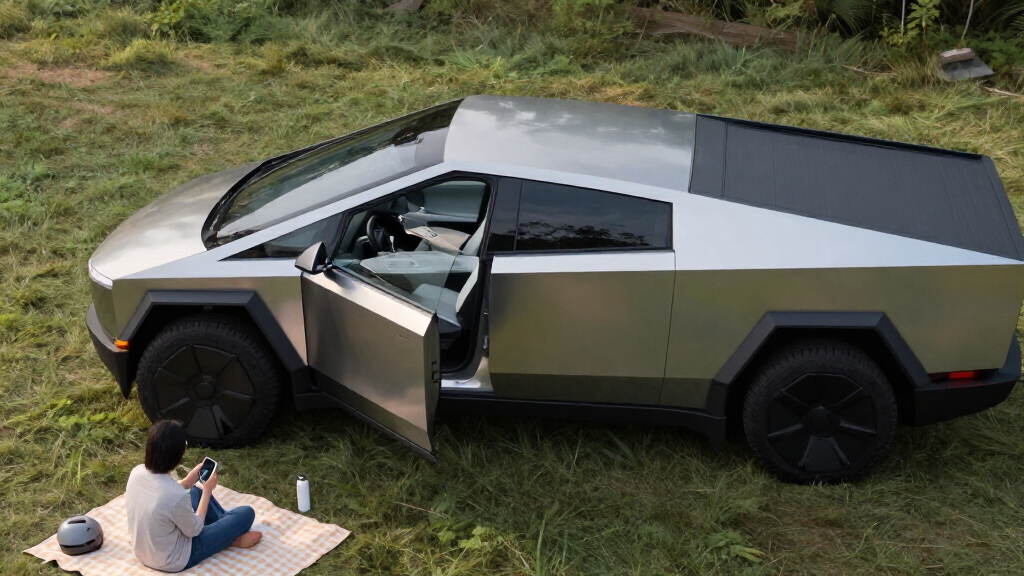
The prototype was unveiled recently, with images and videos circulating online showing the vehicle’s interior and exterior. Notably, there is no steering wheel—an element traditionally essential for driver control—and the vehicle appears to lack visible brake lines, which are typically integral to vehicle braking systems. For more on Tesla’s safety investigations, see Tesla’s vehicle safety concerns. Experts familiar with automotive engineering have expressed surprise, as these omissions challenge standard safety and control assumptions. Tesla has not issued a formal statement clarifying whether this prototype is purely conceptual or a functional vehicle intended for testing or production.
Industry analysts point out that Tesla has been exploring autonomous vehicle technology for years, and this design could indicate a move toward fully driverless operation, potentially eliminating the need for manual controls. However, the lack of official confirmation leaves open questions about the vehicle’s safety protocols, regulatory approval, and whether the prototype is a fully operational model or a concept vehicle. For more on Tesla’s autonomous vehicle developments, visit Tesla’s autonomous vehicle investigations.
Implications for Autonomous Vehicle Safety and Control
The absence of a steering wheel and brake lines on Tesla’s Cybercab prototype underscores a possible shift toward fully autonomous vehicles that do not require traditional manual controls. If Tesla is moving toward a control system that does not rely on human intervention, this could revolutionize vehicle safety standards, regulatory frameworks, and consumer expectations. However, it also raises concerns about safety, especially in emergency scenarios, and whether existing laws are equipped to regulate such vehicles. The development is significant because it could signal a future where driver controls become obsolete, but only if safety and reliability are convincingly demonstrated.
As an affiliate, we earn on qualifying purchases.
Tesla’s History with Autonomous Vehicle Innovation
Tesla has long positioned itself as a leader in electric and autonomous vehicle technology, with its Autopilot and Full Self-Driving (FSD) systems being central to its strategy. Over recent years, Tesla has showcased various prototypes and concepts aimed at achieving fully driverless operation. The company’s approach often involves incremental testing and public reveals that generate buzz and speculation. The recent prototype’s features—particularly the missing steering wheel and brake lines—are consistent with Tesla’s ongoing push toward autonomous vehicles, but such radical design choices are unprecedented in the automotive industry. Historically, Tesla’s prototypes have sparked debate about safety, regulation, and technological feasibility, and this latest development continues that trend.
As an affiliate, we earn on qualifying purchases.
Unconfirmed Details About Vehicle Functionality
It is not yet clear whether the prototype is a fully operational vehicle or a conceptual model. Tesla has not released official technical specifications or safety documentation. The purpose of the missing components remains unconfirmed, and there is no information on whether the vehicle can be driven manually or relies solely on autonomous systems. Regulatory approval processes for such a design are also unknown, as no official safety assessments have been announced.
electric vehicle brake line replacement
As an affiliate, we earn on qualifying purchases.
As an affiliate, we earn on qualifying purchases.
Next Steps in Tesla’s Autonomous Vehicle Development
Tesla is expected to provide further details about the prototype in upcoming announcements or regulatory filings. Industry observers anticipate that Tesla might conduct additional testing or showcase functional versions of the vehicle to demonstrate safety and operational capabilities. Regulatory agencies will likely scrutinize the design closely before permitting any deployment on public roads. The company may also clarify whether this prototype is part of a broader strategy to eliminate manual controls in future models or a one-off concept.
Tesla autonomous vehicle accessories
As an affiliate, we earn on qualifying purchases.
As an affiliate, we earn on qualifying purchases.
Key Questions
Does the absence of a steering wheel mean Tesla is moving toward fully driverless cars?
While the prototype’s design suggests a move toward fully autonomous operation, Tesla has not officially confirmed this. The missing steering wheel could indicate a driverless system, but details are still emerging.
Are there safety concerns with a vehicle that lacks brake lines?
Yes, traditional brake lines are critical for vehicle safety. The absence of visible brake lines raises questions about how braking is managed and whether new safety mechanisms are in place, but official details are not yet available.
Is this prototype operational or just a concept?
It is currently unclear whether Tesla’s Cybercab prototype is fully operational or a conceptual model. Tesla has not provided technical or safety documentation to clarify its status.
Will regulators approve such a radical vehicle design?
Regulatory approval would depend on safety testing and certification. Given the unconventional features, approval could face significant hurdles unless Tesla demonstrates safety and reliability.
When might we see this vehicle on public roads?
There is no official timeline. Further testing, safety assessments, and regulatory approvals are required before any deployment, which could take years depending on progress and compliance.
Source: rss