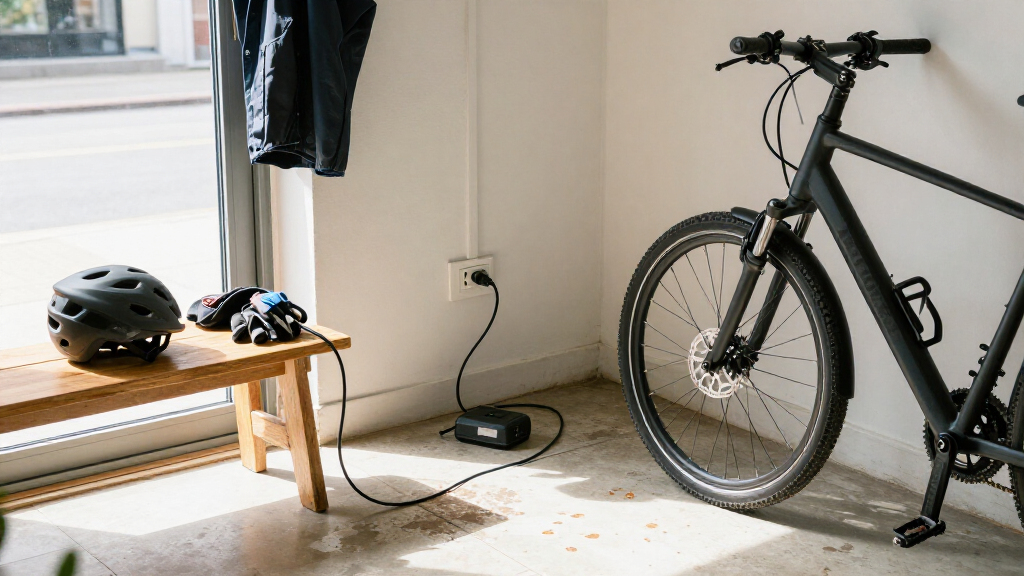
Among these electric bike chargers, I’d choose the Hyleton 54.6V 3A UL-Certified Fast Charger as the best overall for riders whose 48V battery supports its higher output and whose connector matches. The Suptopone 54.6V 2A Charger with 5 Connectors stands out for plug flexibility, while the VHBW 42V Charger is a more specific option for compatible Jetson bikes and scooters. The main tradeoffs are battery-voltage compatibility, connector fit, charging speed, and whether a multi-plug charger actually supports your bike. A charger can look right and still be unsuitable if its output or polarity does not match your battery. Read on for the full comparison and guidance on choosing a safe fit.

Get bike and ride gear delivered free — and shop member deals
- Fast, free delivery on millions of items
- Access to Prime Big Deal Days deals on October 6–7
- Prime Video, Amazon Music and more included
Key Takeaways
- Output voltage matters more than a charger’s product title: the 54.6V models are intended for compatible 48V lithium-ion batteries, while the 42V models target compatible 36V batteries.
- The Hyleton 54.6V 3A UL-Certified model is the standout speed-and-certification option, but its higher current only makes sense if the battery maker allows 3A charging.
- Multi-connector models address plug uncertainty, not battery uncertainty: Suptopone, WUKUR, and several other five- or six-plug options still require a voltage, polarity, and connector check.
- Most listed 48V chargers are 54.6V, 2A models, so differences in included plugs, stated battery type, and brand or model specificity matter more than headline output.
- The VHBW Jetson-compatible charger has the narrowest stated use, while general 42V and 54.6V options should only be considered after confirming the bike’s exact charging requirements.
| Suptopone 54.6V 2A Charger for 48V Lithium Batteries with 5 Connectors |  | Best for Connector Variety | Output voltage: 54.6 V | Output current: 2 A | Input: 100–240 V, 50/60 Hz | VIEW LATEST PRICE | See Our Full Breakdown |
| EVAPLUS 54.6V Charger for 48V Lithium Batteries |  | Best for Simple DC-Connector Setups | Output voltage: 54.6 V | Output current and wattage: 1.5 A; 81.9 W | Battery compatibility: 48V lithium (13S) | VIEW LATEST PRICE | See Our Full Breakdown |
| 54.6V 2A Charger for 48V Lithium Batteries, with 6 Interchangeable Plugs |  | Best for the Widest Plug Selection | Output voltage: 54.6 V | Output current: 2 A | Input: 100–240 V AC range stated; spec field also lists 240 V | VIEW LATEST PRICE | See Our Full Breakdown |
| EVAPLUS 42V 2A Charger for 36V Lithium Batteries |  | Best for Compatible 36V Scooter Batteries | Output voltage and current: 42 V; 2 A | Compatible battery: 36V lithium | Input voltage: 240 V listed | VIEW LATEST PRICE | See Our Full Breakdown |
| 48V Electric Bike Charger, 54.6V 2A, with 5 Interchangeable Plugs |  | Best for Multi-Device 48V Owners | Output voltage and current: 54.6 V; 2 A | Input voltage: 110 V | Battery compatibility: 13S 48V lithium battery packs | VIEW LATEST PRICE | See Our Full Breakdown |
| Hyleton 48V Lithium-Ion E-Bike Battery Charger, 54.6V 2A |  | Best for Connector Flexibility | Battery compatibility: 48V lithium-ion e-bike batteries | Charger output: 54.6V, 2A | Input voltage: 100–240V | VIEW LATEST PRICE | See Our Full Breakdown |
| EVAPLUS 54.6V Charger for 48V 13S Lithium Batteries with 5 Plug Types | 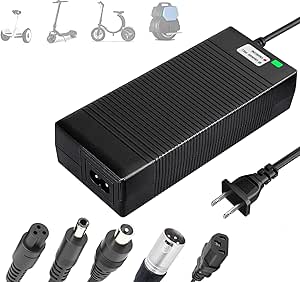 | Best for Safety Certification | Input: 100–240V, 50/60Hz | Output: 54.6V, 1.5A | Wattage: 81.9W | VIEW LATEST PRICE | See Our Full Breakdown |
| 54.6V 2A Charger for 48V 13S Li-ion E-bike Batteries |  | Best for a Longer Charging Reach | Output: 54.6V, 2A | Input voltage: 100–120V | Compatible batteries: 48V–54.6V 13S lithium-ion | VIEW LATEST PRICE | See Our Full Breakdown |
| 54.6V 2A Charger for 48V E-Bike Batteries |  | Best for Broad Device Compatibility | Input voltage: 100–240V, 50/60Hz | Output: 54.6V, 2A | Compatible batteries: 48V 13S lithium-ion only | VIEW LATEST PRICE | See Our Full Breakdown |
| Brokeir 54.6V 2A Charger for 48V Electric Bike Batteries |  | Best for Automatic Charging Safeguards | Model: JY-546200 | Output: 54.6V, 2A | Wattage: 109.2W | VIEW LATEST PRICE | See Our Full Breakdown |
| 54.6V 2A Charger for 48V Lithium E-Bike and Scooter Batteries |  | Best for Connector Flexibility | Output voltage: 54.6V DC | Output current: 2A | Input voltage: AC 100–240V | VIEW LATEST PRICE | See Our Full Breakdown |
| 42V 2A Electric Scooter Charger for 36V Lithium Batteries | 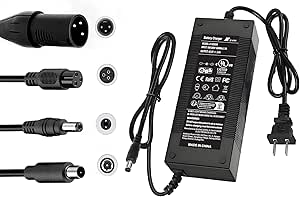 | Best Safety-Focused 36V Replacement | Compatible batteries: 36V lithium-ion | Output voltage: 42V | Output current: 2A | VIEW LATEST PRICE | See Our Full Breakdown |
| Hyleton 54.6V 3A UL-Certified Fast Charger for 48V Lithium E-Bike Batteries |  | Best for Faster 48V Charging | Output voltage: 54.6V | Output current: 3A | Input voltage: 110V | VIEW LATEST PRICE | See Our Full Breakdown |
| WUKUR 54.6V 2A Charger for 48V Lithium Batteries with 5 Connectors |  | Best for a Long Cable and Common E-Bike Plugs | Model: CT-1250 | Battery compatibility: 48V lithium-ion batteries only | Input: 100–240V AC, 50/60Hz | VIEW LATEST PRICE | See Our Full Breakdown |
| VHBW 42V Charger for Compatible Jetson Bikes and Scooters |  | Best for Select Jetson Models | Output voltage: 42V DC | Maximum current: 2A | Input: 100–240V AC, 50/60Hz | VIEW LATEST PRICE | See Our Full Breakdown |
| electric bike charger | Input |
|---|---|
| Suptopone 54.6V 2A Charger for | 100–240 V, 50/60 Hz |
| EVAPLUS 54.6V Charger for 48V | 100–240 V AC; 2 A |
| 54.6V 2A Charger for 48V Lithi | 100–240 V AC range stated; spec field also lists 240 V |
| EVAPLUS 42V 2A Charger for 36V | — |
| 48V Electric Bike Charger | — |
| Hyleton 48V Lithium-Ion E-Bike | — |
| EVAPLUS 54.6V Charger for 48V | 100–240V, 50/60Hz |
| 54.6V 2A Charger for 48V 13S L | — |
| 54.6V 2A Charger for 48V E-Bik | — |
| Brokeir 54.6V 2A Charger for 4 | 100–240V, 50–60Hz |
| 54.6V 2A Charger for 48V Lithi | — |
| 42V 2A Electric Scooter Charge | 100–240V, 50/60Hz |
| Hyleton 54.6V 3A UL-Certified | — |
| WUKUR 54.6V 2A Charger for 48V | 100–240V AC, 50/60Hz |
| VHBW 42V Charger for Compatibl | 100–240V AC, 50/60Hz |
More Details on Our Top Picks
Suptopone 54.6V 2A Charger for 48V Lithium Batteries with 5 Connectors
I’d put the Suptopone on the shortlist when a 48V lithium battery’s plug is the main compatibility hurdle. Its five included connector types cover several common formats, while the 2A output offers a middle ground between slower 1.5A options such as the EVAPLUS 54.6V charger and more connector-focused chargers with similar output. The red-to-green indicator makes charge status easy to check, and protection against short circuits, overload, overcurrent, and overvoltage adds useful safeguards.
The tradeoff is that a bundle of plugs does not guarantee a match: the battery voltage, chemistry, and connector must all fit. It is not for lead-acid batteries, and its stated six-hour charge time may not apply to every battery capacity. I’d favor it over the EVAPLUS when a broader selection of plugs matters, but buyers should verify their battery specifications before ordering.
Pros:- Five connector types cover several common charging-port formats.
- 2A output offers more current than the 1.5A EVAPLUS option in this batch.
- Red and green indicators show charging and full-charge status.
- Includes short-circuit, overload, overcurrent, and overvoltage protection.
Cons:- Only compatible with 48V lithium-ion batteries, not lead-acid packs.
- Multiple plugs do not replace checking the battery’s voltage and connector specifications.
- The listed six-hour charge time may vary with battery capacity and condition.
Best for: Owners of 48V lithium e-bikes or scooters whose charge port may match one of the five included connector types.
Not ideal for: Riders with lead-acid batteries, an unverified connector, or a need for a manufacturer-specific charger with confirmed fit.
- Output voltage:54.6 V
- Output current:2 A
- Input:100–240 V, 50/60 Hz
- Battery compatibility:48V lithium-ion batteries
- Connectors:5.5 × 2.5 mm DC; 8 mm mini 3-prong; 12 mm standard 3-prong; 8 mm RCA; 3-pin male XLR
- Listed charge time:6 hours
- Dimensions and weight:2 × 4.7 × 7.5 in; 13 oz
- Certification and warranty:ETL; 2 years
Our verdict“Choose the Suptopone if your 48V lithium battery matches one of its five plugs and you want 2A charging with clear status indicators.”
EVAPLUS 54.6V Charger for 48V Lithium Batteries
The EVAPLUS 54.6V is the straightforward pick for riders whose 48V lithium battery uses one of two specified barrel connectors: 5.5 × 2.5 mm or 2.1 mm. Unlike the Suptopone, it does not offer five different plug styles, so it is less useful when the port type is uncertain. In return, its clear connector specification makes the fit question more focused, and the 1.5A output suits owners who prioritize a basic, protected charging routine over faster charging.
Automatic shutoff and LED status indicators help make charging less hands-on, while the 100–240V AC input supports a broad range of mains supplies. Its output is lower than the 2A Suptopone and six-plug charger in this group, and the stated four-to-six-hour estimate depends on battery capacity. I’d skip it if you need a non-barrel plug or faster output; also confirm the exact connector size before purchase.
Pros:- Specifies compatibility with two common DC barrel connector sizes.
- Automatic shutoff stops charging when the battery is full.
- LED indicators distinguish charging from a full charge.
- Over-voltage, over-current, and short-circuit protection are included.
Cons:- 1.5A output is lower than the 2A Suptopone and other chargers in this batch.
- Limited to the specified DC connector sizes, so it offers less plug flexibility.
- The listed 4–6-hour charging estimate depends on the battery.
Best for: Owners of 48V 13S lithium e-bikes or scooters who have confirmed their battery uses a 5.5 × 2.5 mm or 2.1 mm DC connector.
Not ideal for: Riders needing a 2A charger, a wider range of plug types, or compatibility with a battery outside the specified 48V lithium format.
- Output voltage:54.6 V
- Output current and wattage:1.5 A; 81.9 W
- Battery compatibility:48V lithium (13S)
- Connector:DC 5.5 × 2.5 mm or 2.1 mm
- Input:100–240 V AC; 2 A
- Safety and charging features:Over-voltage, over-current, and short-circuit protection; automatic shutoff; LED status indicators
- Compatible devices:Electric bikes and scooters
- Weight and warranty:11.2 oz; 12 months
Our verdict“Pick this EVAPLUS model for a confirmed 48V lithium battery with a matching barrel port when automatic shutoff matters more than higher output or extra plugs.”
54.6V 2A Charger for 48V Lithium Batteries, with 6 Interchangeable Plugs
For shoppers who want the most connector options in this set, this six-plug charger has a small advantage over the five-plug Suptopone and five-plug 48V charger. Its 54.6V, 2A output is suited to compatible 48V lithium-ion batteries, including those in bikes, scooters, and hoverboards. It also adds trickle charging when the battery is full, plus protection against over-voltage, over-current, short circuits, and overheating.
That extra plug does not make it universally compatible: the battery must still use the correct connector and match the charger’s electrical requirements. The description lists a 100–240V AC input range, while the spec field also gives 240V, so I’d check the supplied label and regional fit before relying on it. Compared with the EVAPLUS 1.5A charger, this model offers higher output and broader connector selection, but the connector match remains the buyer’s responsibility.
Pros:- Six interchangeable connectors provide the broadest plug selection among these five products.
- 2A output exceeds the 1.5A EVAPLUS charger’s listed current.
- Switches to trickle charging when the battery is full.
- Includes over-voltage, over-current, short-circuit, and over-temperature protection.
Cons:- The correct plug and battery specifications still need to be verified.
- Input details are inconsistent across the listing fields, which may require checking the charger label.
- No warranty or weight information is provided in the supplied product data.
Best for: Owners of compatible 48V lithium bikes, scooters, or hoverboards who want six plug options and 2A output.
Not ideal for: Buyers who need manufacturer-confirmed compatibility, a clearly specified single connector, or certainty about input-voltage labeling before purchase.
- Output voltage:54.6 V
- Output current:2 A
- Input:100–240 V AC range stated; spec field also lists 240 V
- Compatible devices:48V lithium-ion electric bikes, scooters, and hoverboards
- Interchangeable connectors:6
- Charging feature:Trickle charging when battery is full
- Protection:Over-voltage, over-current, short-circuit, and over-temperature
- Dimensions and certification:1.7 × 1.8 × 4.8 in; SGS
Our verdict“Choose this charger if six connector choices and 2A output suit your 48V lithium device, but verify the input label and plug fit before buying.”
EVAPLUS 42V 2A Charger for 36V Lithium Batteries
This EVAPLUS is the one to choose when your vehicle uses a 36V lithium battery; its 42V output makes it a different fit from the 54.6V chargers listed for 48V packs. Three connector types give it more flexibility than a single-plug replacement, and its compact, 9.12-ounce design is easier to carry than the larger Suptopone. Built-in short-circuit, over-current, and over-voltage protection round out a practical option for compatible scooters and select small mobility vehicles.
Its limits are specific and worth checking: it is not for 24V or lead-acid batteries, and the listing excludes Hover-1 Ranger and Jetson devices with a 3-pin XLR port. The warranty information also conflicts, listing both six months and a one-year replacement term. I’d favor it over the 48V chargers here only when the battery voltage and connector match; those chargers are not substitutes for a 36V pack.
Pros:- 42V output is suited to compatible 36V lithium batteries, unlike the 54.6V options for 48V packs.
- Three connector types support several compatible devices.
- At 9.12 oz, it is lighter than the Suptopone charger.
- Includes short-circuit, over-current, and over-voltage protection.
Cons:- Not compatible with 24V or lead-acid batteries.
- Explicitly excludes Hover-1 Ranger and Jetson devices with a 3-pin XLR connector.
- Warranty term is inconsistent in the listing, with six months and one year both stated.
Best for: Owners of compatible 36V lithium electric scooters, Pocket Mod, or Sports Mod devices who need a portable 42V replacement charger.
Not ideal for: Owners of 24V or lead-acid batteries, Hover-1 Ranger, or Jetson devices using a 3-pin XLR connector.
- Output voltage and current:42 V; 2 A
- Compatible battery:36V lithium
- Input voltage:240 V listed
- Connectors:0.31-inch one-prong; 0.31-inch mini 3-prong; 5.5 mm × 2.5/2.1 mm DC female
- Compatible devices:Electric scooters, Pocket Mod, Sports Mod
- Dimensions and weight:5.03 × 2.16 × 1.57 in; 9.12 oz
- Safety certification:SGS
- Warranty:Listing gives conflicting terms: 6 months and 1-year replacement warranty
Our verdict“Choose this EVAPLUS only if your device uses a compatible 36V lithium battery and one of its listed connectors.”
48V Electric Bike Charger, 54.6V 2A, with 5 Interchangeable Plugs
This 54.6V, 2A charger is aimed at owners who may charge more than an e-bike: the listing also names scooters, one-wheel boards, and Rad Power Bikes. Five interchangeable plugs give it a useful range, though that is one fewer than the six-plug charger in this batch. Its safety protections cover over-voltage, over-current, short circuits, and overheating, making it a plausible shared charger when each device’s battery and port are confirmed compatible.
The fit caveat matters more here because a broad device list can sound more universal than it is. This charger is specifically for 13S 48V lithium packs, and the product data lists a 110V input rather than the 100–240V range stated for the Suptopone and six-plug alternative. I’d shortlist it for a matching 48V setup, but skip it if you need verified international input support or a confirmed connector for a particular Rad model.
Pros:- Five interchangeable plugs support several connector formats.
- 2A output matches the current of the Suptopone and six-plug charger.
- Lists compatibility across e-bikes, scooters, one-wheel boards, and Rad Power Bikes.
- Includes over-voltage, over-current, short-circuit, and overheating protection.
Cons:- Restricted to compatible 13S 48V lithium battery packs.
- Connector compatibility must be checked for each device, including specific Rad models.
- The listed 110V input is less flexible than the 100–240V input specified for several alternatives.
Best for: Owners of compatible 13S 48V lithium e-bikes and other listed mobility devices who want one charger with five plug options.
Not ideal for: Riders with batteries outside the 13S 48V lithium format or buyers who need a clearly stated 100–240V input range.
- Output voltage and current:54.6 V; 2 A
- Input voltage:110 V
- Battery compatibility:13S 48V lithium battery packs
- Compatible devices:Electric bikes, scooters, one-wheel boards, and Rad Power Bikes
- Interchangeable plugs:5
- Protection:Over-voltage, over-current, short-circuit, and overheating
- Dimensions and weight:7 × 3 × 4 in; 15.04 oz
- Listed specification:UL
Our verdict“Pick this model for a compatible 13S 48V device when its five plugs fit and the listed 110V input suits your power supply.”
Hyleton 48V Lithium-Ion E-Bike Battery Charger, 54.6V 2A
I’d choose the Hyleton when the battery’s plug is the main uncertainty: it includes three connector types, including 12 mm 3-pin and 18 mm XLR, alongside two DC barrel sizes. Its 2A output matches the current offered by the 54.6V 2A model from B0D8T1JWC8, while that alternative lists only two barrel connectors and adds a longer cable and cooling fan. Hyleton instead accepts 100–240V input, which suits travel across regions with compatible plug adapters. Overvoltage, overcurrent, short-circuit, and overheat protection add safeguards, and the LED distinguishes charging from a full battery. The tradeoff is strict fit: this is for 48V lithium-ion only, not lead-acid or LiFePO4 packs. I’d verify both battery chemistry and connector before buying.
Pros:- Three connector types cover common barrel, 3-pin, and XLR connections.
- 2A output provides more current than the 1.5A EVAPLUS model.
- 100–240V input supports a broad range of mains voltages.
- Includes overvoltage, overcurrent, short-circuit, and overheat protection.
Cons:- Compatibility is limited to 48V lithium-ion batteries.
- The connector must be checked carefully; three included types do not guarantee a match.
- Not compatible with lead-acid or LiFePO4 batteries.
Best for: Owners of 48V lithium-ion e-bikes whose battery uses one of Hyleton’s three listed connector types, especially those who need wide-range input voltage.
Not ideal for: Riders with lead-acid or LiFePO4 batteries, a different battery voltage, or a connector that does not match the listed types.
- Battery compatibility:48V lithium-ion e-bike batteries
- Charger output:54.6V, 2A
- Input voltage:100–240V
- Connectors:DC 5.5 × 2.5/2.1 mm, 12 mm 3-pin, 18 mm XLR
- Safety features:Overvoltage, overcurrent, short-circuit, and overheat protection
- Indicator:Red while charging; green when plugged in or fully charged
- Housing:V0-rated flame-retardant casing
Our verdict“Choose Hyleton if your 48V lithium-ion battery matches one of its three plugs and you want 2A charging with wide-range input.”
EVAPLUS 54.6V Charger for 48V 13S Lithium Batteries with 5 Plug Types
The EVAPLUS is the cautious pick for riders who value a documented certification and broad plug selection over faster charging. It is UL certified, includes five connector types, and has overvoltage, overcurrent, short-circuit, and temperature protection. That connector range exceeds the three supplied with the Hyleton, which may save buyers from searching for a separate matching plug. The tradeoff is its 1.5A output: compared with the 2A Brokeir, it supplies less current, so charging may take longer when the battery and conditions are otherwise comparable. Its red/green indicator makes charging status easy to check, and the 12-month warranty is specified. I’d still match the battery’s 48V 13S lithium-ion specification and plug carefully; extra connectors do not make it suitable for other chemistries or voltages.
Pros:- UL certification is stated in the product specifications.
- Five plug types offer more connector variety than the Hyleton’s three.
- Built-in protection covers overvoltage, overcurrent, short circuits, and temperature.
- Red and green indicator lights communicate charging status.
Cons:- 1.5A output is lower than the 2A Brokeir and other chargers in this group.
- Compatibility is limited to 48V 13S lithium-ion battery packs.
- Not suitable for lead-acid batteries or other battery voltages.
Best for: Riders with a 48V 13S lithium-ion pack who want a UL-certified charger and a wider assortment of included plugs.
Not ideal for: People prioritizing a 2A output, or owners of lead-acid batteries, other battery voltages, or packs that are not 48V 13S lithium-ion.
- Input:100–240V, 50/60Hz
- Output:54.6V, 1.5A
- Wattage:81.9W
- Compatibility:48V 13S lithium-ion battery packs
- Connector types:5.5 × 2.5/2.1 mm, 3-prong DC, RCA, 3-pin XLR, IEC
- Safety certification:UL certified
- Protections:Overvoltage, overcurrent, short circuit, and temperature
- Indicator:Red while charging; green when fully charged
- Warranty:12 months
Our verdict“Pick EVAPLUS if UL certification and five plug types matter more to you than the higher current offered by 2A alternatives.”
54.6V 2A Charger for 48V 13S Li-ion E-bike Batteries
For a bike that charges some distance from the outlet, this model’s standout is its 8.2-foot cable, not a larger connector assortment. It supplies 54.6V at 2A to compatible 48V–54.6V 13S lithium-ion batteries and lists two barrel sizes, 5.5 × 2.1 mm and 5.5 × 2.5 mm. That is narrower connector coverage than the five plugs on the EVAPLUS or seven options on the 54.6V 2A charger from B0G24WL19N, so matching the battery port matters. A cooling fan and several electrical protections are included, but the fan may make noise during use. I’d also pay attention to the indicator: green can mean full, but the listed behavior also includes a broken or dangerously low-voltage battery. It accepts only 100–120V input, unlike the wide-range Hyleton.
Pros:- 8.2-foot cable can reach outlets farther from the bike.
- 2A output matches the higher-current options in this roundup.
- Cooling fan and voltage, current, temperature, and short-circuit protections are included.
- Two barrel connector sizes are specified.
Cons:- 100–120V input is narrower than the 100–240V range listed for Hyleton and EVAPLUS.
- The cooling fan may be audible during charging.
- A green indicator may also signal a broken or dangerously low-voltage battery.
Best for: Owners of compatible 48V 13S batteries who need extra cable reach and use 100–120V mains power.
Not ideal for: Buyers needing international 100–240V input, a quiet fanless charger, or more plug options than the two listed barrel sizes.
- Output:54.6V, 2A
- Input voltage:100–120V
- Compatible batteries:48V–54.6V 13S lithium-ion
- Connector types:5.5 × 2.1 mm and 5.5 × 2.5 mm
- Cable length:8.2 ft
- Weight:0.46 kg
- Charging indicator:Red while charging; green when fully charged or battery is broken/under 35.7V
- Safety protections:Voltage, overcurrent, overtemperature, and short-circuit protection
Our verdict“Choose this charger for a compatible 48V 13S battery when cable reach matters and its limited input range and connector options fit your setup.”
54.6V 2A Charger for 48V E-Bike Batteries
The strongest case for this 54.6V 2A charger is its seven plug options, which include DC, RCA, XLR, and IEC connectors. That gives it broader listed connector coverage than the Hyleton’s three types or the Brokeir’s five, and named compatibility includes Ecotric City/Beach, Lectric XP 2.0/3.0, and Evercross H5/H7 devices. For a supported 48V 13S lithium-ion pack, 2A output is paired with overvoltage, overcurrent, short-circuit, and temperature protection, plus automatic shutoff at the end of charging. The red/green indicators give another status cue. The compromise is strict battery fit: seven plugs do not change the requirement for a 48V 13S lithium-ion battery. I’d choose it over the B0D8T1JWC8 model for plug variety, but not if I needed that model’s long 8.2-foot cable.
Pros:- Seven plug options provide the widest stated connector selection among these five products.
- Names several compatible Ecotric, Lectric, and Evercross models.
- Automatically shuts off when charging is complete.
- Includes multiple electrical and temperature protections with red/green indicators.
Cons:- Works only with 48V 13S lithium-ion battery packs.
- Not suitable for lead-acid batteries or packs with other voltages.
- Connector quantity does not replace checking the exact battery port and device compatibility.
Best for: Owners of listed Ecotric, Lectric, or Evercross models—or other compatible 48V 13S lithium-ion bikes—who need a wide selection of connector types.
Not ideal for: Riders with lead-acid batteries, other battery voltages or chemistries, or anyone who needs a specifically documented long cable.
- Input voltage:100–240V, 50/60Hz
- Output:54.6V, 2A
- Compatible batteries:48V 13S lithium-ion only
- Connector options:Seven options, including DC, RCA, XLR, and IEC
- Dimensions:1.5 × 2.5 × 6.6 in
- Weight:1.1 lb
- Certification:SGS
- Warranty:2 years
- Compatible devices:Ecotric City/Beach, Lectric XP 2.0/3.0, Evercross H5/H7
Our verdict“Choose this model if your 48V 13S battery is compatible and seven connector options are more useful than the long cable on B0D8T1JWC8.”
Brokeir 54.6V 2A Charger for 48V Electric Bike Batteries
The Brokeir is a good fit for buyers who want automatic charge termination backed by several listed fault protections. Its CC-CV charging mode stops when the battery is full, while protection covers overvoltage, overcurrent, short circuits, overheating, reverse connection, and fuse faults. That makes its safeguards more explicitly detailed than those listed for the Hyleton, which specifies four protection types. Brokeir also provides five connectors and UL certification, though the EVAPLUS also carries UL certification and offers five plug types with a lower 1.5A output. Brokeir’s 2A output is the stronger match for buyers comparing those two on current. The product description says it suits most 48V lithium batteries, but connector and battery fit still need checking; it is not compatible with lead-acid batteries.
Pros:- CC-CV charging mode automatically stops when the battery is full.
- Five connector types broaden fit across compatible bikes and scooters.
- UL certified, with reverse-connection and fuse protection also specified.
- 2A output is higher than the 1.5A EVAPLUS charger.
Cons:- Not compatible with lead-acid batteries.
- The five connectors still require a careful match to the battery port.
- The product data does not name specific compatible bike models.
Best for: Owners of 48V lithium e-bike batteries who want a 2A charger with automatic shutoff, UL certification, and reverse-connection protection.
Not ideal for: Riders with lead-acid batteries or anyone whose battery voltage, chemistry, or connector does not match the charger.
- Model:JY-546200
- Output:54.6V, 2A
- Wattage:109.2W
- Input:100–240V, 50–60Hz
- Connector types:5 universal connectors
- Compatible batteries:48V lithium batteries
- Safety features:Overvoltage, overcurrent, short-circuit, overtemperature, reverse-connection, and fuse protection
- Certification:UL certified
- Charging mode:CC-CV with automatic stop when the battery is full
Our verdict“Pick Brokeir if your 48V lithium battery matches and you value automatic shutoff plus its detailed protection list at 2A output.”
54.6V 2A Charger for 48V Lithium E-Bike and Scooter Batteries
This is a practical replacement choice when a 48V lithium-ion battery needs a 54.6V charger and its plug type is uncertain. Its six included connector adapters cover several common formats, including XLR and aviation connectors, giving it broader plug options than the four-connector 42V scooter charger in this roundup. The tradeoff is that adapter variety does not confirm electrical compatibility: the battery must use a 13S lithium-ion configuration, and the connector must match. At 2A, it suits routine charging rather than buyers prioritizing the faster charge rate of the Hyleton 3A model. Automatic shut-off and an LED indicator add useful charging cues, while the cooling fan may be audible. I would shortlist it for connector flexibility, not as a universal charger.
Pros:- Six connector adapters cover several plug formats, including 3-pin XLR and aviation types.
- Automatic shut-off helps prevent continued charging after the battery is full.
- LED indicator shows charging and standby status.
- 100–240V AC input suits use with common household mains supplies.
Cons:- Limited to compatible 48V 13S lithium-ion batteries.
- Buyers must verify connector fit and battery configuration before use.
- The 2A output is slower than the 3A Hyleton charger.
Best for: Owners of 48V 13S lithium-ion e-bikes or scooters who need several connector options for a compatible battery.
Not ideal for: Owners of 36V, lead-acid, LiFePO4, or other non-13S batteries, and riders who need a confirmed match for a particular connector without checking first.
- Output voltage:54.6V DC
- Output current:2A
- Input voltage:AC 100–240V
- Battery compatibility:48V lithium-ion, 13S
- Connector adapters:DC 5.5×2.1/2.5mm, 8mm, 9mm and 12mm aviation, 3-pin XLR, IEC
- Features:Automatic shut-off, LED indicator, cooling fan
- Included:Charger, US power cord, six connector adapters
- Dimensions:7 × 2 × 5 in
Our verdict“Choose this for a compatible 48V 13S battery when a wide set of connector adapters matters more than faster charging.”
42V 2A Electric Scooter Charger for 36V Lithium Batteries
For a scooter with a 36V lithium-ion battery, this charger pairs the appropriate 42V output with several protective features, including safeguards against overheating, reverse connection, and short circuits. That makes it a more clearly specified safety-focused option than the VHBW Jetson charger, which is aimed at select devices using a particular barrel plug rather than a general 36V scooter battery category. Its four connector options help with common plug types, but they do not guarantee a match: fit and polarity still need checking against the original charger and battery. The 2A output provides a standard replacement charging rate, not the faster 3A output offered by the Hyleton for compatible 48V batteries. Its strict voltage and chemistry limits are the main drawback.
Pros:- 42V output is specified for compatible 36V lithium-ion batteries.
- Includes over-voltage, over-current, short-circuit, overheating, and reverse-connection protections.
- Four connector options cover several common formats.
- UL and CE certifications are listed, with a one-year warranty.
Cons:- Not compatible with lead-acid batteries or other battery voltages.
- Connector fit and polarity may not match every scooter.
- The 2A output is less suited to buyers seeking a higher-current charger.
Best for: Scooter owners replacing a charger for a confirmed 36V lithium-ion battery who want multiple electrical and thermal protections.
Not ideal for: Owners of 48V systems, lead-acid batteries, or scooters whose plug fit or polarity differs from the listed connector options.
- Compatible batteries:36V lithium-ion
- Output voltage:42V
- Output current:2A
- Wattage:84W
- Input:100–240V, 50/60Hz
- Connector options:DC 5.5×2.1mm, DC 5.5×2.5mm, 8mm RCA, XLR
- Safety protections:Over-voltage, over-current, short circuit, overheating, reverse connection
- Certifications:UL, CE
- Warranty:1 year
Our verdict“Pick this as a safety-feature-rich replacement when your scooter’s battery is 36V lithium-ion and its connector matches.”
Hyleton 54.6V 3A UL-Certified Fast Charger for 48V Lithium E-Bike Batteries
The Hyleton is the speed-focused choice here: its 3A output exceeds the 2A output of the other 48V chargers in this group, including the WUKUR, so it may shorten charging time when the battery supports that rate. It also combines several electrical and temperature protections with an LED status light and automatic shut-off or trickle charging when full. Connector adapters add flexibility, though buyers still need to confirm the exact plug and battery requirements for their bike. This is a narrower fit than the general-purpose 54.6V charger with six adapters: Hyleton specifies 48V lithium-ion e-bike batteries only, excluding scooters, lead-acid batteries, and LiFePO4 packs. Its listed 110V input is also less flexible than chargers rated for 100–240V.
Pros:- 3A output is higher than the 2A output of the WUKUR and other chargers in this group.
- Includes adapters for multiple listed connector formats.
- Protection features cover voltage, current, short circuits, and temperature.
- LED status indication and automatic shut-off or trickle charging are specified.
Cons:- Compatible only with 48V lithium-ion e-bike batteries.
- Not for scooters, lead-acid batteries, or LiFePO4 batteries.
- Listed input is 110V, less flexible than 100–240V alternatives.
Best for: E-bike owners with a compatible 48V lithium-ion battery who want a higher-current charger and can verify the connector match.
Not ideal for: Owners of scooters, LiFePO4 or lead-acid batteries, other battery voltages, or riders who need a charger with a stated 100–240V input range.
- Output voltage:54.6V
- Output current:3A
- Input voltage:110V
- Battery compatibility:48V lithium-ion e-bike batteries only
- Connectors:5.5×2.5mm/2.1mm DC plug, 12mm 3-pin and 18mm XLR adapters
- Certifications:UL; also stated to meet TUV, CE, FCC and RoHS
- Indicator:Red while charging; green when full or on standby
- Dimensions:6.8 × 3.3 × 1.7 in
Our verdict“Choose the Hyleton when faster charging is a priority and your 48V lithium-ion e-bike battery and connector are confirmed compatible.”
WUKUR 54.6V 2A Charger for 48V Lithium Batteries with 5 Connectors
WUKUR makes a strong case for riders who want a long 8.2-foot cable and a focused set of five connector types for a compatible 48V lithium-ion battery. That cable can make charging easier when the outlet is not beside the bike, while the listed protections include over-voltage, over-current, short circuit, overheating, and reverse connection. The brand names Lectric, Ecotric, and Evercross provide useful starting points, but model and connector confirmation still matter. Compared with the six-adapter 54.6V charger in this roundup, WUKUR offers one fewer connector type; compared with Hyleton, it has a lower 2A output. Its ETL, CE, FCC, and RoHS listings and 18-month warranty add reassurance, but it remains unsuitable for other battery chemistries or voltages.
Pros:- 8.2-foot cable gives more reach between an outlet and the bike.
- Five connector types include options for select named e-bike models.
- Multiple electrical and thermal protections, plus a fuse, are specified.
- ETL, CE, FCC, and RoHS certifications and an 18-month warranty are listed.
Cons:- Limited to compatible 48V lithium-ion batteries.
- Connector options do not confirm compatibility with every listed brand or model.
- 2A output is lower than the Hyleton charger’s 3A output.
Best for: Owners of compatible 48V lithium-ion e-bikes, including select Lectric, Ecotric, and Evercross models, who need extra cable reach.
Not ideal for: Riders whose batteries are not 48V lithium-ion, or buyers who need the higher charging current of the Hyleton 3A charger.
- Model:CT-1250
- Battery compatibility:48V lithium-ion batteries only
- Input:100–240V AC, 50/60Hz
- Output:54.6V, 2A, 109.2W
- Connector types:DC 5.5×2.1mm, 12mm aviation, mini 3-prong 8mm, Cannon, Xiaomi RCA 8mm
- Cable length:8.2 ft
- Safety features:Over-voltage, over-current, short-circuit, over-temperature, reverse-connection protection; fuse
- Certifications:ETL, CE, FCC, RoHS
- Warranty:18 months
Our verdict“Pick WUKUR for a compatible 48V battery when extra cable length and its five-plug selection suit your setup.”
VHBW 42V Charger for Compatible Jetson Bikes and Scooters
Unlike the multi-adapter chargers elsewhere in this roundup, the VHBW targets a defined group of select Jetson bikes and scooters using a 42V charging system and a 5.5×2.5mm barrel plug. Its listed model coverage is useful for owners of devices such as the Bolt, Adventure, or J8, but this is not a general replacement for every Jetson: the product data excludes some models and devices with 3-prong connectors. The charger delivers up to 2A output and lists protections against over-voltage, over-current, short circuits, and overheating. Compared with the 36V scooter charger in this roundup, VHBW is more model-specific and does not list multiple connector options. Its 2.7m total cord and two-year warranty are practical bonuses, provided the exact device and plug match.
Pros:- Lists compatibility with numerous select Jetson bike and scooter models.
- Up to 2A output for compatible 42V charging systems.
- Includes over-voltage, over-current, short-circuit, and overheating protection.
- 2.7m total cord length and a two-year warranty are specified.
Cons:- Restricted to 42V devices using a 5.5×2.5mm barrel plug.
- Not compatible with some Jetson models, including devices that use 3-prong connectors.
- Has a single listed connector type, unlike the multi-adapter chargers in this roundup.
Best for: Owners of listed Jetson bikes or scooters with a 42V charging system and a 5.5×2.5mm barrel connector.
Not ideal for: Jetson owners whose model is excluded, devices with 3-prong connectors, or riders seeking a multi-plug charger for different vehicles.
- Output voltage:42V DC
- Maximum current:2A
- Input:100–240V AC, 50/60Hz
- Connector:5.5×2.5mm barrel plug
- Cord length:2.7m total
- Compatible devices:Select Jetson models, including Bolt, Bolt Pro, Adventure, Journey, Shadow, LX10, J5, J8, Eris, Ora Pro, Racer, Rhythm, and Ryder
- Certifications:CE, ETL, SGS
- Warranty:2 years
- Dimensions:2.5 × 1.77 × 1.18 in
Our verdict“Choose VHBW only if your Jetson model, 42V system, and 5.5×2.5mm plug all match the listed specifications.”
How We Picked
I ranked these chargers around the checks that most affect fit and day-to-day usefulness: correct charging voltage, current, connector compatibility, and clarity about supported battery types. I gave extra weight to details that help a buyer verify a match, such as a stated 13S lithium-ion configuration, multiple connector options, or a named compatible bike family. Safety-related claims, including the Hyleton 3A model’s UL certification, also matter, but a certification claim does not override a mismatch with the battery maker’s requirements.
The order reflects how broadly useful and clearly differentiated each option appears from the supplied product information, not a claim that every charger fits every bike. The many 54.6V 2A products occupy similar roles, so connector variety and specificity separate them; the 42V products serve a different battery-voltage group and are not substitutes. I placed the 3A model higher for riders who can use its added output, while treating that speed advantage as conditional. Where specifications are sparse or the intended bike family is narrow, I rank the charger lower and advise buyers to verify the label, connector, and polarity before purchase.
Factors to Consider When Choosing Electric Bike Chargers
I’d start with the battery and bike documentation, not a charger’s product title. These listings include chargers for two different battery-voltage groups, plus several models with similar output but different connector claims. Use the following checks to rule out unsafe or incompatible options before comparing convenience features.
Match Charger Output to the Battery’s Required Charging Voltage
A battery described as 48V lithium-ion commonly needs a charger with a 54.6V output, while a compatible 36V lithium-ion battery commonly uses a 42V charger. Those figures describe the charger’s output voltage, not the battery’s nominal voltage, which is why they can look mismatched at first glance. Confirm the required charging voltage on the original charger label, battery documentation, or manufacturer support page. Do not choose by the bike’s advertised voltage alone if the battery chemistry or pack configuration is unclear. The 42V and 54.6V options in this roundup serve different groups and should not be swapped. If the label is missing or unreadable, pause and identify the battery before connecting a replacement.
Check Connector Shape, Polarity, and Pin Layout
A plug that physically fits is not proof that it is electrically compatible. Compare the replacement connector with the original for shape, diameter, number of pins, pin arrangement, and polarity. Multi-plug chargers can help when a bike uses one of the supplied tips, but they do not make a charger universal across e-bikes. Some connectors that look alike use different wiring, and a wrong polarity can damage equipment. Check the manufacturer’s compatibility information or ask the bike maker if you cannot confirm the pinout. I would favor a verified single connector over a collection of tips whose fit is only guessed.
Choose Charging Current Within the Battery Maker’s Limit
Amperage affects how quickly a compatible battery can charge, but the battery’s approved charge-current limit sets the ceiling. A 3A charger may reduce charging time compared with a 2A model only when the battery management system and cells support that current. Higher output is not automatically better; exceeding the battery’s specification can create a safety risk or shorten battery life. Check both the battery label and the bike maker’s manual, especially if the original charger was rated at 2A. If the allowed current is unknown, a matching replacement with the original rating is the more cautious choice. Also remember that actual charge time varies with battery capacity and how depleted it is.
Treat Certification and Safety Details as Separate Checks
A stated certification can be a useful signal, but it does not confirm that a charger matches your particular battery. Verify the exact model’s markings and documentation rather than relying only on a listing headline. Look for clear output specifications, protection information, and instructions for use; incomplete details leave more for the buyer to verify. Use the charger in a dry, ventilated area and follow the battery maker’s charging guidance. Stop using a unit with a damaged cable, unusual heat, odor, or other signs of failure. When safety documentation is unclear, contact the seller or manufacturer before plugging it in.
Decide Whether a Spare or Faster Charger Solves a Real Need
A second charger can be useful for keeping one at work or as a backup, but only if it is an exact electrical match for the battery. For a daily commuter, a compatible higher-current charger may be useful if the battery allows it and shorter charging windows matter. For occasional rides, a standard 2A charger may be sufficient, so extra output may bring little practical benefit. Think about where you will store and use it: cable length, ventilation, and access to a safe outlet can shape convenience more than a small change in charging speed. Avoid carrying loose interchangeable tips unless they can be kept organized and matched correctly. Buy for your routine, not just the largest amperage listed.
Confirm the Charger Is Intended for Your Battery Chemistry and Bike
Voltage alone does not establish compatibility across every battery chemistry, pack configuration, or e-bike brand. These products primarily describe lithium or lithium-ion use, but buyers should still confirm that the charger’s specifications match the exact pack. A product naming a specific family, such as the VHBW Jetson-compatible model, may be a sensible route for that owner but a poor choice for a different bike without confirmed fit. Likewise, a charger for a 48V 13S pack should not be assumed to work with every battery labeled 48V. Use the bike or battery manufacturer’s compatibility list when available. If a listing does not state enough to verify a match, treat that uncertainty as a reason to seek clarification.
Frequently Asked Questions
Can I use a 54.6V charger with any battery labeled 48V?
No. A 54.6V charger is commonly associated with compatible 48V lithium-ion packs, but the label alone does not confirm chemistry, pack configuration, connector, or allowed charge current. Check the original charger’s output and the battery maker’s specifications before choosing a replacement. The 13S listings provide more configuration detail, but they still need to match your particular battery. If you cannot verify compatibility, ask the bike or battery manufacturer rather than testing the charger on the pack.
Will a 3A charger charge my battery faster than a 2A charger?
It can, provided the battery is rated to accept 3A and the charger is otherwise compatible. The Hyleton 3A option’s higher current is a potential time-saving feature, not a safe upgrade for every battery. The battery’s charge-current limit and charging system may restrict the benefit or rule it out entirely. Check the battery documentation and original charger label before changing amperage. If the approved limit is unclear, stick with the manufacturer’s specified current.
Does a charger with several interchangeable plugs fit every e-bike?
No. Multiple tips increase the chance of a physical connector match, but they do not establish correct polarity, pin layout, output voltage, or battery compatibility. A plug may fit while its wiring does not match the bike. Compare the connector and electrical details with the original charger or the manufacturer’s specifications. Treat the included tips as a convenience only after confirming that one is the correct match. Never force a connector that does not seat naturally.
How do I tell whether I need a 42V or 54.6V charger?
Check the required charging voltage on your original charger, battery label, or bike documentation. A 42V charger is commonly used with compatible 36V lithium-ion batteries, while a 54.6V charger is commonly used with compatible 48V lithium-ion batteries. These are not interchangeable, even if the charger plugs look similar. If you only know the battery’s nominal voltage, confirm the chemistry and pack details before ordering. When documentation conflicts, ask the battery maker to identify the correct charger output.
Is the VHBW Jetson charger a safer choice for a Jetson bike?
Its stated Jetson compatibility makes it a more targeted option than a generic charger, but you still need to match the exact bike or battery model. Confirm the required output voltage, connector, and polarity against your original charger or Jetson’s documentation. A brand name or compatibility phrase by itself does not prove that every Jetson model uses the same charger. If your model is not named in the listing, check with the manufacturer before buying. The same verification applies to any replacement charger, including products with broad e-bike wording.
Conclusion
For the broadest mix of useful output and stated certification, I’d pick the Hyleton 54.6V 3A UL-Certified Charger as best overall, but only for a battery approved for 3A charging. The Suptopone 54.6V 2A with 5 Connectors is my best value-style choice for riders who need connector options and have verified the correct tip and polarity. For a premium-style upgrade focused on quicker charging, the Hyleton 3A is the standout, while beginners should choose the charger that matches the original unit’s output and connector rather than chasing extra plugs or amperage. For compatible 36V bikes, compare the EVAPLUS 42V 2A and 42V scooter charger; Jetson owners should check the specific fit of the VHBW 42V. Across all 15 options, my final rule is simple: verify voltage, current, connector, and polarity before use.
Fall Picks
fall essentials
As an affiliate, we earn on qualifying purchases.